Terriers vs Herding Dogs: Decoding Canine Prey Drive
Discover the psychological differences between terrier prey drive and herding instincts. Learn how to select the right high-drive breed for your lifestyle.
When selecting a dog, many prospective owners focus on superficial traits like coat color, size, or general energy levels. However, understanding the deep-seated psychological instincts of a breed is the true key to a harmonious human-canine relationship. Nowhere is this more evident than when comparing terriers and herding breeds. Both groups are renowned for their high energy, intelligence, and intense focus, but the underlying psychology driving their behavior is fundamentally different. By decoding the specific type of prey drive inherent in these groups, you can make an informed, compassionate choice that aligns with your lifestyle.
The Science of the Chase: The Predatory Motor Sequence
To understand why dogs do what they do, we must look to their evolutionary roots. Canine behaviorists and ethologists often reference the predatory motor sequence to explain prey drive. This sequence is a hardwired neurological pattern consisting of eight distinct stages: search, stalk, chase, bite, hold, kill, dissect, and consume. Over thousands of years, humans have selectively bred dogs by amplifying certain stages of this sequence while suppressing others, depending on the working job the dog needed to perform. According to the American Kennel Club's Terrier Group guidelines, these modifications in the predatory sequence are what give distinct breed groups their unique psychological profiles and behavioral quirks.
Terrier Instincts: The Tenacious Hunters
Terriers were originally bred to hunt, chase, and kill vermin and small predators that threatened farms and homes. Because their job required them to go 'to ground' (into burrows) and dispatch prey quickly without human assistance, the predatory sequence in terriers is heavily weighted toward the latter stages. They possess an amplified search, stalk, chase, bite, and kill-bite instinct.
Psychological Profile
Terriers are independent, highly aroused, and notoriously stubborn. Their psychology is that of a solitary or small-pack hunter who must make split-second life-or-death decisions underground. This translates to a dog that is less 'biddable' (eager to please) and more driven by environmental triggers. When a terrier sees a squirrel, the neurological cascade to the 'kill' phase is nearly instantaneous.
Behavior in the Home
In a domestic setting, this intense prey drive manifests as digging, relentless chasing of small animals, and a high tolerance for pain or discomfort when locked onto a target. Terriers are not typically aggressive toward humans, but their 'gameness' means they will not back down from a challenge, including larger dogs.
Herding Instincts: The Strategic Controllers
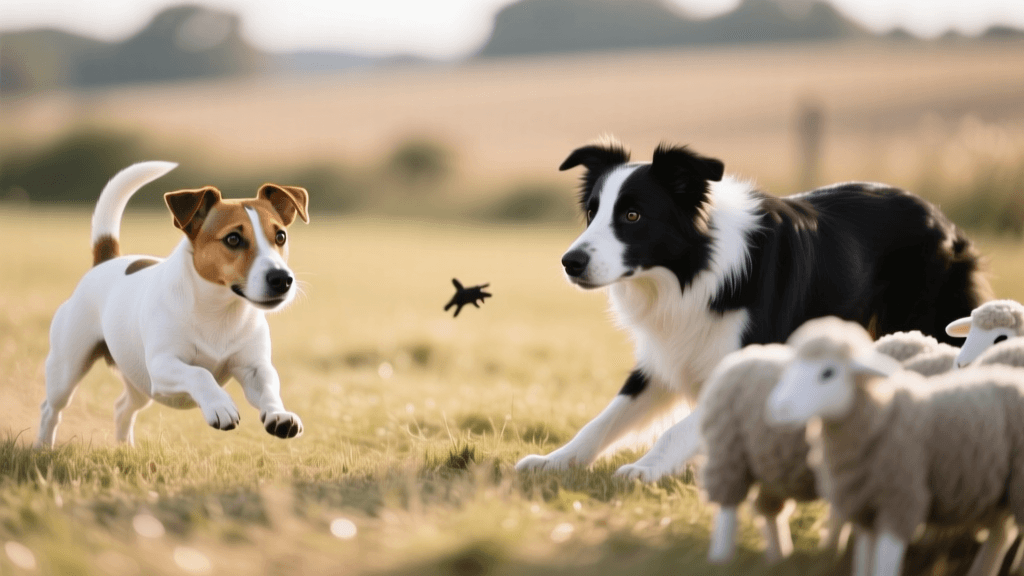
In contrast, herding breeds like Border Collies, Australian Shepherds, and German Shepherd Dogs were developed to control the movement of livestock. To do this effectively without harming the flock, humans selectively bred these dogs to amplify the early stages of the predatory sequence (search, stalk, chase, and bite) while heavily suppressing the 'kill-bite' and subsequent stages. The American Kennel Club's Herding Group profile highlights that these dogs are essentially predators trapped in a state of perpetual stalking, using their intense 'eye' and movement sensitivity to manipulate the flight zones of other animals.
Psychological Profile
Herding dogs are highly biddable, hyper-aware of motion, and deeply bonded to their handlers. Their psychology revolves around control, order, and anticipating the movements of their 'flock' (which, in a modern home, might be your children, other pets, or even passing cars).
Behavior in the Home
Without a proper outlet, herding instincts can become highly problematic. Owners often report behaviors such as nipping at the heels of running children, staring intensely at household cats, or attempting to circle and corral guests. Unlike the terrier's independent hunt, the herding dog's behavior is deeply intertwined with a need for human direction and a 'job' to do.
Breed Comparison Chart: Terriers vs. Herding Dogs
Understanding these psychological differences is crucial for breed selection. The following table breaks down the core behavioral distinctions between the two groups.
| Behavioral Trait | Terrier Breeds | Herding Breeds |
|---|---|---|
| Primary Instinct | Hunting and dispatching pests | Controlling and gathering flocks |
| Predatory Sequence | Amplified chase, grab, and kill-bite | Amplified eye, stalk, chase, and nip |
| Trainability | Independent; requires high motivation | Highly biddable; eager to work with handler |
| Reaction to Movement | Chases to catch and kill | Chases to circle, control, or nip heels |
| Ideal Enrichment | Scent work, earthdog, flirt poles | Agility, Treibball, advanced obedience |
| Common Breeds | Jack Russell, Rat Terrier, Airedale | Border Collie, Aussie, Corgi |
Actionable Advice: Environment, Enrichment, and Costs
Selecting the right breed is only the first step; setting up your environment to accommodate their specific psychological needs is where the real work begins.
Secure Fencing and Dig-Proofing
Both groups require secure outdoor spaces, but for different reasons. Terriers will dig under fences to chase a scent, while herders may attempt to scale or jump fences to chase a passing car or deer.
- For Terriers: Install a physical dig-proof barrier. Use 19-gauge, 1/2-inch galvanized hardware cloth buried at least 24 inches deep and bent outward in an L-shape. Expect to spend between $3 to $5 per linear foot on materials, totaling $450 to $750 for a standard yard.
- For Herders: Focus on height and visual barriers. A 6-foot wooden privacy fence prevents them from seeing triggering stimuli (like joggers) and reduces the urge to jump. Installation costs typically range from $1,500 to $3,000 depending on your property size.
Targeted Enrichment Products
To satisfy their instincts safely, invest in species-appropriate enrichment tools.
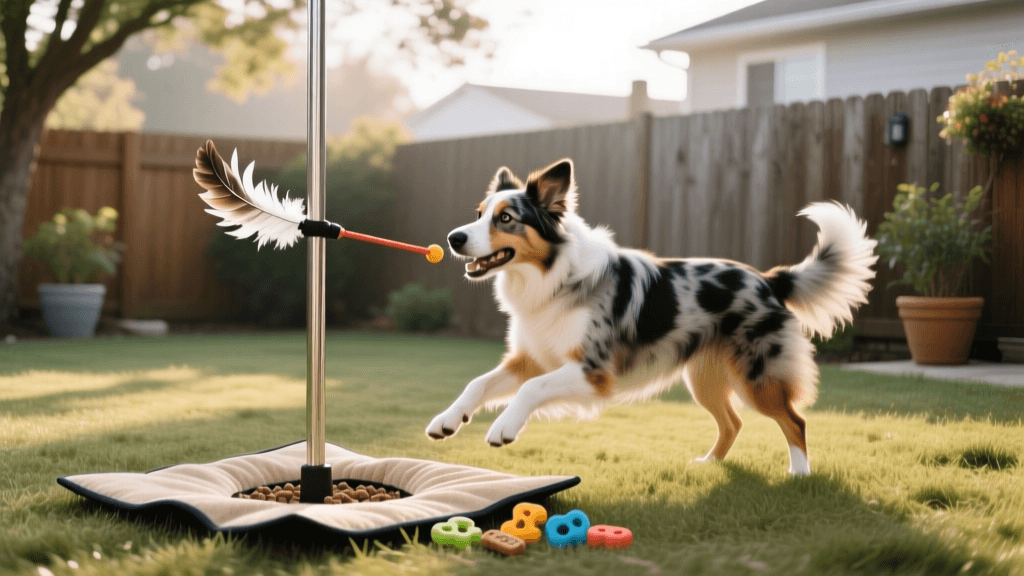
- Terriers: The Outward Hound TailTeaser Flirt Pole (approx. $25-$40) mimics the erratic movement of prey, allowing them to chase and 'kill' a toy without harming local wildlife. Pair this with a Kong Classic stuffed with frozen peanut butter to satisfy their need to dissect and chew.
- Herders: Treibball is an excellent urban alternative to herding. Purchase a set of large, durable yoga balls or specialized Jolly Balls ($30-$50 each). Teaching your herding dog to push these balls into a designated goal using their nose and shoulders satisfies their need to control large, moving objects.
Timing: Socialization and Instinct Testing
The psychological window for socialization in puppies begins to close between 12 and 16 weeks of age. During this critical period, exposure to various movements, sounds, and surfaces is vital. For high-drive breeds, improper socialization can lead to severe reactivity or predatory drift—a phenomenon where a dog's prey drive overrides its socialization, leading to tragic outcomes with small children or other pets. The ASPCA Dog Behavior Resources strongly recommend structured, positive exposure during this window to build impulse control.
Furthermore, if you are adopting an older dog or a mixed breed, consider investing in a professional Herding Instinct Test or Prey Drive Evaluation. These sessions, typically costing between $50 and $150, are conducted by certified behaviorists or breed clubs. They provide a safe, controlled environment to observe how your dog reacts to livestock or high-value moving lures, giving you a precise roadmap for their training needs.
Conclusion
Choosing between a terrier and a herding dog is not merely a choice of aesthetics; it is a choice of psychological compatibility. Terriers offer a fiercely independent, spirited companionship that thrives on the thrill of the hunt and the satisfaction of a job well done on their own terms. Herding dogs offer a deeply connected, cooperative partnership that demands mental engagement, structure, and shared activities. By understanding the predatory motor sequence and respecting the evolutionary history of these incredible animals, you can provide the right environment, training, and enrichment to help your high-drive dog thrive in the modern world.
robin-maitland
All our authors care for dogs every day — read more of their work on the authors page.