Australian Shepherd vs Greyhound: Matching Breed Instincts
Discover the behavioral differences between Australian Shepherds and Greyhounds. Learn how herding instincts and sighthound prey drive impact your lifestyle.
Introduction to Breed Instincts
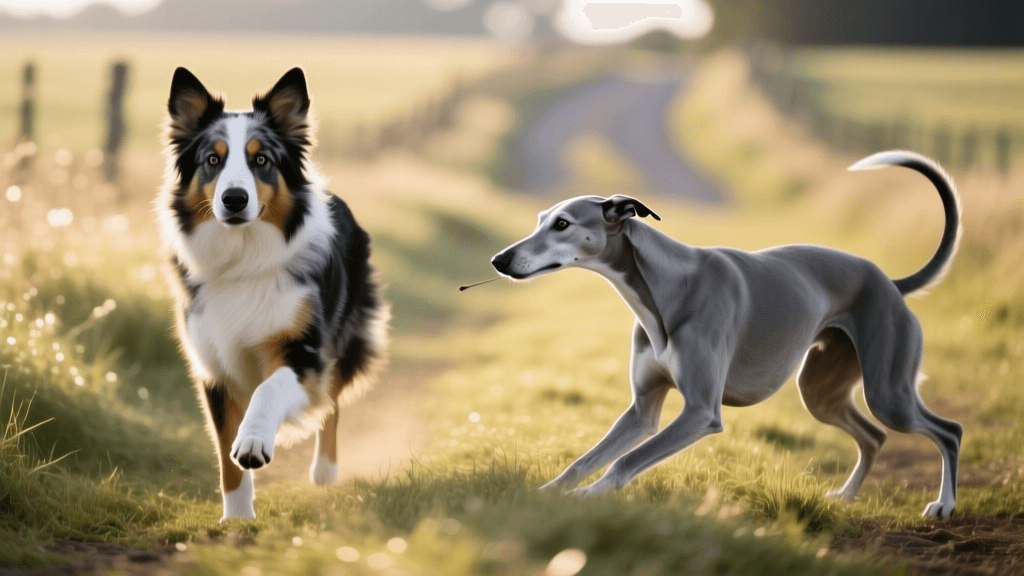
Selecting a dog based on physical appearance rather than behavioral genetics is one of the most common pitfalls for prospective pet owners. When we talk about "energy levels," the conversation often lacks nuance. A dog that requires three hours of hiking is vastly different from a dog that requires three hours of complex puzzle-solving, even if both are labeled "high energy." To truly understand canine psychology and make an informed selection, we must examine the genetic imperatives that drive behavior. In this guide, we will compare two profoundly misunderstood breeds: the Australian Shepherd and the Greyhound. By analyzing their predatory motor sequences, environmental needs, and daily routines, you will learn how to match breed instincts to your actual lifestyle.
The Psychology of the Herder: Australian Shepherd Instincts
The Australian Shepherd is a quintessential herding breed, developed to work tirelessly alongside ranchers in rugged terrain. According to the American Kennel Club (AKC), the Aussie is renowned for its intelligence, agility, and relentless work ethic. But what does this mean for a suburban pet owner?
Herding breeds possess a modified predatory motor sequence. In a wolf, the sequence is: eye, stalk, chase, grab-bite, kill-bite, and consume. In herding dogs, selective breeding has amplified the "eye," "stalk," and "chase" phases while heavily suppressing the "kill-bite." This results in a dog that is genetically hardwired to control movement. If an Aussie does not have sheep to herd, they will herd children, bicycles, cars, or other pets. This often manifests as nipping at heels, intense staring, and hyper-vigilance.
Actionable Advice for Aussie Owners
Physical exercise alone will not exhaust an Australian Shepherd; you must tax their central nervous system. A 45-minute physical run will only build their endurance, creating a canine marathon runner. Instead, focus on cognitive enrichment:
- Scent Work and Nose Games: Hide high-value treats (like freeze-dried liver) around your yard or home. Fifteen minutes of intense sniffing lowers a dog's heart rate and provides mental fatigue equivalent to an hour of walking.
- Flirt Pole Training: Use a flirt pole (a giant cat wand for dogs, typically $25-$40) to satisfy the chase instinct. Crucially, you must teach a "drop it" and "wait" command to build impulse control amidst high arousal.
- Mat Training: Teach your Aussie to settle on a specific cot or mat. Herding dogs struggle to "turn off," so explicitly training a relaxation protocol is vital for their psychological well-being.
The Psychology of the Sprinter: Greyhound Instincts
On the opposite end of the spectrum is the Greyhound. Often mistakenly labeled as high-energy due to their racing history, Greyhounds are actually the quintessential "45-mph couch potatoes." The AKC notes that Greyhounds are independent, gentle, and surprisingly low-energy in the home. However, their psychological triggers are vastly different from those of a herding dog.
Greyhounds are sighthounds. Their brains are wired to detect minute movements at vast distances. When a Greyhound sees a squirrel, a plastic bag blowing in the wind, or a small dog darting across the street, their full predatory sequence (including the grab-bite and kill-bite) can be triggered in a fraction of a second. This is not "bad behavior" or "aggression"; it is a deeply ingrained neurological reflex. Furthermore, retired racing Greyhounds often require significant psychological decompression. As highlighted by Best Friends Animal Society, understanding a dog's background and breed-specific needs is critical for a successful adoption, especially for dogs transitioning from kennel or track environments to a bustling home.
Actionable Advice for Greyhound Owners
- Secure Containment: Greyhounds can easily clear standard fences if they spot prey. A minimum 6-foot wooden privacy fence (costing between $1,500 and $3,500 to install) is highly recommended. Never rely on invisible or underground electric fences, as the prey drive will easily override the fear of a shock.
- The "Sniffari" Walk: Instead of long, exhausting jogs, take your Greyhound on two 20-minute leisurely walks per day. Allow them to stop and sniff every few feet. This provides mental stimulation without joint stress.
- Muzzle Conditioning: If you have a multi-pet household, condition your Greyhound to wear a basket muzzle (like the Baskerville Ultra, approx. $20) using positive reinforcement. This ensures safe, stress-free introductions to small animals and provides peace of mind during off-leash hikes in enclosed areas.
Head-to-Head Behavioral Comparison
When selecting between a herding breed and a sighthound, it is essential to look beyond the surface. The table below breaks down the core behavioral and environmental differences to help you make an informed choice.
| Trait | Australian Shepherd (Herder) | Greyhound (Sighthound) |
|---|---|---|
| Primary Drive | Controlling movement; mental problem-solving | Visual tracking; short bursts of sprinting |
| Daily Physical Need | 60-90 minutes (agility, hiking, fetch) | 40 minutes (two 20-minute leisurely leash walks) |
| Mental Stamina | Extremely High (requires daily training/puzzles) | Low to Moderate (enjoys napping and sniffing) |
| Prey Drive | Modified (nipping/herding, rarely lethal) | High (full predatory sequence triggered by movement) |
| Biddability | Very High (eager to please, highly trainable) | Moderate (independent, responds best to high-value food) |
| Apartment Suitability | Poor (barks at noises, paces, needs space to work) | Excellent (sleeps 18+ hours a day, quiet indoors) |
| Estimated Monthly Enrichment Cost | $50 - $100 (puzzle toys, classes, agility fees) | $20 - $40 (snuffle mats, soft beds, muzzle training treats) |
Matching Breed Instincts to Your Daily Routine
Before bringing either breed home, map out your actual daily schedule, not your idealized weekend schedule. If you work an eight-hour day away from home, an Australian Shepherd left in a backyard will likely develop destructive behaviors, barrier frustration, and chronic stress. They require a mid-day dog walker who specializes in active engagement, which can cost $25 to $35 per visit. Alternatively, doggy daycare (averaging $30-$50 per day) can provide the social and physical outlet they crave, provided the facility properly separates herding dogs from smaller breeds to prevent nipping incidents.
Conversely, a Greyhound can easily adapt to an eight-hour workday. They are biologically predisposed to conserve energy, sleeping for the vast majority of the day on a plush orthopedic bed (invest $80-$150 in a high-quality bolster bed to support their bony prominences). When you return home, a brief neighborhood walk and a gentle training session using soft treats are all that is required to maintain their psychological balance.
Actionable Selection Checklist
Use this checklist to evaluate your readiness for these distinct behavioral profiles:
- Time Audit: Do you have 60+ minutes daily for active, engaged training (Aussie), or do you prefer a companion for relaxed evening routines (Greyhound)?
- Environment Check: Do you have a 6-foot privacy fence and the budget to maintain it? (Crucial for both, but an absolute safety requirement for the sighthound's visual triggers).
- Household Dynamics: Are there toddlers or small pets in the home? Herding dogs may nip at running children, while sighthounds may view small, fast-moving pets as prey. Both require careful management and professional behavioral consultation ($150-$250 per session).
- Tolerance for "Doggy" Behavior: Can you accept that a Greyhound may never be reliable off-leash in an unfenced area? Can you accept that an Aussie may try to herd your guests?
Conclusion
Understanding your dog begins long before you bring them home. By respecting the genetic blueprints of breeds like the Australian Shepherd and the Greyhound, you set the stage for a harmonious relationship. The Aussie offers an active, deeply bonded partnership for those willing to invest time in mental enrichment, while the Greyhound provides a gentle, low-maintenance indoor companion with a hidden need for secure outdoor management. Choose the instinct that matches your reality, and you will unlock the profound joy of living in sync with your canine companion.
robin-maitland
All our authors care for dogs every day — read more of their work on the authors page.