Tellington TTouch Somatic Training for Anxious Dogs 2026
Discover holistic Tellington TTouch somatic techniques to calm anxious dogs in 2026. Learn natural, force-free bodywork for canine reactivity and stress.
The Evolution of Holistic Canine Training in 2026
As we navigate the landscape of canine behavioral science in 2026, the paradigm of dog training has profoundly shifted. We no longer view obedience as a mere series of mechanical inputs and outputs. Instead, modern holistic trainers and veterinary behaviorists recognize that true behavioral modification must address the entire nervous system. For anxious, reactive, or chronically stressed dogs, traditional operant conditioning—relying solely on treats and clickers—often falls short if the dog's autonomic nervous system is trapped in a state of sympathetic arousal (fight or flight). This is where natural and holistic approaches, specifically somatic bodywork like the Tellington TTouch method, have become indispensable tools in the modern trainer's repertoire.
Holistic training operates on the principle that the mind and body are inextricably linked. A dog cannot learn new coping mechanisms or exhibit cognitive flexibility if their body is flooded with cortisol and adrenaline. By integrating gentle, non-habituated touch and mindful movement exercises, we can manually down-regulate a dog's nervous system, creating a physiological foundation where true learning and emotional resilience can occur.
What is Tellington TTouch and Somatic Awareness?
Developed in the 1970s by Linda Tellington-Jones and continuously refined through modern neurobiological research, the Tellington TTouch method is a globally recognized holistic approach to animal care and training. Unlike traditional canine massage, which primarily targets muscle tissue to relieve physical tension, TTouch focuses on the skin, fascia, and peripheral nervous system. The goal is not to manipulate muscle but to awaken cellular intelligence and promote neuroplasticity.
According to the official Tellington TTouch methodology, specific circular movements and lifts applied to the skin send novel sensory input to the brain. Because these touches are non-habituated—meaning the dog's brain does not automatically filter them out as routine background noise—they stimulate the parasympathetic nervous system. This shift from sympathetic (stress) to parasympathetic (rest and digest) dominance is the holy grail of holistic anxiety management. In 2026, somatic awareness is widely considered a prerequisite for advanced behavioral rehabilitation, allowing dogs to process environmental triggers without immediately defaulting to panic or aggression.
Core TTouch Techniques for Anxiety and Reactivity
Integrating TTouch into your daily training routine requires patience, observation, and a commitment to force-free handling. Below are three foundational techniques that holistic practitioners use to help anxious dogs find their center.
1. The Clouded Leopard Touch
The Clouded Leopard is the most iconic TTouch technique. It involves using the pads of your fingers to move the dog's skin in a gentle, continuous circle. The secret lies in the pressure and the completion of the circle.
- Pressure Scale: TTouch uses a scale of 1 to 3. For anxious dogs, always start with a '1'—the amount of pressure it takes to move the skin without pressing into the underlying muscle. Imagine the weight of a nickel resting on your eyelid.
- The Movement: Keep your fingers slightly curved. Move the skin in a circle, plus a little bit more (about one and a quarter circles). Pause, lift your hand, and move to an adjacent spot.
- Application: Work along the dog's back, shoulders, and the base of the neck. Avoid the spine directly. This technique is profoundly grounding and is often used before a known stressor, such as a thunderstorm or a veterinary visit.
2. The Lying Leopard Touch
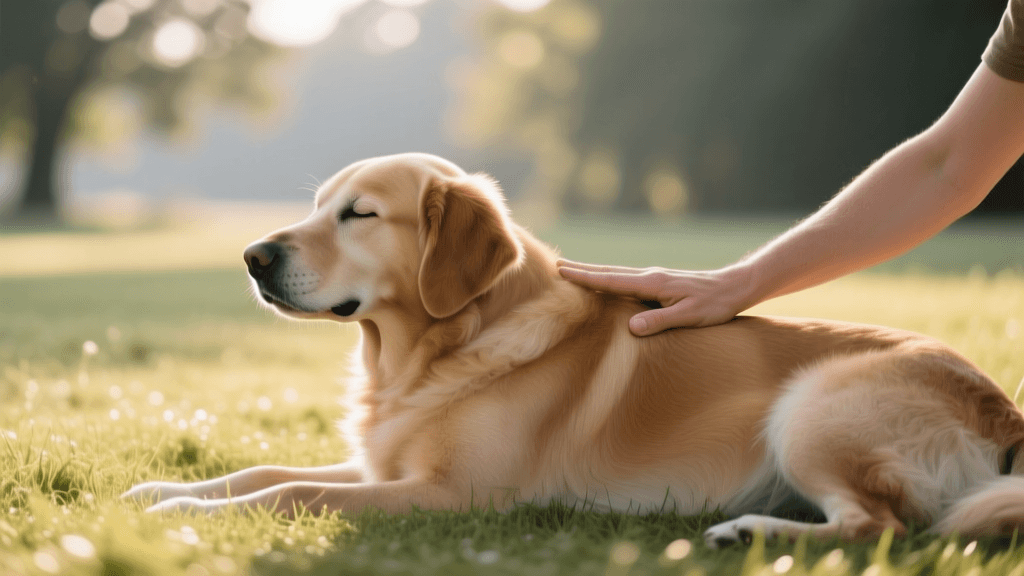
When a dog is too reactive or fearful to tolerate the movement of the Clouded Leopard, the Lying Leopard is the ideal alternative. This technique involves simply resting the flat palm of your hand on the dog's body, allowing your body heat to transfer to the animal. The holistic principle here is bio-thermal grounding. By placing one hand on the dog's chest (near the heart center) and the other on their ribcage or lower back, you provide a deep, reassuring physical boundary. This mimics the comforting pressure of a holistic anxiety wrap but uses the human-animal bond as the primary conduit for emotional regulation.
3. Ear Work and the Vagus Nerve
The canine ear is densely packed with acupressure points and nerve endings that connect directly to the vagus nerve—the primary highway of the parasympathetic nervous system. Holistic ear work involves gently stroking the ear from the base to the tip, or performing tiny, micro-circular TTouches along the ear flap. In moments of acute panic, gently holding the base of the ear and applying a feather-light '1' pressure slide can act as a physiological circuit breaker, slowing the heart rate and lowering blood pressure. This technique aligns seamlessly with Fear Free handling principles, which emphasize minimizing stress and utilizing low-impact, consent-based physical contact during handling.
Integrating Holistic Bodywork with Grounding Equipment
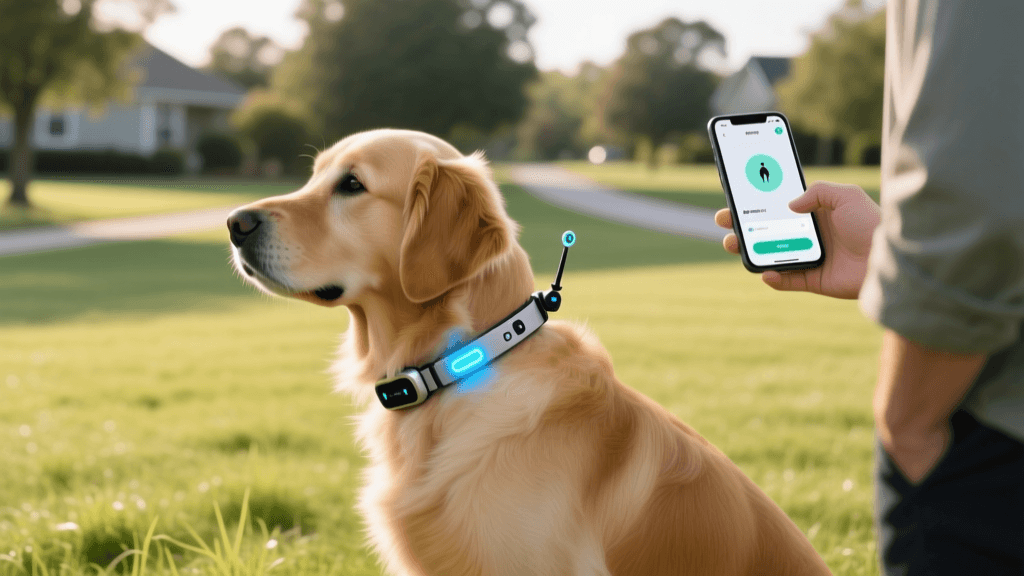
A truly natural training approach in 2026 extends beyond the trainer's hands to the equipment used on the dog's body. Restrictive gear, such as tight chest harnesses or corrective collars, can compress the thoracic cavity, restrict natural gait, and inadvertently trigger a sympathetic nervous system response. When a dog's physical movement is restricted, their psychological feeling of being trapped increases, exacerbating reactivity.
Holistic trainers advocate for anatomically balanced equipment, such as the Balance Harness or the Tellington TTouch Harmony Harness. These designs feature a front and back ring, allowing a dual-point leash attachment. This setup provides gentle, biomechanical feedback that encourages the dog to center their own weight and balance without relying on pain or discomfort. When you pair a balanced harness with mindful leash handling—keeping the leash loose and using slow, deliberate movements—you create a holistic feedback loop that promotes spatial awareness and emotional calm.
The 2026 Holistic Somatic Training Protocol
To see lasting changes in your dog's baseline anxiety levels, somatic bodywork must be applied consistently, not just in moments of crisis. Below is a structured, four-week integration schedule designed for a moderately anxious dog.
| Week | Focus Area | Daily Routine (10-15 Mins) | Goal |
|---|---|---|---|
| Week 1 | Consent and Observation | Lying Leopard on chest/ribs. Stop if dog licks lips or looks away. | Build trust; establish a consent-based handling baseline. |
| Week 2 | Spinal Proximity | Clouded Leopard (Pressure 1) along the back and shoulders. | Introduce cellular movement; lower resting heart rate. |
| Week 3 | Vagal Toning | Ear Work and gentle tail strokes (if consented). | Strengthen parasympathetic response to mild environmental noise. |
| Week 4 | Active Integration | Combine TTouch with slow, mindful leash walking on a Balance Harness. | Transfer somatic calm into active, real-world movement. |
The Science Behind the Holistic Approach
Skeptics of natural training methods often demand empirical data, and the scientific community in 2026 has increasingly validated the efficacy of somatic interventions. Research into canine neurobiology confirms that tactile stimulation of the fascia and skin alters brainwave patterns, shifting the brain from high-beta (alert/anxious) waves to alpha and theta (relaxed/meditative) waves. Furthermore, holistic approaches to canine anxiety are frequently recommended alongside environmental enrichment and dietary adjustments. As noted by the ASPCA guidelines on calming anxious dogs, a multi-modal approach that includes gentle handling, safe spaces, and predictable routines is the most effective way to manage chronic stress in companion animals.
True obedience is not born from suppression, but from a nervous system that feels safe enough to learn. When we touch the dog with intention, we are not just petting them; we are rewiring their relationship with the world.
Conclusion: Embracing the Whole Dog
As dog owners and trainers, our ultimate goal is not merely to produce a dog that obeys on command, but to cultivate a companion who is emotionally balanced, confident, and physically at ease. The Tellington TTouch method and holistic somatic training offer a profound pathway to achieve this. By stepping away from purely mechanical training and embracing the natural, neurobiological power of mindful touch, we honor the whole dog. In 2026, the most advanced training tool you possess is not a high-tech collar or a specialized treat pouch—it is your own hands, guided by empathy, science, and a deep respect for the canine nervous system.
marcus-aldridge
All our authors care for dogs every day — read more of their work on the authors page.