Tellington TTouch and Canine Massage for Trust Building in 2026
Discover how Tellington TTouch and canine massage techniques can deepen your bond, reduce anxiety, and build trust with your dog in 2026.
The Evolution of Canine Bonding in 2026
In the landscape of modern dog ownership, the year 2026 marks a significant shift from traditional, command-based training toward holistic, relationship-centered co-regulation. As our understanding of canine psychology deepens, veterinary behaviorists and certified trainers are increasingly advocating for somatic practices—specifically Tellington TTouch and canine myofunctional therapy (massage)—as primary tools for building profound trust. Unlike basic obedience training, which engages the dog's cognitive and working mind, intentional therapeutic touch speaks directly to the canine nervous system, fostering a sense of safety, mutual understanding, and deep emotional connection.
Whether you are working with a newly adopted rescue dog displaying fear-based behaviors, or simply looking to enrich the relationship with your lifelong companion, mastering the art of therapeutic touch is one of the most rewarding investments you can make. This comprehensive guide will walk you through the science, the body language prerequisites, and the exact techniques you need to implement a successful touch-based bonding routine this year.
The Neurobiology of Touch and the Oxytocin Loop
To understand why massage and TTouch are so effective for bonding, we must look at the neurobiology of the human-dog relationship. Foundational research, including the landmark studies on the oxytocin-gaze positive loop published in PubMed Central, demonstrates that mutual positive interactions between dogs and their owners trigger a simultaneous release of oxytocin—the 'love' or 'bonding' hormone—in both species.
When you engage in slow, intentional, and consent-based touch, you are actively stimulating the parasympathetic nervous system (the 'rest and digest' network) in your dog. This lowers cortisol levels, decreases heart rate, and signals to the dog's brain that they are in a secure environment. In 2026, with the rise of biometric smart collars that track Heart Rate Variability (HRV), owners can actually see real-time data proving that structured massage sessions drastically improve a dog's stress recovery times and overall emotional baseline.
Understanding Consent and Canine Body Language
The most critical mistake well-meaning owners make is assuming their dog always wants to be touched. True bonding requires consent. Before initiating any TTouch or massage routine, you must perform a 'consent test' and accurately read your dog's calming and stress signals.
The 3-Second Rule is the gold standard for consent testing. Pet your dog gently on the chest or shoulder for three seconds, then completely remove your hand and observe their reaction.
| Signal Type | Canine Body Language | What It Means for Your Session |
|---|---|---|
| Green Light (Consent) | Leaning into your hand, soft eyes, relaxed open mouth, nudging your hand when you stop, loose body posture. | Proceed with massage or TTouch. The dog is receptive and seeking connection. |
| Yellow Light (Caution) | Freezing, lip licking, yawning, turning head away, whale eye (showing whites of eyes), tense muscles. | Stop immediately. The dog is tolerating but not enjoying the touch. Give them space. |
| Red Light (Refusal) | Moving away, hiding, stiffening, growling, snapping, or pinned-back ears. | Do not touch. The dog is over threshold or in pain. Consult a veterinary behaviorist. |
Always respect a 'Yellow' or 'Red' light. Forcing touch on a dog that is displaying calming signals will actively damage trust and increase anxiety, completely defeating the purpose of the bonding exercise.
Core Tellington TTouch Techniques for Deep Trust
Developed by Linda Tellington-Jones, the Tellington TTouch method is a globally recognized somatic practice. According to the official Tellington TTouch organization, this method uses specific, non-habitual touches to activate cellular intelligence, reduce fear, and build confidence. Unlike traditional petting, which is often fast and repetitive, TTouch is slow, mindful, and deliberate.
1. The Clouded Leopard TTouch
This is the foundational TTouch technique. It is used to relax the dog, reduce localized tension, and build a general sense of well-being.
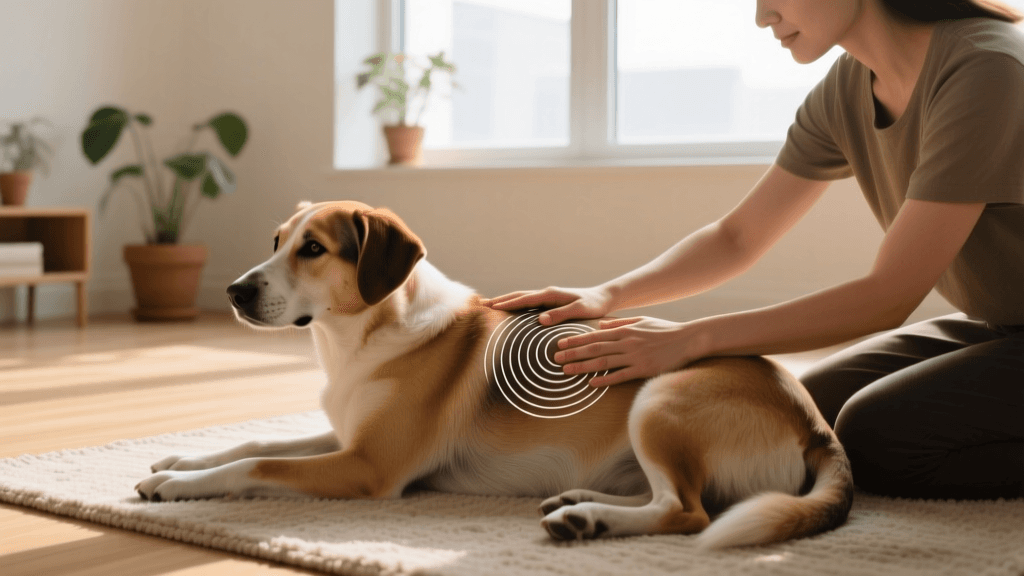
- The Technique: Place the pads of your fingers lightly on your dog's body (the shoulder or back is a great starting point). Keep your hand curved as if holding a small cloud.
- The Movement: Move the skin in a slow, clockwise circle and a quarter (one full circle plus a quarter turn). The key is to move the skin, not just slide your fingers over the fur.
- The Pressure: Use a pressure scale of 1 to 10, where 1 is barely touching the fur and 10 is deep tissue pressure. For bonding and relaxation, stick to a 2 or 3.
- The Pace: Take a full 3 to 4 seconds to complete one circle and a quarter. Pause, move your hand an inch, and repeat.
2. Ear Work (Ear Slides)
The ears are rich in nerve endings and acupressure points connected to the vagus nerve, which governs the parasympathetic nervous system. Ear work is profoundly calming and is often used to help dogs recover from acute stress or panic.
- The Technique: Gently cradle the base of your dog's ear between your thumb and index finger.
- The Movement: Apply very light pressure and slowly slide your fingers from the base of the ear out to the tip. Imagine you are smoothing out a delicate piece of silk.
- The Pace: Repeat this slow sliding motion 5 to 10 times per ear. If your dog closes their eyes and sighs, you are successfully engaging their relaxation response.
Canine Myofunctional Therapy (Massage) Basics
While TTouch focuses on the nervous system and skin, canine massage targets the underlying muscle fascia and circulatory system. Combining both modalities creates a comprehensive bonding session that addresses both mental and physical tension.
Effleurage (Long Sweeping Strokes)
Effleurage is used to open and close a massage session. It involves long, continuous, sweeping strokes that follow the direction of the dog's coat and the natural flow of venous blood back toward the heart.
- Start at the base of the neck and use the flat of your palm to glide slowly down the spine, over the hips, and down the hind legs.
- Keep your hands in constant contact with the dog's body. Lifting your hands abruptly can startle the dog and break the relaxation loop.
- Use this technique to map your dog's body, feeling for areas of heat, tension, or muscle knots without trying to 'fix' them immediately.
Petrissage (Kneading)
Petrissage involves gently lifting, squeezing, and releasing the muscle tissue. This is excellent for dogs that carry tension in their shoulders and neck—common in dogs that pull on the leash or are highly alert to their environment.
- Use your whole hand to gently grasp the muscle belly of the shoulder.
- Squeeze softly, hold for one second, and release.
- Work your way down the neck and along the topline, always being incredibly gentle around the spine itself.
Essential Tools for Canine Massage in 2026
The market for canine wellness tools has expanded significantly. Having the right environment and accessories can elevate your bonding sessions from a simple petting session to a true spa-like therapeutic experience.
| Tool Category | 2026 Recommendation | Purpose and Benefit |
|---|---|---|
| Massage Oil | Organic Cold-Pressed Hemp Seed Oil (Unscented) | Reduces friction on short-coated breeds. Hemp oil is rich in Omega-3s and is completely safe if your dog licks their fur afterward. |
| Environment | Orthopedic Memory Foam Mat with Non-Slip Base | Provides joint support for senior dogs and prevents slipping, allowing the dog to fully surrender their weight and relax their muscles. |
| Enrichment | Silicone Licking Mat (Suction Cup Backing) | Smear with plain pumpkin puree or bone broth. Licking releases endorphins and pairs perfectly with massage to deepen relaxation. |
| Biometric Tracker | Smart Collar with HRV Monitoring | Allows you to track your dog's Heart Rate Variability over time, proving the long-term physiological benefits of your touch therapy routine. |
Step-by-Step 15-Minute Evening Bonding Routine
Consistency is the bedrock of trust. Implementing a short, predictable routine signals to your dog that this is a safe, dedicated time for connection. Here is a highly effective 15-minute evening protocol:
- Minutes 1-2: The Setup and Consent. Prepare a quiet room with dim lighting. Place the orthopedic mat on the floor and offer the licking mat. Perform the 3-second consent test. If the dog engages and leans in, proceed.
- Minutes 3-6: Effleurage Mapping. Using the flat of your palm, perform long, slow strokes from the neck to the tail. Do not apply deep pressure. Simply glide and breathe deeply yourself; dogs are highly attuned to their owner's respiration rates and will mirror your calm breathing.
- Minutes 7-11: Clouded Leopard TTouch. Move to the shoulders and back. Perform the slow, one-and-a-quarter circles. Focus on areas where you noticed tension during the effleurage phase, but do not try to massage out knots—just use the TTouch to invite the nervous system to release the holding pattern.
- Minutes 12-14: Ear Work. Transition to the base of the ears. Perform the slow ear slides. You will likely notice your dog's breathing slow down significantly, and they may even fall asleep.
- Minute 15: The Fade Out. Slowly reduce the pressure of your touch, returning to feather-light effleurage, and then gently remove your hands. Sit quietly next to your dog for a few moments before standing up, allowing their nervous system to integrate the session.
Tracking Progress and Behavioral Shifts
As you integrate Tellington TTouch and massage into your weekly routine throughout 2026, pay close attention to the behavioral shifts in your dog. According to current guidelines from the Human Animal Bond Research Institute (HABRI), consistent positive physical contact not only improves the animal's welfare but significantly reduces owner stress and depression.
You will likely notice that your dog becomes more resilient to environmental stressors, such as loud noises or strangers approaching. Furthermore, dogs that receive regular, consent-based touch often display fewer anxiety-driven behaviors, such as excessive licking, pacing, or destructive chewing, because their baseline state of arousal has been permanently lowered. By prioritizing somatic bonding, you are not just training a dog; you are cultivating a profound, interspecies partnership built on mutual respect, biological co-regulation, and unwavering trust.
anouk-beaumont
All our authors care for dogs every day — read more of their work on the authors page.