Puppy Teething Psychology and Best Chew Toys for 2026
Discover the psychology behind puppy teething and chewing instincts. Explore the best soothing chew toys for 2026 to redirect behavior and relieve pain.
The Developmental Psychology of Puppy Teething
Welcoming a new puppy into your home is an exhilarating experience, but it quickly introduces new dog owners to one of the most challenging developmental milestones in canine growth: teething. To truly master the 'Understanding Your Dog' category of pet ownership, we must look past the destroyed shoes and gnawed baseboards to understand the profound psychological and neurological drivers behind puppy chewing. Teething is not merely a physical transition from deciduous (baby) teeth to permanent adult teeth; it is a critical window of sensory mapping, pain management, and instinctual fulfillment.
According to veterinary developmental timelines, a puppy's baby teeth begin to erupt at around three to six weeks of age. By the time they are twelve to sixteen weeks old, these sharp little teeth begin to loosen and fall out, making way for their 42 adult teeth. This intense transitional phase, which typically concludes around six to eight months of age, is marked by severe gingival inflammation, itching, and deep jaw aching. Understanding this biological reality is the first step in addressing the behavior with empathy and scientific redirection rather than frustration.
Sensory Mapping and Oral Exploration
Puppies are born with limited visual and auditory capabilities. In their earliest weeks, their primary interface with the world is olfactory and tactile, heavily concentrated in the muzzle and mouth. When a puppy chews on an object, they are engaging in 'sensory mapping.' The nerve endings in their gums and lips send complex data to the somatosensory cortex regarding the object's density, texture, temperature, and taste. This is why puppies seem to mouth everything in their environment, from carpet fibers to television remotes.
From a behavioral psychology standpoint, chewing is also a self-soothing mechanism. The rhythmic, repetitive motion of gnawing stimulates the release of endorphins and serotonin in the canine brain. These neurotransmitters act as natural painkillers and mood stabilizers. When a puppy is experiencing the sharp, throbbing pain of an adult incisor pushing through the gum line, chewing on a resistant surface provides counter-pressure that temporarily numbs the pain receptors. Therefore, providing the correct outlet for this instinct is not just about saving your furniture; it is a vital component of your puppy's psychological well-being and pain management.
Why Puppies Destructively Chew (And How to Redirect)
A common misconception among novice owners is that destructive chewing is a sign of malice, spite, or poor temperament. In reality, puppies lack the cognitive foresight and episodic memory required to feel 'spite.' If a puppy chews your favorite slippers, it is simply because the slippers carry your scent (which is comforting to them), they are accessible, and the leather or fabric provides a satisfying resistance that massages sore gums.
Redirecting this behavior requires an understanding of operant conditioning. We cannot simply punish a puppy for chewing the wrong item; we must actively teach them which items yield the highest neurological reward. This is where the selection of the right teething toy becomes paramount. The best teething toys of 2026 are designed not just for durability, but to mimic the tactile feedback puppies crave while offering therapeutic relief for inflamed tissues.
Key Features of Effective Teething Toys in 2026
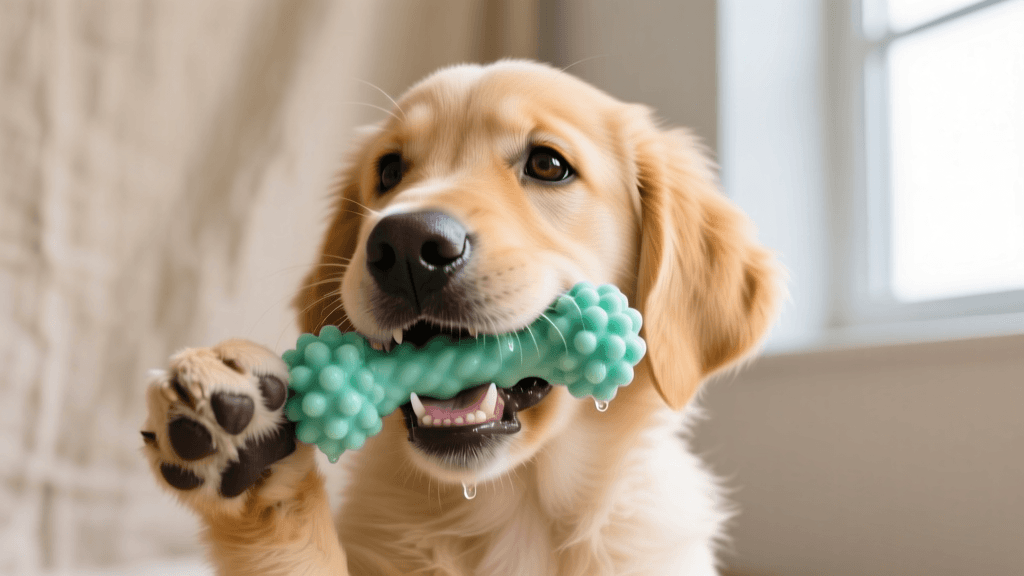
Material science in pet products has advanced significantly. The top-rated soothing chew toys for 2026 utilize specialized thermoplastic elastomers and natural rubber compounds that are firm enough to withstand aggressive gnawing but yield just enough to protect developing tooth enamel and sensitive gums. When evaluating toys through a behavioral lens, look for the following features:
- Textural Variety: Toys with multi-surface ridges, nubs, and bristles act like a toothbrush, massaging the gums and satisfying the puppy's need for complex sensory input.
- Thermal Adaptability: Toys that can be safely frozen provide cryotherapy, constricting blood vessels in the gums to drastically reduce swelling and numb acute pain.
- Ergonomic Grip: Puppies need to be able to pin the toy down with their front paws while they work their back molars. Toys with awkward shapes often get abandoned in favor of easier-to-hold household items.
- Scent Infusion: Toys that incorporate natural, dog-safe scents (like real bacon or peanut butter embedded in the polymer) trigger the foraging instinct, keeping the puppy engaged longer.
Top Soothing Teething Toys for Puppy Instincts (2026 Review)
Based on veterinary behaviorist recommendations and material durability testing current for 2026, here is a comparison of the most effective teething toys designed to satisfy canine developmental instincts.
| Toy Model (2026) | Material Profile | Behavioral Benefit | Est. Price |
|---|---|---|---|
| KONG Puppy Teething Stick | Soft, Proprietary Puppy Rubber | Soothes gums, encourages fetching and interactive play | $14.99 |
| Nylabone Puppy Power Chew | Flexible, Textured Polymer | Satisfies heavy gnawing instinct, promotes dental health | $11.50 |
| West Paw Zogoflex Bumi | Zogoflex Elastomer (Floatable) | Tug-of-war bonding, builds confidence and jaw strength | $18.00 |
| Benebone Puppy Wishbone | Nylon Infused with Real Bacon | Scent-driven engagement, ergonomic wishbone grip | $16.99 |
1. KONG Puppy Teething Stick
The KONG Puppy Teething Stick remains a gold standard in veterinary behavior circles. Made from a softer, exclusive pink or blue rubber formula designed specifically for developing jaws, it features patented dental ridges. Psychologically, the hollow center is its greatest asset. By stuffing the core with plain Greek yogurt or puppy-safe pumpkin puree and freezing it, you transform the toy into a long-lasting puzzle feeder. The freezing process provides immediate cryotherapy for inflamed gums, while the mental challenge of extracting the food tires the puppy out cognitively, reducing anxiety-driven chewing.
2. Nylabone Puppy Power Chew
For puppies with an intense, relentless drive to gnaw, the Nylabone Puppy Power Chew offers the necessary resistance. The material is engineered to be tough but slightly flexible. As the puppy chews, the surface roughens, creating tiny bristles that help clean teeth and stimulate the gums. The variety of shapes available in 2026, including the dinosaur and bone shapes, allows puppies to use their front paws to anchor the toy, satisfying their natural predatory hold-and-tear instincts in a safe, controlled manner.
3. West Paw Zogoflex Bumi
The Bumi is a masterpiece for interactive behavioral training. Teething can make puppies irritable and prone to nipping hands. The Bumi's S-shape and durable, non-toxic Zogoflex material make it the ultimate tool for teaching 'tug-of-war' rules. Engaging in structured tug play builds a puppy's confidence, strengthens the human-animal bond, and provides an acceptable outlet for their prey drive. It also stretches the jaw muscles, relieving the deep tissue tension associated with teething.
Behavioral Training Techniques During the Teething Phase
Providing the best toys is only half the equation; how you manage the environment and train the puppy dictates long-term success. The ASPCA strongly advocates for proactive redirection over punitive measures. The most effective technique is the 'Trade-Up' game.
When you catch your puppy chewing on an inappropriate item (like a chair leg), do not yell or chase them. Chasing turns the behavior into a game of keep-away, reinforcing the idea that the stolen item is highly valuable. Instead, approach calmly with a high-value teething toy, such as a frozen KONG. Offer the toy to the puppy. The moment they drop the furniture leg to investigate the new, more rewarding toy, praise them enthusiastically. This teaches the puppy that relinquishing forbidden items results in a positive neurological reward.
Furthermore, the American Kennel Club (AKC) emphasizes the importance of rotating toys. Puppies suffer from habituation; if a toy is always available, it loses its novelty and dopamine-triggering potential. Keep a selection of four or five teething toys, but only leave two out at a time. Rotate them every few days to maintain the puppy's curiosity and engagement.
Environmental Management and Puppy Proofing
Behavioral psychology tells us that it is much easier to manage an environment than to constantly correct a developing brain. Puppy-proofing your home is essential. Use baby gates to restrict access to rooms with heavy electrical wiring or expensive rugs. Keep shoes in closed closets and use bitter apple sprays on baseboards as a temporary deterrent while the puppy's impulse control matures. Remember, a puppy left unsupervised in an open environment is being set up for failure. Utilize a playpen or a crate when you cannot actively monitor their chewing choices.
When to Consult a Veterinary Behaviorist
While intense chewing is normal, certain signs indicate that a puppy may be experiencing complications beyond standard teething discomfort. If your puppy exhibits a sudden refusal to eat hard kibble, excessive drooling mixed with blood, pawing frantically at the mouth, or if a baby tooth remains firmly in place while the adult tooth erupts beside it (a condition known as retained deciduous teeth), consult your veterinarian immediately. Retained teeth can cause severe orthodontic issues and chronic pain, which will manifest as behavioral irritability and resistance to handling around the muzzle.
Conclusion
Surviving the puppy teething phase requires a shift in perspective. By viewing chewing not as an act of destruction, but as a vital, instinctual coping mechanism for a rapidly developing brain and body, you can respond with patience and strategy. Equipping your home with the best soothing chew toys of 2026, utilizing frozen treats for pain relief, and practicing positive redirection techniques will not only save your belongings but will also lay the foundation for a confident, well-adjusted, and happily chewing adult dog.
priya-sutaria
All our authors care for dogs every day — read more of their work on the authors page.