Tellington TTouch Massage for Dog Anxiety and Bonding in 2026
Discover how Tellington TTouch massage techniques reduce dog anxiety and deepen your bond in 2026. Learn ear strokes, clouded leopard, and HRV tracking.
The Evolution of Canine Tactile Therapy in 2026
The human-canine bond has always been built on mutual trust, but in 2026, our understanding of how physical touch impacts a dog’s nervous system has reached unprecedented depths. As dog owners and veterinary professionals increasingly prioritize holistic mental health, Tellington TTouch (TTouch) has emerged as a premier modality for reducing canine anxiety, improving proprioception, and fostering profound relationship building. Unlike traditional petting, which can sometimes overstimulate an anxious dog, TTouch utilizes specific, mindful circular movements and lifts to activate the parasympathetic nervous system, promoting a state of deep cellular relaxation.
Originally developed by Linda Tellington-Jones for equine rehabilitation, TTouch has been adapted extensively for canine behavioral health. Today, it is recognized as a vital tool for co-regulation—the process by which a calm human nervous system helps stabilize a stressed canine nervous system. By integrating these specialized massage techniques into your daily routine, you are not merely grooming or petting your dog; you are actively rewiring their stress responses and building a resilient, trust-based bond.
The Science of Co-Regulation and Oxytocin
When you engage in mindful TTouch, both you and your dog experience a measurable release of oxytocin, often referred to as the "bonding hormone." Simultaneously, cortisol (the primary stress hormone) levels drop. According to guidelines on canine massage published by the American Kennel Club, targeted tactile therapy can significantly lower a dog's heart rate, ease muscle tension associated with chronic anxiety, and improve overall circulation.
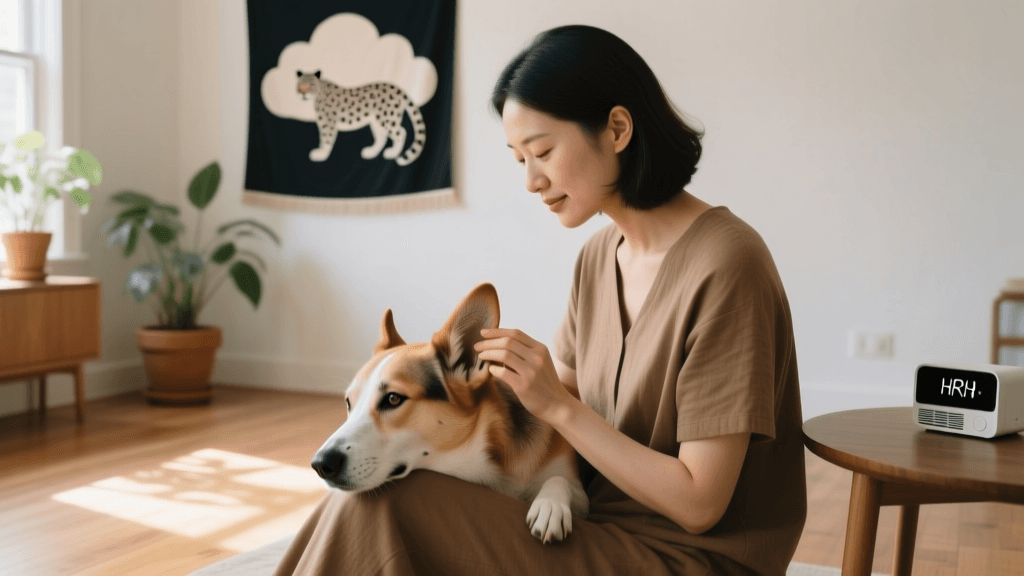
In 2026, the integration of biometric smart collars has allowed owners to quantify this bond. Advanced wearable devices now track Heart Rate Variability (HRV) in real-time. A higher HRV indicates a balanced autonomic nervous system and a state of relaxation. Many owners practicing TTouch report seeing their dog’s HRV metrics improve dramatically within minutes of beginning an Ear Stroke or Clouded Leopard session, providing empirical proof of the deep physiological connection between human intent and canine wellbeing.
Core Tellington TTouch Techniques for Deep Bonding
To harness the full health and relationship-building benefits of TTouch, it is essential to move beyond standard stroking. The methodology relies on specific pressure, speed, and intention. Below are three foundational techniques that are highly effective for anxious, reactive, or rescue dogs.
1. The Clouded Leopard
The Clouded Leopard is the cornerstone of TTouch. It involves using the pads of your fingers to make slow, deliberate, one-and-a-quarter circles on the dog’s skin. The key is to move the skin over the underlying tissue, rather than simply sliding your fingers over the coat. Apply gentle pressure—imagine you are moving the skin over a ripe tomato without bruising it. This technique stimulates the nerve endings just beneath the skin, sending calming signals to the brain and helping dogs who are "touch-sensitive" or defensive to accept physical contact in a non-threatening way.
2. The Ear Stroke (Ear TTouch)
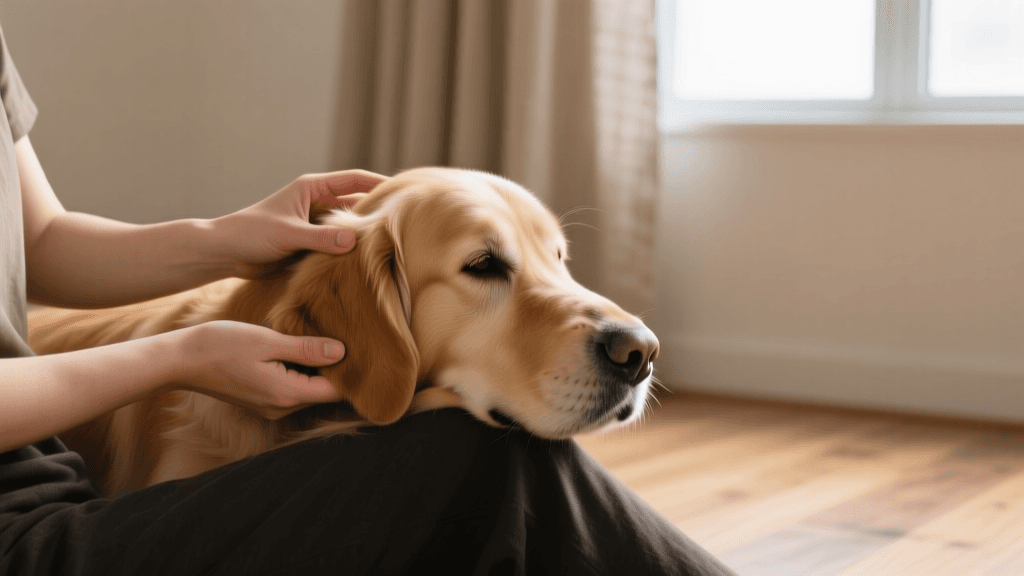
The ears are rich in acupressure points connected to the vagus nerve, which governs the parasympathetic nervous system. The Ear Stroke is arguably the most powerful technique for acute anxiety, thunderstorm phobias, or vet-visit stress. Gently hold the base of the dog’s ear between your thumb and forefinger. Slowly slide your fingers outward toward the tip of the ear, applying a very light, consistent pressure. As noted in the official Tellington TTouch methodology, this specific stroke can induce a state of near-sedation in highly aroused dogs, making it an invaluable tool for relationship building during high-stress triggers.
3. The Python Lift
Named for the gentle but firm grip of a constrictor, the Python Lift involves gathering a fold of skin and underlying muscle, lifting it slightly away from the body, holding it for a few seconds, and releasing it slowly. This is exceptionally beneficial for dogs carrying tension in their topline, shoulders, or hindquarters due to fear-based posturing. By physically releasing the fascial tension, you signal to the dog’s brain that it is safe to let go of their defensive armor, deepening their trust in your handling.
TTouch Techniques: Health and Bonding Comparison
| Technique | Target Area | Primary Health Benefit | Bonding Impact |
|---|---|---|---|
| Clouded Leopard | Back, Sides, Neck | Reduces superficial nerve hypersensitivity; lowers heart rate. | Builds trust in dogs that flinch at standard petting. |
| Ear Stroke | Pinna (Ear Flap) | Stimulates vagus nerve; mitigates acute panic and shock. | Creates a profound "safe space" association with the handler. |
| Python Lift | Shoulders, Topline, Hips | Releases deep fascial tension; improves proprioception. | Encourages physical vulnerability and reliance on the owner. |
| Lying Leopard | Chest, Belly, Flanks | Aids digestion; promotes deep diaphragmatic breathing. | Fosters intimacy and co-regulation during rest periods. |
Building a 15-Minute Evening Bonding Routine
Consistency is the bedrock of relationship building. Establishing a predictable, calming routine signals to your dog that they are safe, which is especially critical for rescue dogs with unknown trauma histories. Here is a structured 15-minute evening routine designed to transition your dog from the high stimulation of the day into restorative sleep.
Minutes 1-3: The Grounding Phase. Sit on the floor with your dog. Avoid direct eye contact, which can be perceived as confrontational by anxious dogs. Begin with long, slow strokes down the back to establish a baseline of comfort. Take deep, audible breaths yourself; dogs are highly attuned to human respiration and will often mirror your breathing patterns.
Minutes 4-10: The Clouded Leopard Application. Transition to the Clouded Leopard technique. Start at the shoulders and work your way down the spine and sides. Move at a pace of about one circle every two seconds. If your dog leans into your hand or lets out a long sigh, you have successfully tapped into their parasympathetic response. If they move away, reduce the pressure and slow your pace.
Minutes 11-14: The Ear Stroke. As your dog begins to settle, gently incorporate the Ear Stroke. Work on one ear at a time, sliding from the base to the tip. This is the optimal time to practice co-regulation. Close your eyes, focus on your own heartbeat, and allow the shared stillness to reinforce your bond.
Minute 15: The Release. Slowly withdraw your hands. Allow your dog to remain in their resting state without immediately asking them to perform a command or get up. This respect for their physical boundaries reinforces that your touch is a source of comfort, not a demand for compliance.
Measuring the Bond: Smart Collars and HRV Tracking
The year 2026 has brought remarkable advancements in canine biometric tracking. Smart collars equipped with photoplethysmography (PPG) sensors can now accurately track a dog’s Heart Rate Variability (HRV) and resting respiratory rate. For owners dedicated to the Bonding and Relationship Building aspect of holistic health, these metrics are invaluable.
By reviewing your dog’s biometric data via companion apps, you can identify exactly which TTouch techniques yield the highest spike in HRV (indicating deep relaxation). If you notice that the Python Lift on the shoulders consistently lowers your dog's resting heart rate by 10-15 beats per minute, you can tailor your bonding sessions to focus on that area. Furthermore, tracking these metrics over weeks and months provides objective data to share with your veterinary behaviorist, proving the efficacy of your tactile therapy in managing conditions like separation anxiety or noise phobias.
Troubleshooting Touch Aversion and Building Trust
Not all dogs are immediately receptive to massage, particularly those with histories of abuse or chronic pain. If your dog exhibits whale eye, lip licking, yawning, or attempts to leave the area, it is crucial to respect their boundaries. Forcing physical contact will actively damage the bond and reinforce their anxiety.
Instead, utilize a concept known as the "consent test." Offer your hand near the dog’s shoulder and perform a single, gentle Clouded Leopard circle, then withdraw your hand and observe. If the dog leans in, nudges you, or remains relaxed, you have consent to continue. If they look away, freeze, or move off, the session is over. As highlighted in resources provided by the Humane Society regarding dog behavior issues, allowing the dog to dictate the pace of physical interaction is fundamental to overcoming touch aversion. Over time, as the dog learns that they have agency and that you will respect their "no," their willingness to engage in TTouch will naturally expand, leading to a much deeper, trust-based relationship.
Conclusion
Tellington TTouch is far more than a massage technique; it is a sophisticated language of physical communication that bridges the gap between human intention and canine nervous system regulation. By incorporating the Clouded Leopard, Ear Stroke, and Python Lift into your daily routine, and by leveraging 2026’s biometric tracking technology to monitor your dog’s physiological responses, you can actively dismantle anxiety and build an unbreakable bond. In the realm of canine health and wellbeing, the most powerful tool you possess is not a supplement or a pharmaceutical—it is your mindful, intentional touch.
jonas-cole
All our authors care for dogs every day — read more of their work on the authors page.