Top Quiet Apartment Dogs: 2026 Health & Wellness Guide
Discover the best quiet dog breeds for apartments in 2026. Learn essential health, joint care, and mental enrichment tips for low-vocalization city dogs.
Why Choose a Quiet Breed for Apartment Living?
Urban living in 2026 means closer quarters, stricter HOA noise policies, and a premium on peace and quiet. For dog owners in high-density apartments, selecting a low-vocalization breed is often the first step toward a harmonious living situation. However, choosing a quiet dog is only the beginning. The true challenge lies in addressing the specific health and wellbeing needs of these companions within a confined space. While they may not bark at every passing siren or neighbor, quiet breeds often harbor unique physical and psychological requirements that, if ignored, can lead to chronic stress, obesity, and joint deterioration.
According to the American Kennel Club, the best apartment dogs are not necessarily just the smallest dogs, but those with adaptable temperaments and lower indoor energy levels. Yet, lower indoor energy must be carefully balanced with targeted health routines to prevent the onset of sedentary-related diseases. This comprehensive 2026 guide explores the intersection of breed-specific health profiles and apartment-friendly wellness routines, ensuring your quiet companion thrives in a small-space environment.
Top Quiet Dog Breeds and Their Unique Health Profiles
Not all quiet dogs share the same physiological traits. Understanding the specific vulnerabilities of your breed is critical for preventative care in an apartment setting.
The Greyhound: The 45-MPH Couch Potato
Greyhounds are famously quiet and docile indoors, making them surprisingly excellent apartment dogs despite their large size. However, their unique physiology requires specific care. Greyhounds have incredibly low body fat and thin skin, meaning they are highly susceptible to temperature fluctuations and pressure sores. In an apartment, it is vital to provide thick, orthopedic bedding to protect their bony prominences from hard floors. Furthermore, their deep chests put them at risk for Gastric Dilatation-Volvulus (GDV), or bloat. Feeding them using a slow-feeder bowl and enforcing a strict rest period after meals is a non-negotiable wellness routine.
The Cavalier King Charles Spaniel: Affectionate but Fragile
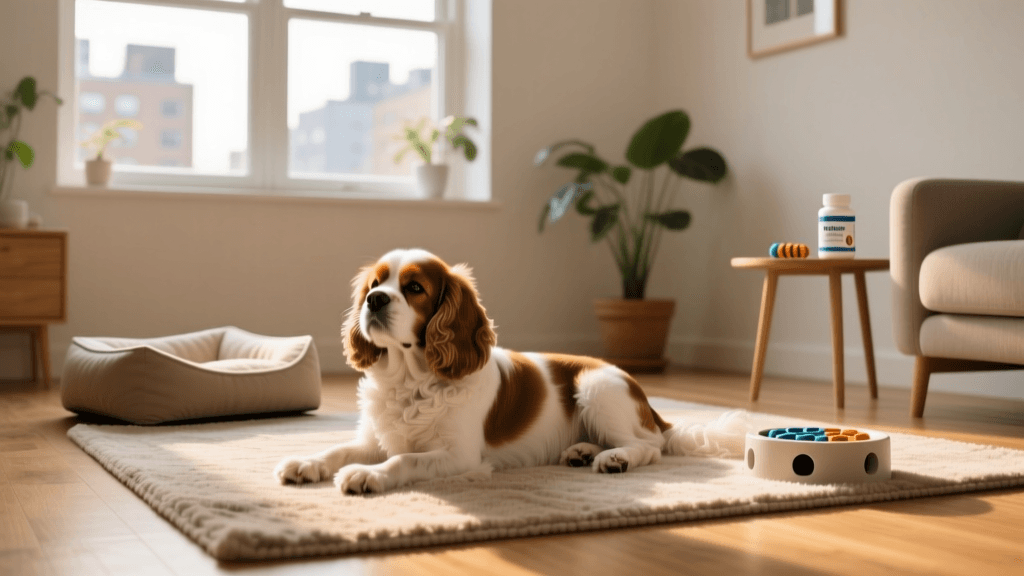
Cavaliers are exceptionally quiet, gentle, and adaptable to small spaces. Unfortunately, they are predisposed to severe health issues, most notably Mitral Valve Disease (MVD) and Syringomyelia (SM). Because apartment living limits vigorous running, Cavaliers can easily become overweight, which exacerbates the strain on their compromised hearts and joints. Wellness routines for Cavaliers in 2026 must focus on strict caloric restriction, low-impact leash walking, and regular veterinary cardiac screenings starting as early as two years of age.
The Basset Hound: Low-Slung and Prone to Back Issues
Basset Hounds are scent hounds that are surprisingly quiet and lethargic indoors. Their heavy bone structure and short legs make them prone to Intervertebral Disc Disease (IVDD) and severe obesity. In a multi-story apartment building, navigating stairs can be devastating to a Basset's spine. Owners must utilize pet ramps or carry their Bassets up and down common area stairwells. Maintaining a lean body condition score is the single most effective way to protect their orthopedic health in a limited-square-footage home.
The Basenji: The Barkless Dog with High Mental Needs
Famous for being the 'barkless dog' (they yodel or 'roo' instead), Basenjis are fastidious and quiet. However, their high prey drive and intelligence mean they are prone to destructive anxiety if under-stimulated. A bored Basenji in an apartment will not necessarily bark, but they will chew through drywall or ingest toxic household items. Mental wellness is just as critical as physical health for this breed.
2026 Wellness Comparison Chart for Apartment Dogs
To help you tailor your dog's care, here is a structured comparison of the wellness requirements for these top quiet breeds in an apartment setting.
| Breed | Primary Health Risk | Daily Apartment Exercise | Recommended 2026 Wellness Tech |
|---|---|---|---|
| Greyhound | Bloat (GDV) & Pressure Sores | Two 20-min brisk walks | Smart slow-feeder bowls, heated orthopedic mats |
| Cavalier King Charles Spaniel | Mitral Valve Disease & Obesity | Three 15-min low-impact strolls | Automated portion-control microchip feeders |
| Basset Hound | IVDD & Joint Degeneration | Two 25-min scent-sniffing walks | Telescoping pet ramps, joint-support supplement dispensers |
| Basenji | Destructive Anxiety & Fanconi Syndrome | One 45-min run + indoor puzzles | Interactive smart puzzle cameras, automatic laser toys |
Protecting Joint Health on Hardwood Floors
One of the most overlooked hazards of modern 2026 apartment builds is the prevalence of polished hardwood, laminate, or luxury vinyl plank flooring. While aesthetically pleasing and easy to clean, these slippery surfaces are a nightmare for canine orthopedic health. When a dog slips, even microscopically, it causes repetitive strain on the hip, knee, and shoulder joints. Over time, this accelerates the development of osteoarthritis, particularly in low-slung breeds like Basset Hounds or large, thin breeds like Greyhounds.
To mitigate this, apartment dwellers must create 'traction zones.' Utilize interlocking high-density foam mats or low-pile, non-slip area rugs in high-traffic areas, particularly near the dog's bed, water bowl, and entryway. If your dog is recovering from a spinal issue or surgery, veterinary physical therapists recommend covering at least 70% of the dog's accessible floor space with traction-enhancing materials. Additionally, keeping the hair between your dog's paw pads trimmed every three weeks significantly improves their natural grip on smooth surfaces.
Mental Enrichment: Preventing Silent Stress
A common misconception is that a quiet dog is a content dog. In reality, many low-vocalization breeds internalize their stress and anxiety. Without an outlet, this silent stress manifests as compulsive behaviors, such as excessive paw licking (which can lead to pododermatitis), flank sucking, or chronic gastrointestinal upset. The ASPCA emphasizes that mental stimulation is just as tiring and necessary for a dog as physical exercise.
In an apartment where space for fetch or running is nonexistent, mental enrichment becomes your primary tool for wellbeing. Incorporate the following into your daily 2026 routine:
- Scent Work and Snuffle Mats: Hiding kibble in a dense snuffle mat engages a dog's olfactory system, burning mental energy and lowering their heart rate.
- Lick Mats and Frozen Enrichment: Spreading dog-safe yogurt or bone broth on a textured silicone mat and freezing it provides a soothing, endorphin-releasing activity that is entirely silent and perfect for apartment evenings.
- Shaping Games: Use a clicker to teach complex, low-movement tricks like 'chin rest,' 'target,' or 'hold.' This builds confidence and strengthens the human-animal bond without requiring square footage.
Weight Management in Limited Square Footage
Obesity is a pervasive crisis in urban dog populations. In a large home with a yard, a dog might accrue thousands of incidental steps throughout the day simply by moving between rooms, checking the window, or following their owner. In a 600-square-foot apartment, incidental movement is virtually zero. This sedentary baseline means that even a slight overfeeding will rapidly result in weight gain.
The American Veterinary Medical Association notes that excess weight exacerbates almost every chronic condition in dogs, from cardiovascular disease to osteoarthritis. To combat the 'apartment calorie trap,' owners must transition away from free-feeding or generic measuring cups. In 2026, the gold standard for apartment dog weight management is the use of smart, microchip-activated feeders that dispense food down to the exact gram based on your dog's calculated resting energy requirement (RER). Furthermore, swapping out high-carbohydrate training treats for single-ingredient freeze-dried proteins or pieces of your dog's daily kibble allowance ensures that training sessions do not inadvertently tip the caloric scale.
Conclusion
Living in an apartment with a quiet dog breed offers a peaceful, deeply rewarding companionship. However, the absence of noise should never be mistaken for the absence of need. By proactively managing joint health on slippery floors, prioritizing deep mental enrichment, and strictly controlling caloric intake, you can ensure your low-vocalization companion lives a vibrant, pain-free, and psychologically fulfilled life. As urban spaces continue to evolve, adapting our wellness routines to meet the specific biological needs of our quiet friends remains the ultimate hallmark of responsible, modern dog ownership.
hannah-wickes
All our authors care for dogs every day — read more of their work on the authors page.