Step-by-Step Guide to Teaching Your Dog the Place Command
Learn how to teach your dog the place command with this step-by-step guide. Create a calmer home and manage daily routines with ease.
Mastering the 'Place' Command: A Step-by-Step Training Guide
Sharing your life with a dog brings immense joy, but it also requires establishing boundaries and routines that keep both you and your furry companion happy. One of the most practical and transformative skills you can teach your dog is the 'place' command. Also known as 'go to your bed' or 'settle,' this cue instructs your dog to go to a specific mat or bed and remain there until released. Whether you are cooking dinner, hosting guests, or simply need a moment of peace, the place command is an indispensable tool for modern dog ownership. In this comprehensive guide, we will break down the exact steps, timing, and equipment needed to train this behavior successfully.
Why the 'Place' Command is Essential for Daily Life
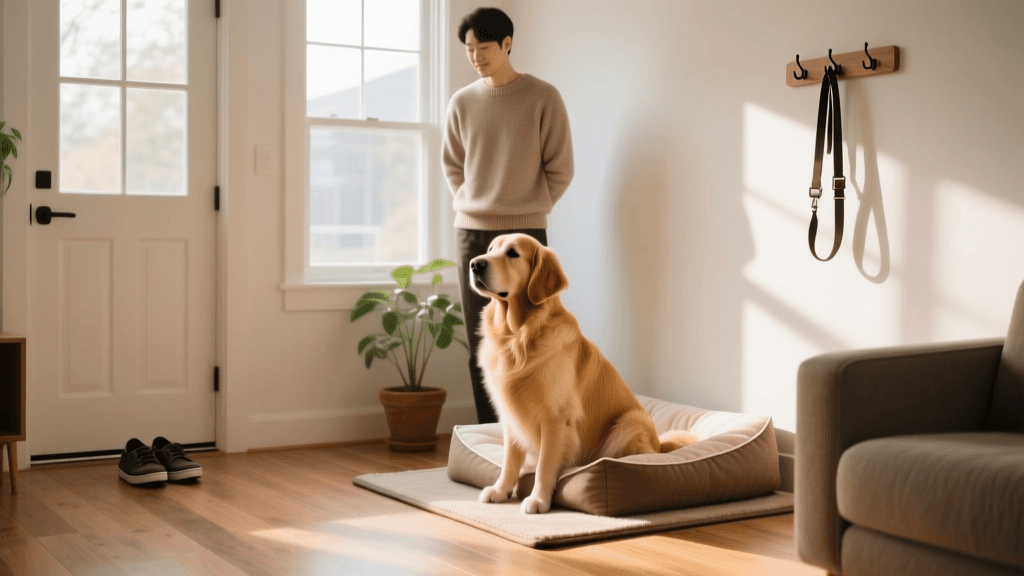
Unlike the 'sit' or 'down' commands, which dictate a strict physical posture, the 'place' command dictates a location. Your dog can sit, stand, lie down, or stretch out on their mat, as long as all four paws remain on the designated spot. According to the Humane Society of the United States, teaching your dog a designated settling spot helps reduce anxiety, prevents begging at the dinner table, and keeps them safely out of the way during high-traffic moments in your home. It gives your dog a 'job' to do, which is especially beneficial for high-energy breeds or multi-pet households where chaos can easily erupt. By providing a predictable safe zone, you empower your dog to make calm choices independently.
What You Need to Get Started
Before beginning your training sessions, gather the right equipment. You will need a distinct mat, high-value treats, a clicker (optional but recommended), and a release cue. When selecting a mat, consider your dog's size, chewing habits, and your home's layout. A good rule of thumb is to choose a mat roughly 24x36 inches for medium-to-large breeds, ensuring they have enough room to stretch out comfortably without hanging off the edges.
| Mat Type | Best For | Average Cost | Pros & Cons |
|---|---|---|---|
| Flat Plush Mat | Small breeds, calm dogs | $15 - $30 | Pros: Portable, machine washable. Cons: Easily destroyed by chewers, lacks clear boundaries. |
| Elevated Cot (e.g., Coolaroo) | Active dogs, warm climates | $30 - $60 | Pros: Highly durable, breathable, defines clear physical boundaries. Cons: Bulky to travel with. |
| Orthopedic Bed (e.g., Kurgo) | Senior dogs, joint issues | $50 - $120 | Pros: Maximum comfort, supportive for aging joints. Cons: Expensive, heavy, harder to clean. |
For treats, opt for soft, highly palatable options like Zuke's Mini Naturals or boiled chicken breast. Cut them into pea-sized pieces (roughly 1/4-inch cubes) so your dog can consume them quickly without getting full or distracted by chewing. You want to maintain a high rate of reinforcement during the initial learning phases.
Step 1: Introducing the Mat (Days 1-3)
The goal of the first step is to build a strong positive association with the mat. Place the mat on the floor in a quiet room with minimal distractions. The moment your dog looks at the mat, click your clicker or say 'Yes!' and toss a treat directly onto the mat. If your dog steps onto the mat to get the treat, reward them heavily with three to four treats in quick succession. Repeat this 10 to 15 times per session, keeping sessions short (under 5 minutes) to maintain enthusiasm. If your dog lies down on the mat voluntarily, throw a 'jackpot' of 5-10 treats to reinforce that settling on the mat is highly rewarding. Do not add any verbal cues during this phase; let the dog figure out that interacting with the mat yields delicious results.
Step 2: Adding the Verbal Cue (Days 4-7)
Once your dog is reliably stepping onto the mat to receive treats, it is time to attach the verbal cue. As your dog is moving toward the mat, clearly say 'Place' or 'Go to your bed.' Reward them the moment all four paws are on the mat. Practice this from different angles and distances within the same room. Gradually phase out tossing the treat onto the mat; instead, hand the treat directly to your dog while they are standing or sitting on the mat. This encourages them to stay on the bed rather than jumping off to chase a thrown treat. Keep your timing precise: the treat must be delivered within 1 second of the desired behavior to ensure the dog understands exactly what they are being rewarded for.
Step 3: Building Duration and Distance (Weeks 2-3)
Now that your dog understands where to go, you must teach them to stay there. Start by asking your dog to go to their place. Once they are on the mat, wait 3 seconds before giving a treat. Gradually increase the time interval: 5 seconds, 10 seconds, 30 seconds, and eventually 1 minute. If your dog breaks the command and leaves the mat, calmly guide them back without offering a treat, and reset your timer to a shorter duration where they can succeed.
Pro Tip: The ASPCA emphasizes that consistency is key in dog training. Always use the same release word, such as 'Free' or 'All Done,' to signal that the training exercise is over and your dog is allowed to leave the mat.Once your dog can hold the 'place' command for 60 seconds while you stand nearby, begin taking one step back. Return and reward. Slowly increase your distance, eventually walking out of the room for a few seconds before returning to reward. Never call your dog off the mat; always return to the mat to deliver the reward, or use your release word to let them come to you.
Step 4: Proofing the Behavior in Real-Life Scenarios (Week 4 and Beyond)
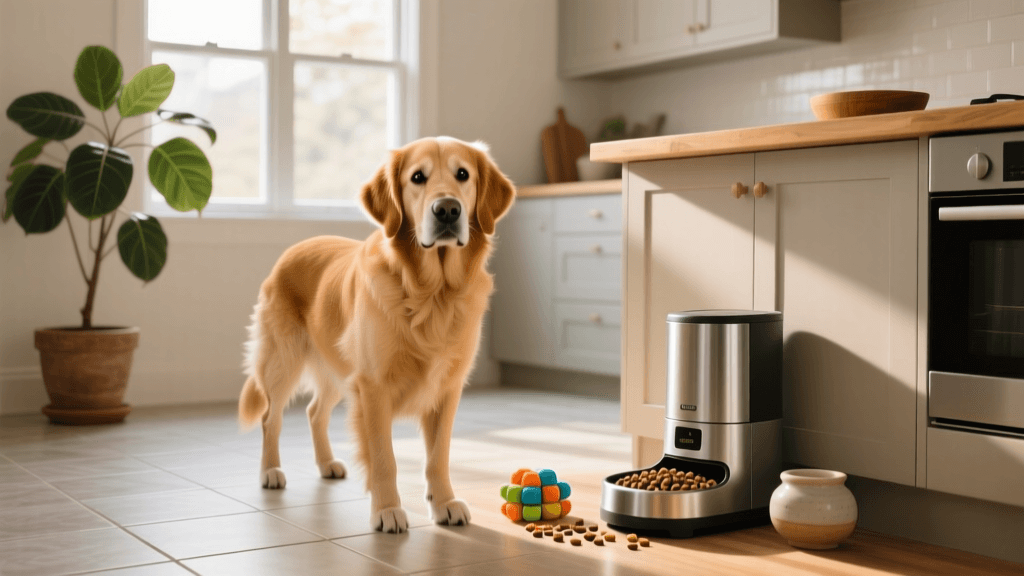
A command is only useful if it works amid real-life distractions. Begin 'proofing' the behavior by introducing mild distractions. Drop a toy nearby, have a family member walk past, or pretend to eat a snack. If your dog stays on their mat, reward them generously. Next, move the mat to different rooms in the house, such as the kitchen or the living room. For example, if you have a multi-pet household, feeding time can be chaotic. Place your dog's mat in the corner of the kitchen. Ask them to 'Place' while you prepare the bowls. Reward them periodically for remaining calm while the other pets are eating. This not only prevents food aggression but also establishes a peaceful dining routine. Similarly, when guests arrive, having your dog on their mat prevents jumping and excessive barking at the door. You can provide a long-lasting chew, like a bully stick or a frozen Kong stuffed with peanut butter, to keep them occupied on their mat for 20 to 30 minutes while you catch up with your visitors.
Common Mistakes and Troubleshooting
- Moving too fast: If your dog is failing, you are likely increasing the duration or distance too quickly. Go back to the last successful step and build up more gradually.
- Using the mat for punishment: Never send your dog to their place as a time-out or scolding. The mat must always be associated with positive experiences, relaxation, and rewards.
- Repeating the cue: Say 'Place' only once. If you repeat it ('Place, place, place!'), your dog will learn to ignore the first command and wait for the third.
- The 'Creeping' Dog: Some dogs will slowly inch their way off the mat while maintaining a down position. To fix this, clearly define the boundaries. An elevated cot like the Coolaroo is excellent for this, as the physical frame provides a tactile boundary that your dog can easily feel. If using a flat mat, place it against a wall during early training phases.
- Forgetting the release cue: If you do not formally release your dog, they will eventually decide for themselves when to get up, which undermines the training.
Final Thoughts
Teaching your dog the 'place' command requires patience, consistency, and high-value rewards, but the payoff is a more harmonious household. By giving your dog a clear boundary and a comfortable spot to observe the world, you reduce their stress and improve your daily routine. As noted by the American Veterinary Medical Association (AVMA), structured training and clear communication are foundational to a strong human-animal bond. Stick to the steps, keep your training sessions positive, and soon your dog will be racing to their mat the moment you say the word.
beth-carrasco
All our authors care for dogs every day — read more of their work on the authors page.