Beat Canine Obesity: Portion Control and Enrichment
Discover how to manage your dog's weight through precise portion control, caloric math, and daily enrichment feeders for a healthier, happier life.
The Hidden Epidemic in Our Living Rooms
When we think of sharing our lives with dogs, we often picture long hikes, playful afternoons at the park, and cozy evenings on the couch. However, a silent crisis is undermining the health and longevity of our canine companions: obesity. According to the Association for Pet Obesity Prevention, over 50% of dogs in the United States are classified as overweight or obese. This excess weight is not merely a cosmetic issue; it is a profound health risk that exacerbates osteoarthritis, increases the likelihood of type 2 diabetes, compromises respiratory function, and can shave up to two years off a dog's lifespan.
Managing a dog's weight within the context of a busy daily routine requires more than simply scooping less kibble into a bowl. It demands a strategic approach that combines precise nutritional mathematics with behavioral enrichment. By transforming mealtime from a passive, two-second event into an engaging, calorie-burning activity, you can help your dog achieve a healthy weight while simultaneously reducing boredom-related behavioral issues.
The Mathematics of Mealtime: Calculating True Caloric Needs
The most common mistake dog owners make is relying on the feeding guidelines printed on the back of a kibble bag. These guidelines are often generalized and can overestimate a dog's caloric needs by as much as 30%, especially for spayed or neutered indoor dogs. To truly manage your dog's weight, you must calculate their specific Daily Energy Requirement (DER).
Experts at the Tufts University Cummings Veterinary Medical Center recommend starting with the Resting Energy Requirement (RER). The formula is: RER = 70 x (Body Weight in kg)^0.75. Once you have the RER, you multiply it by a specific factor based on your dog's life stage and weight loss goals. For a dog needing to lose weight, the multiplier is typically 1.0 x RER (target weight) or 0.8 x RER (current weight).
Let us look at a practical example. Imagine a 30-pound (13.6 kg) neutered Beagle named Barnaby who needs to lose weight. His current RER is roughly 530 kcal per day. If his ideal weight is 25 pounds (11.3 kg), his target RER is 455 kcal per day. To induce weight loss, his daily caloric intake should be capped at around 455 calories. If his chosen weight-management kibble contains 320 calories per cup, Barnaby should receive exactly 1.42 cups of food per day. Measuring this with a standard 8 oz baking cup is highly inaccurate; investing in a $15 digital kitchen scale to weigh his food in grams is a game-changer for precision.
Ditching the Bowl: Enrichment Feeders for Weight Loss
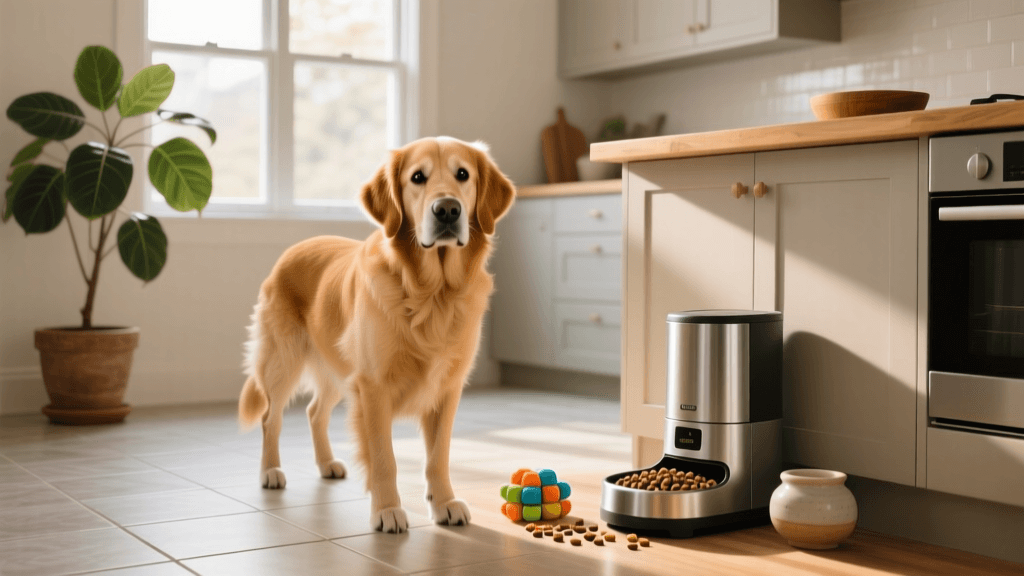
In the wild, canines spend up to 80% of their waking hours foraging and hunting for food. In our living rooms, they are handed a bowl of highly palatable, extruded kibble that vanishes in seconds. This mismatch leads to rapid eating, poor digestion, and persistent begging. Enrichment feeders solve this by forcing dogs to use their brains and paws to extract their daily calories, effectively turning mealtime into a physical and mental workout.
Below is a comparison of top-tier enrichment feeders ideal for weight management routines:
| Product Name | Type | Difficulty | Avg Cost | Best For |
|---|---|---|---|---|
| Kong Classic (Red) | Stuffable Rubber Toy | Beginner to Intermediate | $15 - $18 | Dogs who chew; freezing kibble mixed with low-sodium bone broth for extended licking time. |
| Outward Hound Nina Ottosson Dog Brick | Interactive Puzzle Board | Intermediate | $25 - $30 | Smart breeds (e.g., Poodles, Border Collies) that need to slide and flip compartments to find dry kibble. |
| West Paw Toppl | Interlocking Treat Toy | Beginner | $20 - $24 | Senior dogs or dogs with dental issues; the wide opening allows for easy extraction of soaked kibble. |
| Wool Snuffle Mat | Foraging Mat | Beginner | $25 - $35 | Fast eaters and scent hounds (e.g., Beagles, Basset Hounds) who need to sniff out every single piece of kibble. |
By rotating these tools, you prevent your dog from becoming bored and ensure they are consistently challenged. A 15-minute prep session on Sunday evening—stuffing and freezing three Kongs and pre-portioning puzzle toys into ziplock bags—can save you immense time during a hectic workweek.
A Practical Daily Routine for Weight Management
Integrating portion control and enrichment into a busy schedule requires a structured routine. Here is a practical, actionable daily schedule for a working owner managing a dog's weight loss:
Morning Routine (6:30 AM)
Instead of a quick bowl dump, serve breakfast in a Snuffle Mat or a Dog Brick puzzle. This forces the dog to forage for 10 to 15 minutes while you get ready for work. The mental stimulation tires them out, promoting calm behavior and reducing separation anxiety once you leave the house.
Mid-Day Enrichment (12:00 PM)
If you use a dog walker or come home for lunch, offer a frozen Kong Classic filled with 10% of their daily kibble allowance, soaked in water or low-sodium chicken broth and frozen solid. Licking is a naturally soothing behavior for dogs, and the frozen matrix ensures this snack lasts for 20 minutes, keeping them occupied and hydrated.
Evening Training and Dinner (6:00 PM)
Use 20% of your dog's daily measured kibble as training rewards during a 15-minute obedience or trick-training session. This reinforces your bond, burns physical energy, and ensures they are working for their food. The remaining 70% of their daily calories can be served in a slow-feeder bowl or a West Paw Toppl during your own dinner time to prevent begging.
The 10% Treat Rule and Low-Calorie Swaps
The most common point of failure in any canine weight loss program is unaccounted treats. Veterinary nutritionists universally recommend the '10% Rule': treats and chews should never constitute more than 10% of a dog's total daily caloric intake. For our 30-pound Beagle on a 455-calorie diet, that means a strict treat budget of just 45 calories per day. A single standard commercial biscuit can contain up to 40 calories, blowing the budget in one bite.
To maintain training motivation without derailing weight loss, swap high-calorie commercial treats for whole, dog-safe foods. Here is a structured list of high-volume, low-calorie swaps:
- Baby Carrots (4 kcal each): Excellent for crunch and dental health. Serve raw or lightly steamed.
- Green Beans (2 kcal per bean): Use plain, canned (no salt added) or fresh steamed beans. High in fiber, which promotes a feeling of fullness.
- Blueberries (1 kcal per berry): Packed with antioxidants and perfect for rapid-fire training rewards.
- Apple Slices (10 kcal per slice): Sweet and crunchy. Always remove the core and seeds, which contain trace amounts of cyanide.
- Cucumber Slices (2 kcal per slice): Extremely hydrating and virtually guilt-free for dogs who love to crunch.
By keeping a prep container of these low-calorie options in your fridge, you eliminate the temptation to reach for the calorie-dense treat jar when your dog gives you those pleading eyes.
Monitoring Progress: The Body Condition Score
While the bathroom scale is a useful tool, it does not tell the whole story. Muscle weighs more than fat, and a dog's ideal weight can fluctuate based on their age and activity level. This is why the World Small Animal Veterinary Association (WSAVA) champions the use of the Body Condition Score (BCS). The BCS is a visual and tactile assessment tool, typically on a 1-to-9 scale, where 4 or 5 is considered ideal.
To perform a BCS check at home every two weeks, follow these steps:
- The Rib Test: Run your hands along your dog's sides. You should be able to easily feel their ribs without pressing hard, much like feeling the knuckles on the back of your hand. If you have to press through a layer of fat, their BCS is too high.
- The Waist Check: Look at your dog from above. There should be a clear, defined hourglass waist tucking in behind the ribcage.
- The Abdominal Tuck: Look at your dog from the side. The abdomen should tuck up neatly behind the ribcage, not hang down parallel to the floor.
Weigh your dog every two weeks using the same scale, at the same time of day, and log the data alongside their BCS. If your dog is not losing 1% to 2% of their body weight per week, reduce their daily caloric intake by 10% and reassess in a fortnight.
Conclusion: A Lifestyle, Not a Diet
Beating canine obesity is rarely about putting a dog on a temporary 'diet'; it is about fundamentally shifting how you interact with your pet regarding food and exercise. By embracing the mathematics of caloric needs, replacing passive bowls with engaging enrichment feeders, and utilizing low-calorie whole foods for training, you transform weight management into a rewarding daily routine. The result is not just a leaner dog, but a more stimulated, fulfilled, and vibrant companion ready to share a longer, healthier life with you.
anouk-beaumont
All our authors care for dogs every day — read more of their work on the authors page.