Force-Free Emergency Recall Training 2026: Target Stick Guide
Master force-free emergency recall in 2026 using target sticks and marker cues. Learn step-by-step positive reinforcement techniques for reliable returns.
The Evolution of Force-Free Recall in 2026
Welcome to the definitive guide on force-free emergency recall training. As we navigate dog ownership and behavioral conditioning in 2026, the paradigm has shifted entirely away from aversive methods, such as electronic shock collars or prong collars, toward scientifically backed, positive reinforcement (R+) protocols. An emergency recall is arguably the most critical behavior a dog can learn, potentially saving their life in dangerous situations. However, teaching a dog to abandon a high-value distraction—like a chasing a squirrel or running toward an open gate—requires immense motivation and crystal-clear communication.
According to the American Veterinary Society of Animal Behavior (AVSAB), reward-based training is not only more effective but also essential for safeguarding the psychological well-being of our canine companions. Force-free methods build a foundation of trust, ensuring that when your dog hears their recall cue, they associate it with a massive payout rather than a fear-based correction. In this comprehensive guide, we will explore how to utilize a highly specific, underutilized tool—the target stick—combined with marker cues to forge a bulletproof, joyful emergency recall.
Why Use a Target Stick for Recall Training?
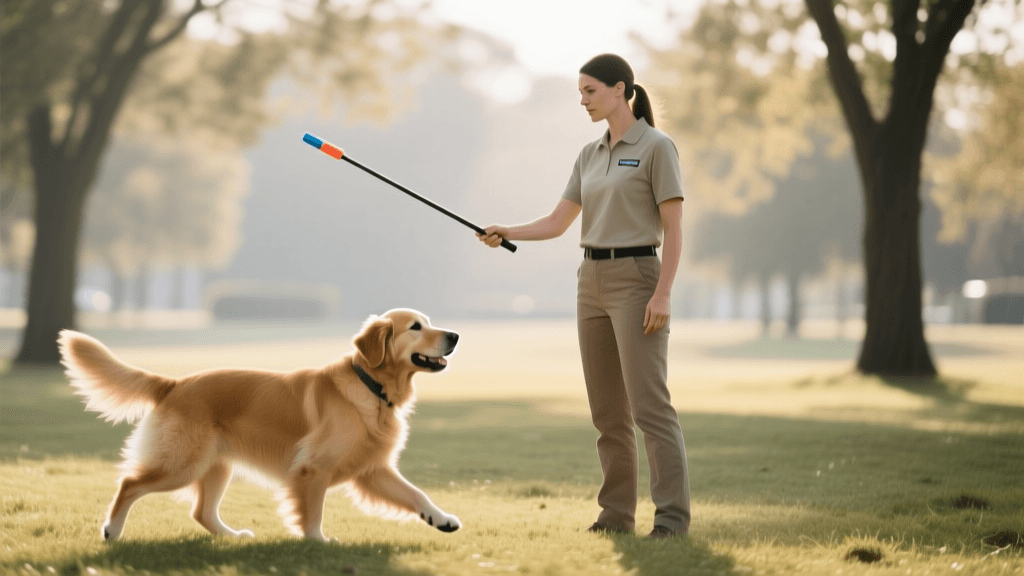
When most owners think of recall training, they picture patting their legs and calling out a verbal cue. While this works in low-distraction environments, it often fails in high-stakes scenarios. A target stick is a telescopic wand with a small, brightly colored ball or knob at the end. It serves as a tangible, visual focal point for the dog.
In 2026, modern force-free trainers heavily rely on target training because it removes the ambiguity of a verbal command. Instead of asking the dog to figure out what "come" means while they are overwhelmed by environmental stimuli, you are presenting a clear, physical destination: touch the ball. This bridges the gap between the dog's current location and your side, turning the recall into a fun, interactive game rather than a chore. Furthermore, the telescopic nature of the stick allows you to guide the dog precisely into your grasp or into a harness clip without leaning over them, which many dogs find intimidating.
Essential Tools for Modern Force-Free Training
Before beginning your training sessions, ensure you have the following high-quality, force-free tools:
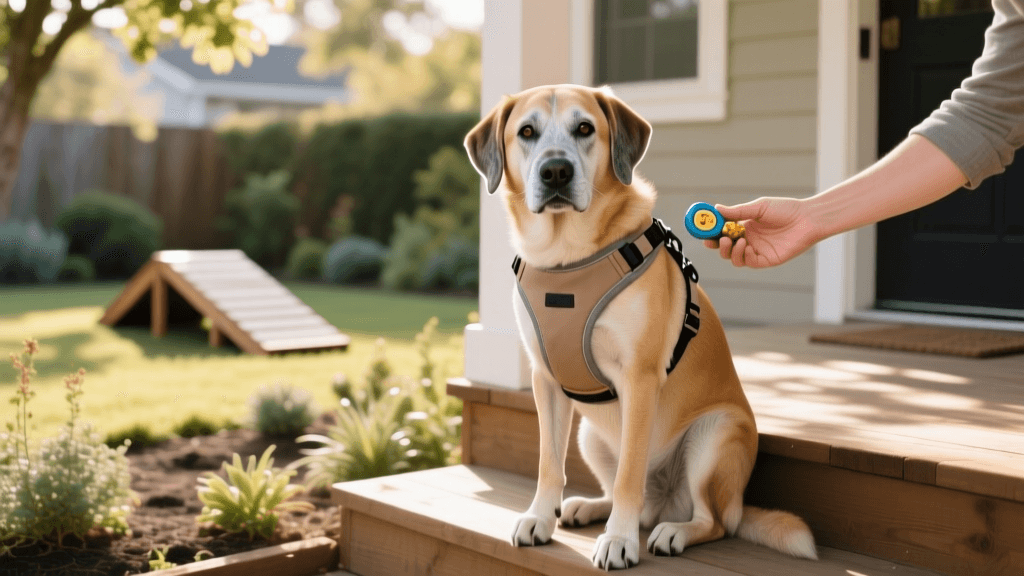
- Telescopic Target Stick: Look for a lightweight, durable stick with a brightly colored tip. The Karen Pryor Clicker Training Target Stick is a gold standard in the industry, featuring a built-in clicker and a retractable design for easy carrying.
- Primary Marker: A mechanical clicker or a consistent verbal marker (like a sharp, upbeat "Yes!"). The marker tells the dog the exact millisecond they have performed the correct behavior.
- High-Value Rewards: In 2026, the market for premium, single-ingredient training treats is vast. Freeze-dried beef lung, boiled chicken breast, or Zuke's Mini Naturals are excellent choices. For an emergency recall, the reward must be in the top tier of your dog's preference hierarchy.
- Biothane Long Line (15-30 feet): A waterproof, durable long line allows you to practice distance recalls safely without resorting to the tension or corrections associated with retractable leashes.
Step-by-Step Target Stick Recall Protocol
Building a reliable recall requires breaking the behavior down into manageable, progressive steps. Never rush this process; foundation is everything.
Phase 1: Charging the Target
Start in a quiet, low-distraction room like your living room. Present the tip of the target stick a few inches from your dog's nose. Most dogs will naturally sniff the novel object. The exact millisecond their nose touches the ball, click your marker and immediately deliver a high-value treat. Repeat this 15-20 times until the dog is enthusiastically bumping the stick the moment it appears. You are not moving the stick yet; the dog must learn that the stick's presence means an opportunity for a reward.
Phase 2: Adding Movement and Duration
Once the dog reliably touches the stationary stick, begin to move it slightly before they touch it. Hold the stick a step away, requiring the dog to take a step forward to make contact. Click and treat. Gradually increase the distance in the room, encouraging the dog to follow the target stick for two, three, and then five steps. This mimics the physical act of a recall, teaching the dog to follow the visual cue over a distance.
Phase 3: Introducing the Verbal Cue
Now, integrate your chosen recall word (e.g., "Come," "Here," or "Touch"). Say the verbal cue just before you present the target stick. The sequence is: Verbal Cue -> Present Stick -> Dog Touches -> Click -> Treat. By pairing the verbal cue with the highly reinforced visual target, the verbal cue inherits the positive emotional response and predictive value of the target stick. As the American Kennel Club (AKC) notes, consistency in your verbal cues and reward timing is paramount for building a reliable response.
Phase 4: Distance, Distraction, and the Long Line
Move your training to a fenced yard or a secure park using your 30-foot biothane long line. Allow the dog to wander and sniff. Call your verbal cue, and if they do not immediately orient to you, present the target stick to guide them back. The moment they touch the stick, click, reward heavily, and release them back to play. This "Premack Principle" approach—using the opportunity to return to play as a secondary reward—makes the recall highly resilient in distracting environments.
2026 Target Stick Recall Progression Table
Use the following structured progression chart to track your dog's criteria for success. Do not move to the next phase until your dog is successful at least 80% of the time in the current phase.
| Training Phase | Distance | Distraction Level | Criteria for Success | Reward Type |
|---|---|---|---|---|
| 1. Charging | 0-1 feet | None (Indoors) | Nose touches ball immediately upon presentation | Standard Kibble / Low-Value |
| 2. Movement | 2-10 feet | Low (Quiet Room) | Dog follows moving stick for 3+ steps | Standard Kibble / Medium-Value |
| 3. Verbal Pairing | 10-15 feet | Medium (Fenced Yard) | Dog responds to verbal cue before stick is shown | High-Value (Chicken/Cheese) |
| 4. Long Line | 15-30 feet | High (Park/Trails) | Dog disengages from sniffing to return to handler | Jackpot (Multiple High-Value Treats) |
| 5. Emergency | Off-Leash (Safe Area) | Extreme (Squirrels/Dogs) | Immediate 180-degree turn and sprint to handler | Jackpot + Tug Play / Premack |
Troubleshooting Common Force-Free Recall Hurdles
Even with the best force-free methods, you may encounter roadblocks. Here is how to troubleshoot the most common issues in 2026:
- The Dog Bites the Stick: If your dog mouths or bites the target ball instead of touching it with their nose, you are likely clicking too late. Ensure your marker occurs the exact millisecond the nose makes contact. If they bite, simply retract the stick, wait three seconds, and present it again. Never yank the stick away, as this can trigger a game of keep-away.
- The Dog Ignores the Verbal Cue: If you say "Come" and the dog doesn't respond, do not repeat the word. Repeating a cue teaches the dog that the first command is optional. Instead, use your long line to gently guide them toward you, or present the target stick to prompt the behavior. You must protect the integrity of your verbal cue by ensuring it is only given when you can guarantee success.
- Poisoned Cues: If you have historically used your recall word to call your dog for something they dislike (like a bath, nail trims, or leaving the dog park), the cue is "poisoned." In this case, abandon the old word entirely and start fresh with a new cue (e.g., "Here" or "Recall") and a new visual marker like the target stick.
The Science Behind Positive Reinforcement Recall
The efficacy of target stick training and marker cues is deeply rooted in operant conditioning and neurobiology. When you use a clicker or a precise verbal marker, you trigger a dopamine release in the dog's brain. Dopamine is not just a "pleasure" chemical; it is a learning and motivation neurotransmitter. According to modern behavioral science and resources provided by Karen Pryor Clicker Training, marker training creates a "seeking" loop. The dog learns that their specific action (touching the target) controls the environment and produces predictable, positive outcomes.
By utilizing a target stick, you are providing a discriminative stimulus that cuts through the noise of a chaotic environment. In high-stress or high-distraction situations, a dog's prefrontal cortex (responsible for complex decision-making) can become overwhelmed. A simple, highly conditioned visual target bypasses this cognitive overload, appealing directly to the dog's conditioned motor responses and reward pathways.
Conclusion
Teaching an emergency recall does not require intimidation, force, or aversive equipment. By embracing the force-free methodologies championed by leading veterinary behaviorists in 2026, you can build a recall that is not only reliable but deeply joyful for your dog. The target stick serves as a bridge, turning a potentially stressful demand into an engaging, rewarding game. Remember to keep your training sessions short, your rewards incredibly high-value, and your patience boundless. With consistent practice, positive marker cues, and the structured progression outlined above, your dog will learn that returning to you is always the best choice they can make.
beth-carrasco
All our authors care for dogs every day — read more of their work on the authors page.