Adapting Obedience Training for Senior Dogs Safely
Learn how to safely adapt obedience training for senior dogs. Discover modified commands, joint-friendly gear, and cognitive enrichment for aging pets.

The Myth of the Untrainable Senior Dog
There is a pervasive and entirely false myth in the dog ownership community that you cannot teach an old dog new tricks. In reality, senior dogs are entirely capable of learning, adapting, and engaging in obedience training. However, the methods we use for a spry, two-year-old Border Collie are not appropriate for a ten-year-old Labrador Retriever navigating the golden years of life. When we approach training from a Senior and Aging Dog Care perspective, the goal shifts from high-energy compliance to cognitive maintenance, joint preservation, and deepening the human-animal bond.
As our canine companions age, their physical capabilities and cognitive processing speeds naturally change. According to the American Society for the Prevention of Cruelty to Animals (ASPCA), senior dogs often experience a slowdown in their daily routines, requiring adjustments in how we interact, exercise, and train them. Adapting your training regimen is not about lowering your standards; it is about honoring your dog's physical limitations while keeping their mind sharp and engaged.
Understanding Physical and Cognitive Limitations
Before modifying your training plan, it is crucial to understand the two primary hurdles aging dogs face: osteoarthritis and cognitive decline.
Osteoarthritis and Mobility Loss
Osteoarthritis is a degenerative joint disease that causes pain, stiffness, and reduced range of motion. The American College of Veterinary Surgeons (ACVS) notes that osteoarthritis is incredibly common in older dogs, often affecting the hips, knees, elbows, and spine. Asking an arthritic dog to perform repetitive 'sit-to-stand' exercises or drop into a 'down' position on a cold, hard floor is not just difficult for them; it is actively painful and can cause long-term joint damage.
Canine Cognitive Dysfunction (CCD)
Similar to dementia in humans, Canine Cognitive Dysfunction (CCD) affects a significant portion of the aging dog population. Symptoms include disorientation, altered sleep-wake cycles, house-soiling, and a decreased response to previously learned obedience cues. A dog that suddenly 'forgets' their recall command may not be being stubborn; they may be experiencing sensory decline or neurological changes that make processing verbal cues more difficult.
Core Command Modifications for Arthritic Dogs
To keep your senior dog engaged without causing physical distress, we must adapt standard obedience commands to accommodate reduced mobility.
The 'Sit' and 'Down' Commands
For a dog with hip dysplasia or severe arthritis, the mechanical act of folding their hindquarters into a sit can be agonizing. Instead of demanding a traditional sit on a hard surface, utilize an elevated, supportive surface. Invest in a raised orthopedic cot or a firm foam platform (approximately 4 to 6 inches off the ground). Teach your dog to 'place' or 'settle' on the cot. The slight elevation reduces the angle of flexion required in the hips and stifles (knees). If a 'down' is necessary for grooming or veterinary exams, teach it exclusively on a high-density memory foam mat, such as the Big Barker Orthopedic Bed (retailing around $240), which prevents pressure sores and cushions sensitive joints.
The 'Recall' (Come) Command
Sprinting to a stop at your feet requires immense deceleration force on aging joints. Modify your recall by asking your dog to come to you at a walking pace and stop two feet away from you, rather than crashing into your shins. Use a calm, low-pitched verbal cue and pair it with a clear visual hand signal, as senior dogs often experience age-related hearing loss. Reward them heavily for a controlled, slow approach.
Hand Targeting (Touch)
Hand targeting is arguably the most valuable tool in the senior dog training arsenal. By teaching your dog to simply touch their nose to the palm of your hand, you can guide them through doorways, onto veterinary scales, and into cars without ever needing to pull on a leash or manipulate their collar. This requires minimal physical exertion from the dog but provides excellent mental stimulation and cooperative care benefits.
Training Adaptation Comparison Chart
The following table outlines how to transition standard training methods into senior-friendly adaptations:
| Obedience Command | Standard Method | Senior Dog Adaptation | Recommended Gear |
|---|---|---|---|
| Sit | Luring head up and back on a flat floor | Asking for a slight head elevation or 'stand-stay' instead | Non-slip yoga mat, raised platform |
| Down | Luring from sit to flat floor | Luring from stand to elevated memory foam bed | Orthopedic memory foam bed |
| Recall | Running fast and stopping abruptly at handler | Walking pace, stopping 2 feet away from handler | Long-line leash, high-visibility vest |
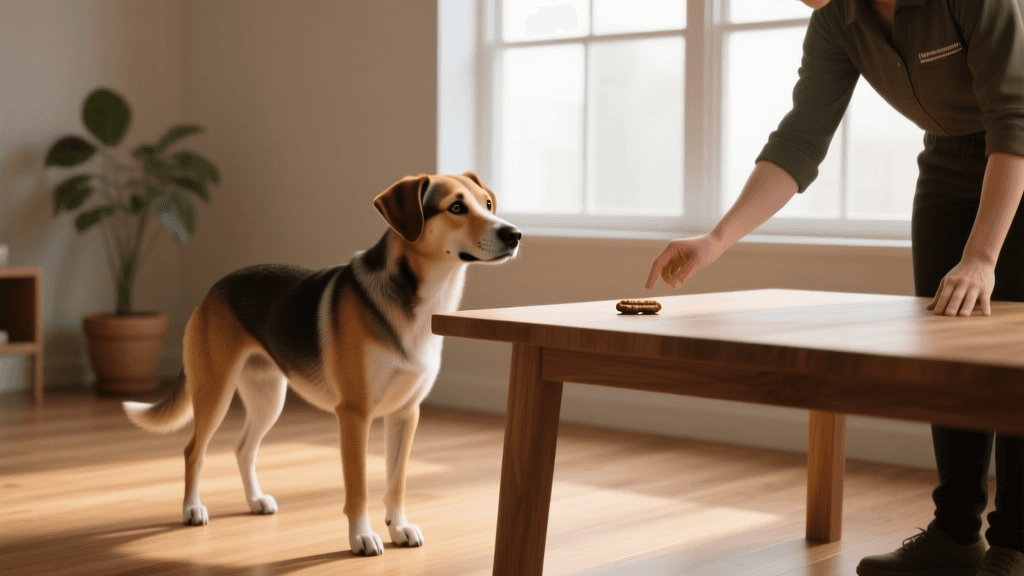
| Leave It | Dropping treats on the floor | Presenting treats in a closed fist or elevated bowl | Spill-proof elevated slow feeder |
| Heel | Tight, fast-paced walking by the left knee | Loose-leash walking at the dog's natural, slower pace | Front-clip no-pull harness |
Cognitive Enrichment: Training the Mind, Not the Body
When physical exercise must be limited due to pain or fatigue, mental exercise becomes your primary outlet for burning off your dog's energy. Ten minutes of cognitive work can tire a senior dog out just as effectively as a thirty-minute walk.
- Scent Work and Snuffle Mats: A dog's sense of smell remains relatively intact even as their vision and hearing fade. Scatter a portion of their daily kibble into a dense fabric snuffle mat (costing around $20 to $30). This encourages natural foraging behaviors and provides immense mental satisfaction without requiring them to walk long distances.
- Interactive Puzzle Toys: Toys like the Kong Senior (designed with softer, gentler rubber for aging teeth, approx. $15) or the Nina Ottosson Dog Brick puzzle require the dog to use their paws and nose to uncover hidden treats. Ensure the puzzle is set to an easy difficulty level to prevent frustration, which can lead to anxiety in dogs with CCD.
- Shaping Games: Use a clicker or a verbal marker ('Yes!') to reward tiny, incremental behaviors. For example, reward your dog simply for looking at a cardboard box, then for taking a step toward it, then for sniffing it. This 'free shaping' builds confidence and encourages problem-solving.
Managing Training Sessions: Timing, Treats, and Costs
Senior dogs have shorter attention spans and fatigue more quickly than their younger counterparts. Managing the logistics of your training sessions is critical for success.
Session Timing and Duration
Keep training sessions incredibly short. Aim for 3 to 5 minutes per session, with a maximum of two sessions per day. Watch closely for signs of fatigue, such as heavy panting, lip licking, yawning, or simply walking away. Always end the session on a positive note, before the dog becomes frustrated or physically sore.
High-Value, Low-Calorie Treats
Because senior dogs are often less active, their daily caloric requirements drop significantly. However, training still requires motivation. Avoid large, calorie-dense biscuits. Instead, opt for tiny, high-value, low-calorie treats. Zuke's Mini Naturals (costing approximately $8 for a 16oz bag) are an excellent choice because they are only 2 calories each and have a soft texture that is easy for senior dogs with dental disease to chew. Alternatively, you can use your dog's measured daily kibble allocation for training to prevent unwanted weight gain, which exacerbates joint pain.
The Role of Veterinary Support
Never attempt to train through pain. If your dog suddenly refuses to perform a modified command, consult your veterinarian. They may recommend joint supplements containing glucosamine and chondroitin, or prescribe NSAIDs (Non-Steroidal Anti-Inflammatory Drugs) to manage pain levels, making training sessions comfortable and enjoyable once again.
Final Thoughts on Aging Gracefully
Training a senior dog is a profound act of empathy and love. By adapting your expectations, modifying your physical cues, and leaning heavily into cognitive enrichment, you can ensure your aging dog remains mentally sharp, emotionally fulfilled, and deeply connected to you. Remember that the goal of obedience in the golden years is not perfection in competition, but rather a harmonious, pain-free life shared with your best friend.
priya-sutaria
All our authors care for dogs every day — read more of their work on the authors page.