Do Talking Dog Buttons Really Work? The Science Explained
Are viral talking dog buttons real communication or clever tricks? Discover the science of canine cognition and how to teach your dog to talk.
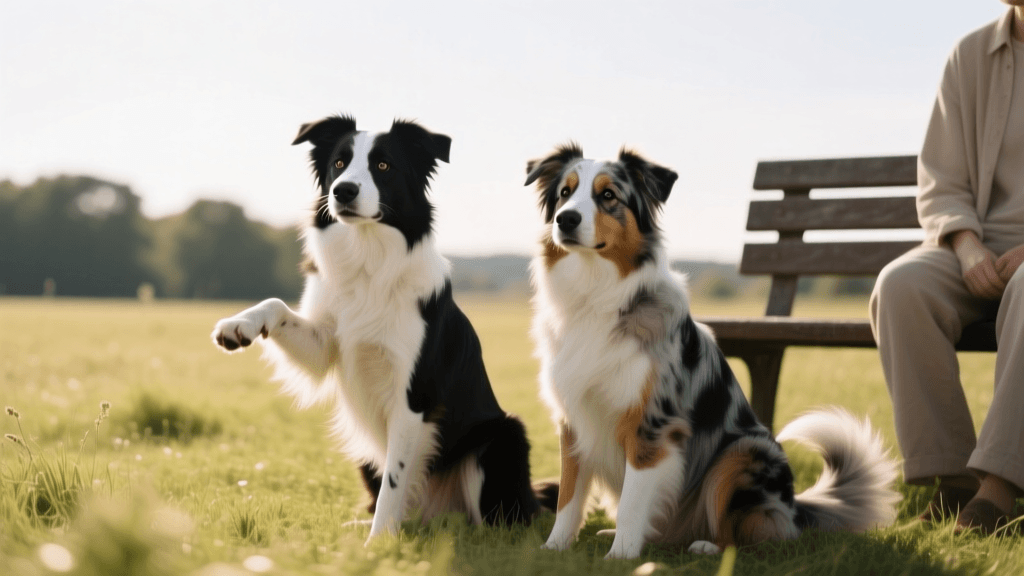
If you have spent any time on TikTok, Instagram, or YouTube over the past few years, you have likely encountered the viral phenomenon of "talking dogs." Canines like Bunny the Sheepadoodle and Stella the Australian Shepherd have amassed millions of followers by pressing soundboard buttons to communicate phrases like "outside," "play," and even seemingly complex existential thoughts like "stranger danger" or "love you." But as a dedicated dog owner, you might be wondering: is this genuine linguistic comprehension, or just a highly trained parlor trick?
Understanding the psychology behind this viral trend requires diving deep into canine cognition, operant conditioning, and the fascinating ways our dogs interact with their environment. In this comprehensive guide, we will explore the science behind talking dog buttons, separate viral myth from behavioral fact, and provide a step-by-step, actionable guide to starting your own dog's soundboard journey.
The Viral Phenomenon of Talking Dogs
The trend of using Augmentative and Alternative Communication (AAC) devices for dogs was popularized by speech-language pathologists and dedicated pet owners who hypothesized that dogs could map recorded words to specific actions or outcomes. According to coverage by NPR on viral soundboard dogs, the internet was captivated by the idea that dogs possessed a hidden vocabulary just waiting to be unlocked. Videos of dogs pressing buttons to ask for a walk or complain about a vacuum cleaner went viral, sparking a massive consumer demand for recordable pet buttons.
However, animal behaviorists urge a measured approach. While dogs are incredibly intelligent and capable of complex associative learning, they do not possess the neurological hardware for human syntax or grammar. When a dog presses a sequence like "outside" and "now," they are not constructing a sentence; they are executing a learned sequence of behaviors that historically resulted in the door opening.
Operant Conditioning vs. True Language
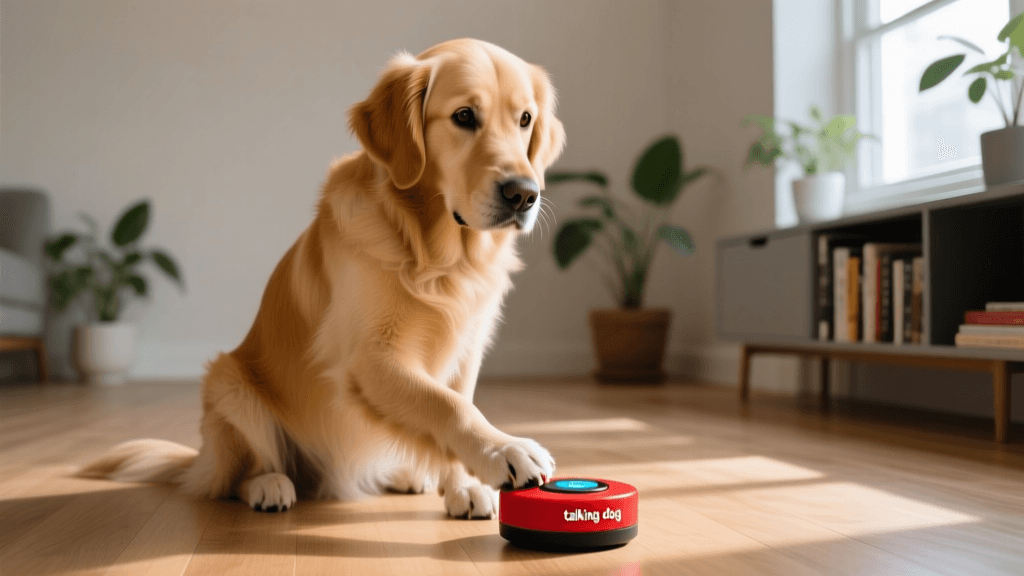
To understand why dogs use buttons, we must look at operant conditioning. This is the psychological principle where behavior is modified by its consequences. If a dog steps on a button that says "treat," and the owner immediately gives them a piece of chicken, the dog learns a simple equation: Pressing the plastic disc yields chicken.
Dogs are master observers of patterns. They do not necessarily understand the English definition of the word "treat" playing from the speaker. Instead, they recognize the visual location of the button, the physical act of pawing it, and the auditory cue that precedes the reward. This is a brilliant display of associative memory, but it differs fundamentally from human language acquisition. A toddler learns that the word "apple" represents the fruit across all contexts; a dog learns that pressing the "apple" button in the kitchen results in a slice of fruit being handed to them by their owner.
The "Clever Hans" Effect and Canine Cognition
When evaluating viral dog videos, scientists often warn of the "Clever Hans" effect. Clever Hans was a horse in the early 1900s that supposedly could do math and spell words by tapping his hoof. In reality, Hans was reading the microscopic, unconscious body language cues of his handler, stopping his tapping the exact moment the human tensed up in anticipation of the correct answer.
Research from the Horowitz Dog Cognition Lab at Barnard College highlights that dogs are exceptionally attuned to human gaze, posture, and micro-expressions. When a dog is hovering over a soundboard, they are often looking directly at their owner. The owner might subtly lean toward the "outside" button or hold their breath when the dog's paw hovers over it. The dog reads this subtle physical tension and presses the button that the human wants them to press, or the one that has historically yielded the most enthusiastic reaction.
Comparison Chart: Canine Communication Methods
How do sound buttons compare to other ways we communicate with our pets? Below is a breakdown of popular canine communication methods.
| Method | Cognitive Demand | Average Cost | Setup Time | Best Use Case |
|---|---|---|---|---|
| Sound Buttons (AAC) | High (Associative Mapping) | $50 - $150 | 2-4 Weeks | Mental enrichment, basic requests |
| Hand Signals | Medium (Visual Cues) | $0 | 1-2 Weeks | Deaf dogs, obedience, sports |
| Verbal Commands | Medium (Auditory Cues) | $0 | 1-2 Weeks | Everyday obedience, recall |
| Bell Training (Door) | Low (Single Action) | $10 - $20 | 3-7 Days | Potty training |
How to Start Button Training: A Practical Guide
If you want to try this viral trend, it is highly recommended as a form of mental stimulation. Here is how to set up your dog for success, including product recommendations and training timelines.
Step 1: Choose the Right Equipment
The most popular brand on the market is FluentPet, which uses hexagonal, interlocking tiles designed to be easily distinguished by a dog's paws. A starter kit typically costs between $60 and $100, while larger kits can reach $150. Alternatively, you can buy standalone recordable buttons from Amazon for around $25, though they are prone to sliding across hardwood floors. Pro Tip: Always place your soundboard on a non-slip rug or yoga mat to prevent the board from moving when your dog steps on it.
Step 2: Select Your First Three Words
Do not start with abstract concepts like "love" or "mad." Start with high-value, actionable words that your dog already understands and loves. The best starter buttons are:
- Outside: Maps to going in the yard or for a walk.
- Play: Maps to getting a favorite toy or engaging in tug-of-war.
- All Done: Maps to the end of an activity, grooming session, or petting.
Step 3: Modeling the Behavior
Dogs learn through observation and shaping. For the first week, you must "model" the behavior. Every single time you take the dog outside, say the word "Outside" clearly, press the button yourself, and immediately open the door. Do this for 10 to 14 days before expecting the dog to press it. Keep training sessions short—no more than 5 to 10 minutes at a time—to prevent frustration.
Step 4: Capturing and Rewarding
Once the dog begins to investigate the board, reward any interaction. If they sniff the "Play" button, give them a toy. If they accidentally step on it, throw a massive party with high-value treats like freeze-dried liver. You are building a positive emotional response to the soundboard.
Troubleshooting Common Button Training Pitfalls
As with any viral pet trend, the reality of daily use comes with challenges. Here is how to handle the most common issues:
The "Spam" Problem: Many owners report that their dog learns the "Outside" button and proceeds to press it 40 times an hour. If this happens, the button has lost its meaning and become a demand for attention. To fix this, implement a "token economy." The dog must press the button, then perform a known behavior like a "sit" or "touch" before the door opens. Alternatively, remove the board for a few hours to reset the boundary.
Biting or Chewing the Buttons: If your dog treats the soundboard as a chew toy, they are under-stimulated or the buttons are too small. Switch to larger, heavy-duty tiles, and ensure you are providing adequate physical exercise outside of button training.
Frustration and Barking: If your dog barks at the board, they are frustrated. You have likely moved too fast or chosen words that are too abstract. Step back to a single, highly rewarding button (like "Treat" or "Play") and rebuild their confidence.
The Hidden Benefit: Mental Enrichment
Even if your dog never forms a viral "sentence," teaching them to use buttons is an incredible form of cognitive enrichment. The ASPCA's guidelines on dog enrichment emphasize that mental stimulation is just as tiring and beneficial for a dog as a long physical walk. Engaging your dog's brain to solve problems, map associations, and interact with their environment reduces anxiety, prevents destructive boredom behaviors, and strengthens the bond between human and hound.
"Dogs are brilliant at reading human body language and finding the most efficient path to a reward. Button training isn't about turning your dog into a human; it is about giving them a new, engaging puzzle that bridges the communication gap in a fun, rewarding way."
Conclusion
So, do talking dog buttons really work? If you define "work" as a dog learning to use a tool to communicate basic desires and engage in mental enrichment, then absolutely. If you expect your dog to debate philosophy or understand complex grammar, you will be disappointed. By approaching this viral trend with a solid understanding of canine psychology, operant conditioning, and realistic expectations, you can turn a social media fad into a deeply rewarding bonding experience for you and your best friend.
jonas-cole
All our authors care for dogs every day — read more of their work on the authors page.