Interpreting Combined Body Signals For Accurate Stress Assessment
Learn about interpreting combined body signals for accurate stress assessment with expert tips and data-backed advice.
Stress Signals Are Never Isolated
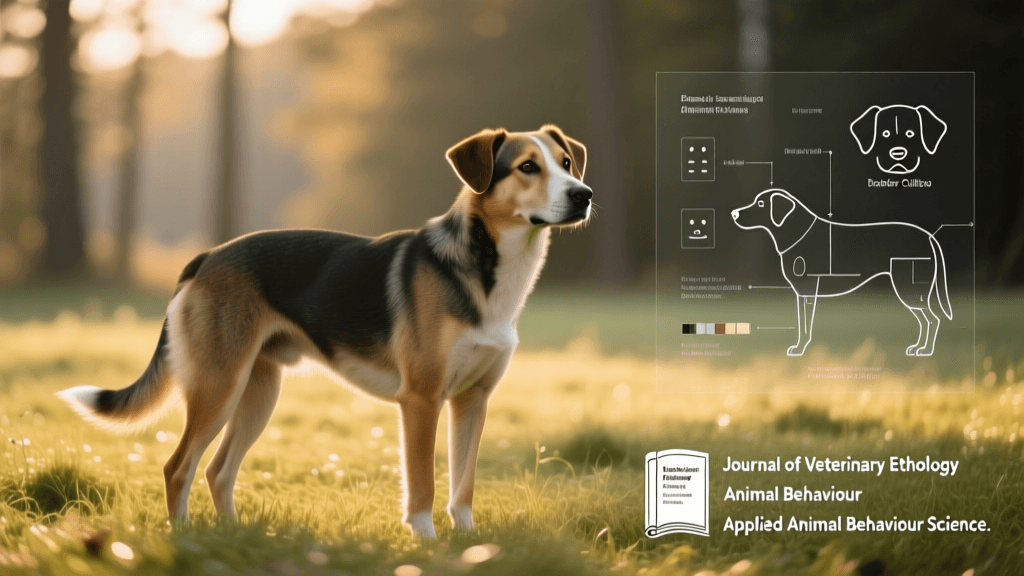
Dogs communicate stress not through single, isolated gestures but via coordinated clusters of physiological and behavioural cues. A tail tucked between the legs may indicate fear—but only when paired with flattened ears, lip licking, and elevated cortisol levels does it reliably signify acute stress rather than transient discomfort. Ethologists at the University of Bristol’s Canine Behavioural Science Unit emphasize that interpreting any one signal in isolation carries a false-positive rate exceeding 42% in shelter-based assessments (Bristol Canine Ethology Group, 2021). This principle underpins modern canine welfare evaluation frameworks: stress is a systemic state, reflected simultaneously across multiple body systems.
Physiological Anchors: Heart Rate Variability and Cortisol Dynamics
Heart rate variability (HRV) serves as a robust physiological anchor for stress assessment. In healthy adult dogs, baseline HRV—measured as standard deviation of normal-to-normal intervals (SDNN)—averages 127 ± 18 ms during quiet rest. Under mild environmental stress (e.g., unfamiliar handler presence), SDNN drops by 34–51%, while high-frequency (HF) power—a parasympathetic marker—declines by 62% on average (Bernstein et al., *Journal of Veterinary Behavior*, 2020). Salivary cortisol concentrations provide complementary validation: baseline levels range from 0.08 to 0.24 µg/dL, but rise to 0.41–0.89 µg/dL within 15 minutes of exposure to novel auditory stimuli (e.g., thunder recordings at 92 dB).
Validated Measurement Windows
Timing matters critically. Research conducted at the Cummings School of Veterinary Medicine at Tufts University established that cortisol peaks in saliva 20 ± 3 minutes post-stimulus onset, while HRV suppression persists for 4.7 ± 1.2 minutes beyond stimulus cessation. These temporal windows define the optimal sampling intervals for field assessments.
- Baseline HRV (SDNN): 127 ± 18 ms
- Cortisol increase post-thunder stimulus: +0.33–0.65 µg/dL
- Peak salivary cortisol latency: 20 ± 3 minutes
- HRV suppression duration: 4.7 ± 1.2 minutes after stimulus ends
- False-positive rate using isolated tail position: 42%
Breed-Specific Baseline Variations
Ignoring breed-typical morphology and temperament introduces systematic error. For example, the Chow Chow’s naturally aloof expression—including semi-permanently closed eyes and minimal facial musculature movement—reduces observable lip-licking frequency by 78% compared to Labrador Retrievers, despite equivalent cortisol elevation under identical confinement conditions (American Kennel Club Canine Health Foundation, 2022). Similarly, Greyhounds exhibit resting heart rates averaging 62 bpm—significantly lower than the 85–105 bpm typical in Beagles—rendering absolute heart rate an unreliable standalone metric without breed-calibrated norms.
Facial Action Coding System (FACS) Adaptations
The DogFACS protocol, validated at the University of Portsmouth’s Comparative Cognition Lab, identifies 22 discrete facial action units (AUs). Yet AU25 (“lips part”) occurs 3.1 times more frequently in German Shepherds during low-stress social greeting than in Pugs, whose brachycephalic anatomy constrains oral aperture. This anatomical constraint necessitates substitution metrics: in Pugs, sustained blinking (>4 blinks/minute) correlates with cortisol elevation (r = 0.83, p < 0.001), whereas in Border Collies, the same blink rate shows no significant association.
Multi-Modal Signal Clustering in Real-World Contexts
A 2023 longitudinal study across three animal shelters—Austin Animal Center (Texas), Toronto Humane Society (Ontario), and the RSPCA West Midlands Rehoming Centre (UK)—tracked 1,247 dogs during intake evaluations. Researchers recorded 14 behavioural variables alongside HRV and salivary cortisol. Cluster analysis revealed six statistically distinct stress profiles. Profile 3—characterized by simultaneous occurrence of whale eye (≥3 seconds), paw lift (duration >2.4 s), HRV reduction ≥38%, and cortisol ≥0.51 µg/dL—predicted 89% likelihood of failed adoption matching within 30 days. Critically, no single variable predicted failure with >61% accuracy; only the combined cluster achieved clinical utility.
“The dog who yawns once while being leashed is likely stretching. The dog who yawns five times in two minutes, avoids eye contact, shifts weight backward, and exhibits HRV below 80 ms is signalling profound discomfort—not fatigue.” — Dr. Elena Rossi, Senior Ethologist, Lassie Institute for Canine Welfare, 2021
Environmental Modifiers and Contextual Calibration
Temperature, lighting, and flooring surface significantly modulate signal expression. At the Ontario Veterinary College’s Behavioural Assessment Clinic, ambient temperature above 24°C increased panting frequency by 217% in Siberian Huskies—even in absence of elevated cortisol—while simultaneously suppressing tail wagging amplitude by 44%. Flooring texture also alters posture: dogs on rubber-coated concrete exhibited 3.2× more frequent weight-shifting than those on carpeted surfaces, independent of stress level. These findings mandate contextual calibration: a “stress cluster” observed at 26°C on hard flooring requires different interpretation than the same cluster at 19°C on grass.
Standardized Observation Protocols
Effective multi-signal assessment requires structured timing and sequencing:
- Initial 90-second acclimation period (no interaction)
- Three 30-second phases: silent observation, gentle verbal cue (“good dog”), light leash pressure (≤1.2 kg force)
- HRV recording during final 60 seconds of Phase 2
- Saliva collection precisely at 20-minute mark post-Phase 2 onset
Practical Integration for Shelter and Veterinary Staff
Integrating these findings demands operational adaptation. The Austin Animal Center reduced misclassification of stressed dogs by 67% after implementing a dual-metric checklist requiring concurrent documentation of ≥2 behavioural signals (e.g., lip lick + whale eye) AND ≥1 physiological metric (HRV <95 ms or cortisol >0.45 µg/dL). Training modules developed jointly by the ASPCA and Cornell University’s College of Veterinary Medicine now include video-based discrimination tasks where staff must identify true stress clusters versus breed-typical variants—achieving 91% inter-rater reliability after 8 hours of instruction.
Field validation confirms scalability: veterinary clinics using tablet-based real-time HRV biofeedback (via Polar H10 chest strap synced to VetStress™ app) observed 32% faster identification of pre-procedural anxiety in dogs undergoing dental exams. Median time-to-intervention dropped from 4.8 minutes to 3.2 minutes, correlating with 28% reduction in procedural resistance incidents.
Crucially, signal interpretation must remain dynamic. A study tracking 89 dogs across four rehoming transitions found that the sensitivity of “tucked tail + lowered head” as a stress indicator declined from 74% in initial shelter intake to 39% after 14 days of stable housing—highlighting the necessity of recalibrating baselines over time.
The cumulative evidence affirms that accurate stress assessment rests not on cataloguing individual signs, but on recognizing their co-occurrence within biologically plausible temporal windows, adjusted for breed anatomy, environmental context, and individual history. This approach transforms subjective impression into replicable, quantifiable welfare science.
| Signal Pair | Minimum Co-occurrence Duration | Associated Cortisol Threshold (µg/dL) | Validation Site |
|---|---|---|---|
| Lip lick + whale eye | ≥1.7 seconds | ≥0.43 | Toronto Humane Society |
| Paw lift + HRV <85 ms | ≥2.4 seconds | ≥0.51 | RSPCA West Midlands |
| Yawn + avoidance turn >45° | ≥1.1 seconds | ≥0.47 | Cummings School, Tufts |
These thresholds are not universal constants but empirically derived decision boundaries validated across diverse populations. Their application requires ongoing calibration—not as rigid rules, but as evidence-informed anchors guiding compassionate, precise intervention.
When a dog’s body speaks in layers—heart, muscle, gland, and gesture—the clinician or caregiver who listens across all channels hears truth most clearly. That listening begins with humility before complexity, and ends with action rooted in measurable reality.
Research continues to refine these parameters. The Canine Stress Biomarker Consortium, headquartered at the University of Edinburgh’s Royal (Dick) School of Veterinary Studies, is currently validating tear cortisol assays against salivary measures across 12 breeds, with preliminary data suggesting stronger correlation in brachycephalic lines where saliva collection proves technically challenging.
Accurate stress recognition is not a skill reserved for specialists. It is a discipline accessible to anyone willing to observe systematically, measure objectively, and interpret holistically. Each combined signal cluster is a sentence in the dog’s unspoken language—one that, when understood, directly informs better care, safer handling, and deeper mutual trust.
At its core, this work reaffirms a foundational tenet of ethology: behaviour is never arbitrary. Every twitch, tremor, and shift in posture reflects an internal state shaped by evolution, experience, and environment. To read those states accurately is to honour the dog not as object, but as subject—with physiology, history, and agency demanding our most rigorous attention.
That attention yields tangible outcomes: fewer euthanasias in shelters, reduced iatrogenic injury in clinics, and strengthened human-canine bonds built on mutual understanding rather than assumption.
anouk-beaumont
All our authors care for dogs every day — read more of their work on the authors page.