First 48 Hours With a New Dog: A First-Time Owner Guide
Bring your new dog home with confidence. Discover a step-by-step 48-hour survival guide, essential gear, and decompression tips for first-time owners.
The Critical First 48 Hours: Setting the Stage
Bringing a new dog home is one of the most exciting milestones in life, but for first-time owners, the initial excitement can quickly turn into overwhelm. The first 48 hours with a new dog are arguably the most critical period in your journey together. This window sets the foundation for your dog's sense of security, establishes your household boundaries, and begins the crucial process of decompression. Whether you are adopting a rescue from a shelter or bringing home a puppy from a breeder, having a structured, actionable plan is the difference between a chaotic transition and a harmonious beginning. This comprehensive survival guide will walk you through the essential gear, timeline, and behavioral strategies you need to navigate the first two days with confidence.
Understanding the 3-3-3 Rule of Decompression
Before you even open your front door, it is vital to understand the psychological state of your new dog. Rescue organizations and behaviorists widely advocate for the '3-3-3 Rule' of dog decompression. According to the Humane Society of the United States, dogs need time to adjust to a completely new environment, new scents, and new people.
The 3-3-3 Rule:
3 Days to decompress and begin feeling safe.
3 Weeks to learn your routine and start showing their true personality.
3 Months to fully settle in and build a deep bond of trust.
During the first 3 days (which includes your critical first 48 hours), your dog may hide, refuse to eat, test boundaries, or sleep excessively. This is not a sign of a 'bad dog'; it is a normal stress response. Your primary goal during this time is not rigorous obedience training, but rather providing a predictable, low-stress environment.
Pre-Arrival: Essential Gear and Safe Room Setup
Do not wait until the dog is in the car to prepare your home. First-time owners often make the mistake of giving a new dog free roam of the entire house immediately. This leads to potty accidents, destructive chewing, and severe overstimulation. Instead, set up a 'Safe Room' or a designated decompression zone.
The Safe Room Checklist and Costs
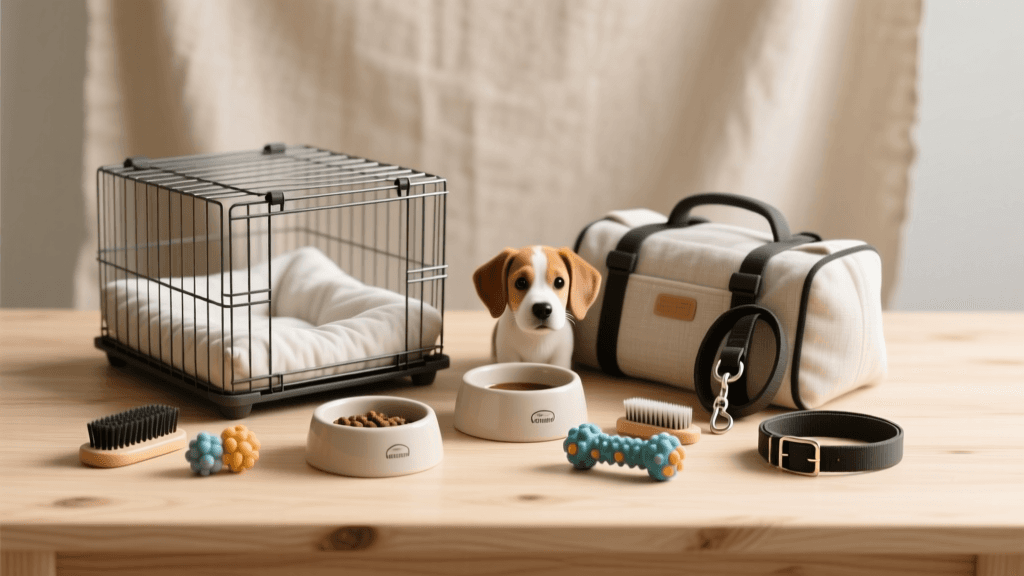
- Wire Crate: A crate provides a den-like sanctuary. The MidWest Homes for Pets iCrate (approx. $70-$90) is an industry standard. Ensure it is large enough for the dog to stand, turn around, and lie down, but use a divider if you have a growing puppy.
- Enzymatic Cleaner: Standard household cleaners do not break down uric acid. Purchase Nature's Miracle Advanced Stain & Odor Eliminator (approx. $15) to completely erase scent markers from previous accidents.
- Pressure-Mounted Baby Gate: Use a gate like the Regalo Easy Step Walk Thru (approx. $40) to block off the safe room or restrict access to stairs and carpeted areas.
- Long-Lasting Chews: Chewing is a natural stress-reliever. Stock up on bully sticks or stuff a KONG Classic ($15) with dog-safe peanut butter and freeze it.
Total estimated setup cost for these core decompression items is roughly $140 to $160. This investment prevents hundreds of dollars in potential property damage and professional cleaning fees.
Hour 0 to 2: The Arrival and First Potty Break
When you arrive home, resist the urge to invite friends and family over for a 'meet and greet.' The American Veterinary Medical Association (AVMA) strongly recommends keeping the environment quiet to prevent sensory overload.
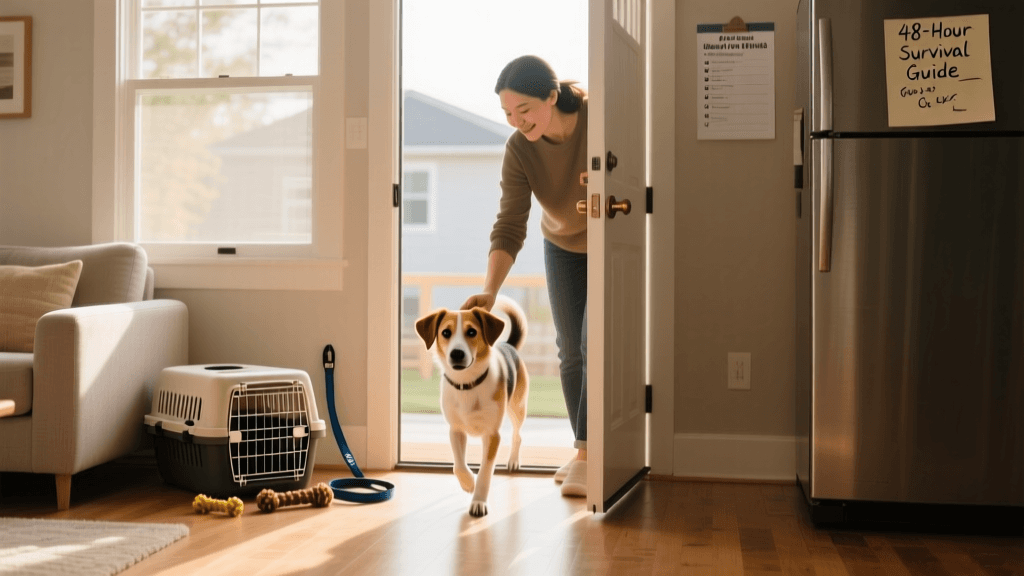
- The Potty Stop: Before entering the house, take your dog directly to their designated outdoor potty spot on a leash. Wait patiently for up to 15 minutes. If they eliminate, offer a high-value treat (like boiled chicken or small training bites) and calm verbal praise.
- The Guided Tour: Keep the dog on a leash as you walk them through the house to their Safe Room. Do not let them pull you from room to room. This establishes you as the guide and prevents them from claiming the entire house as their territory on day one.
- Leash Off, Decompress On: Once in the Safe Room, remove the leash, offer a bowl of fresh water, and let them sniff. Sit quietly on the floor and let them approach you on their own terms. Do not force physical affection.
Hour 2 to 12: Settling In and The First Night
The first evening is often the most challenging, particularly when the sun goes down and the house quiets down. This is when separation anxiety and confusion peak.
Feeding Protocol
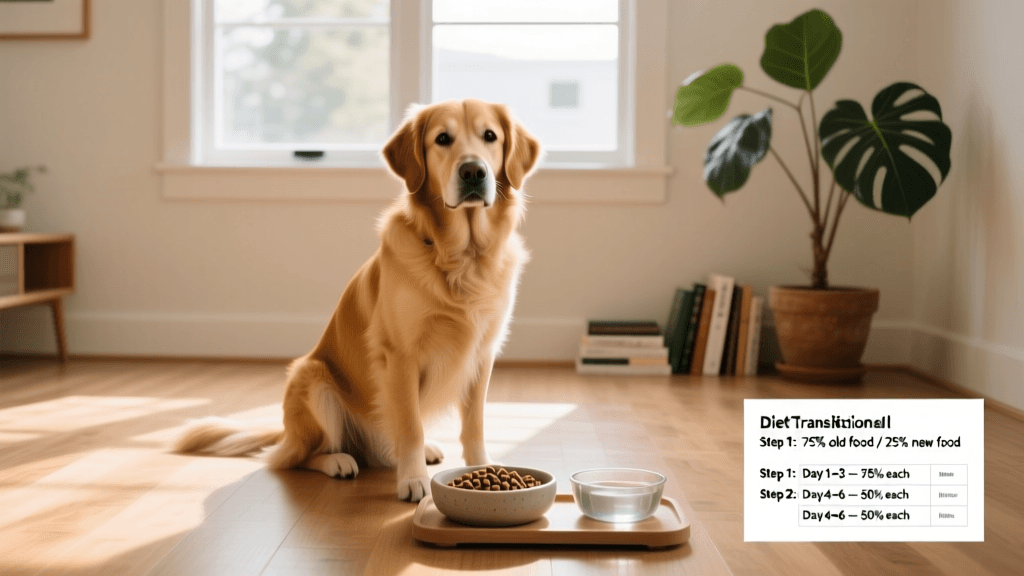
Stick to the exact same food the shelter or breeder was feeding for at least the first two weeks. Sudden diet changes cause gastrointestinal upset and diarrhea. If you plan to transition to a premium brand like Purina Pro Plan or Royal Canin, do so gradually over 7 to 10 days, starting only after the dog is fully settled.
Crate Training and The First Night
According to the American Kennel Club (AKC), the crate should be associated with positive experiences, not punishment. Place the crate in your bedroom or just outside your door for the first few nights. Dogs are social animals, and hearing your breathing or movements reassures them that they have not been abandoned. If the dog whines, wait for a brief moment of silence before offering a treat through the crate bars. Never let the dog out of the crate while they are actively crying, as this teaches them that vocalizing opens the door.
Hour 12 to 48: Establishing Routine and Boundaries
Dogs thrive on predictability. By the second day, you should begin implementing a rigid, repetitive schedule. This removes the anxiety of the unknown.
- Potty Schedule: Take the dog out immediately upon waking, after every meal, after play sessions, and right before bed. For puppies, this means going out every 2 hours during the day.
- Mental Enrichment: Physical exercise is important, but mental fatigue tires a dog out faster. Use snuffle mats, frozen KONGs, and short 5-minute training sessions focusing on basic cues like 'sit' and 'look at me'.
- Boundary Setting: Decide on the house rules now and stick to them. If the dog is not allowed on the furniture, do not allow them on the couch 'just for the first night.' Inconsistency confuses dogs and creates long-term behavioral issues.
First-Time Owner Checklist: The First 48 Hours
Use this structured table to track your progress and ensure you are meeting your new dog's physical and emotional needs during the critical transition window.
| Timeframe | Primary Goal | Action Items | Estimated Cost |
|---|---|---|---|
| Pre-Arrival | Environment Prep | Set up Safe Room, assemble crate, buy enzymatic cleaner, puppy-proof hazards. | $140 - $160 |
| Hour 0-2 | Safe Transition | Immediate potty break, leashed house tour, quiet time in Safe Room. | $0 (Treats) |
| Hour 2-12 | Nutrition & Rest | Feed familiar diet, introduce crate positively, sleep in same room. | $50 (Food) |
| Hour 12-24 | Routine Initiation | Strict potty schedule, 5-min training sessions, no guests. | $15 (Chews) |
| Hour 24-48 | Boundary Setting | Enforce furniture rules, short leash walks, mental enrichment games. | $20 (Toys) |
Common First-Time Owner Mistakes to Avoid
Even with the best intentions, first-time owners frequently stumble during the first two days. Avoid these common pitfalls:
- The 'Grand Tour' Mistake: Taking the dog to a busy pet store, park, or cafe on day one to 'socialize' them. This causes massive sensory overload and can trigger fear-based reactivity. Socialization should be slow and controlled.
- The Empathy Trap: Letting the dog sleep in your bed on the first night because they look sad, only to spend the next six months trying to evict them from the mattress. Start as you mean to go on.
- Over-Coddling: Using a high-pitched, soothing voice when the dog is fearful or crying. This inadvertently validates and rewards the fearful state. Instead, project calm, quiet confidence.
When to Call the Vet or a Behaviorist
While stress-induced behaviors like mild pacing, whining, or skipping a single meal are normal during the first 48 hours, certain red flags require immediate professional intervention. Contact your veterinarian if your dog exhibits persistent vomiting, severe lethargy, bloody diarrhea, or aggressive resource guarding that poses a safety risk to your household. Schedule a 'well-visit' with your vet within the first week of adoption to establish a baseline health record, discuss parasite prevention, and outline a vaccination schedule tailored to your specific region and lifestyle.
Conclusion
The first 48 hours with a new dog are not about achieving perfect obedience; they are about building a foundation of trust, safety, and clear communication. By preparing your environment, managing your expectations through the 3-3-3 rule, and enforcing a calm, predictable routine, you are giving your new companion the greatest possible gift: a secure place to call home. Take a deep breath, stay patient, and enjoy the incredible journey of dog ownership that lies ahead.
jonas-cole
All our authors care for dogs every day — read more of their work on the authors page.