Using Strategic Meal Feeding to Boost Dog Recall Training
Discover how strategic meal feeding and high-value food rewards can dramatically improve your dog's recall training focus, speed, and overall reliability.

The Critical Role of Nutrition in Recall Training
When it comes to canine obedience, the recall command—teaching your dog to reliably come when called—is arguably the most vital behavioral cue you will ever instill. It is a lifesaving skill that grants your dog the freedom to explore off-leash while ensuring their safety in unpredictable environments. However, many dog owners struggle with recall training because they fail to leverage one of the most powerful tools at their disposal: their dog's daily nutrition and feeding schedule.
Training a dog is not just about repetition; it is about motivation. According to the ASPCA's official dog training guidelines, positive reinforcement using high-value rewards is the most effective method for building reliable behaviors. Yet, how and when you deliver those calories matters just as much as the training mechanics themselves. By shifting from passive feeding routines to strategic meal feeding, you can transform your dog's daily diet into a high-drive training currency.
Why Free-Feeding Sabotages Your Recall Command
Free-feeding, the practice of leaving a bowl of dry kibble out for your dog to graze on throughout the day, is a common convenience for busy owners. Unfortunately, it is the enemy of food motivation. When a dog has constant, unrestricted access to their daily caloric intake, food loses its value as a reward. If your dog is never truly hungry, a piece of kibble or a standard training treat will not be compelling enough to make them abandon a fascinating squirrel or a distant playmate to run back to you.
To build a lightning-fast recall, your dog needs to feel a mild, healthy sense of anticipation around mealtimes. This natural biological drive increases dopamine release in the brain when a reward is offered, cementing the neural pathways associated with the "come" command. Transitioning away from free-feeding is the first crucial step in utilizing nutrition as a training strategy.
Transitioning to Scheduled Meal Feeding
Scheduled meal feeding involves offering your dog their daily food allotment at specific, consistent times—typically twice a day for adult dogs, and three times a day for puppies. To maximize training potential, you should implement a strict 15-minute window rule. Place the bowl down, and if the dog does not eat within 15 minutes, pick it up and offer it again at the next scheduled meal.
This routine accomplishes three things:
- Predictability: It regulates your dog's digestive system and potty schedule.
- Value Building: It teaches the dog that food is a finite resource that requires engagement.
- Training Windows: It allows you to schedule training sessions right before meals when the dog's food drive is at its absolute peak.
Managing Calories: The 10% Treat Rule
One of the most common concerns owners have about using food in recall training is the risk of canine obesity. You do not want to overfeed your dog in the pursuit of obedience. Veterinary nutritionists widely recommend the 10% Rule: treats and training rewards should make up no more than 10% of your dog's total daily caloric intake, while the remaining 90% should come from a complete and balanced commercial diet.
According to experts at the Texas A&M College of Veterinary Medicine, carefully calculating treat calories is essential for maintaining a healthy body condition score. To do this, you must subtract the calories used during training from the dog's dinner bowl.
Table 1: Daily Caloric Allocation Example (30 lb. Active Dog)
| Category | Percentage | Estimated Calories | Practical Application |
|---|---|---|---|
| Total Daily Maintenance | 100% | 700 kcal | Base requirement for weight maintenance |
| Balanced Meals (90%) | 90% | 630 kcal | Approx. 2.5 cups of standard kibble, split into two meals |
| Training Treats (10%) | 10% | 70 kcal | Approx. 35 small training treats (at 2 kcal each) |
Note: Always consult your veterinarian to determine the exact caloric needs of your specific dog based on age, breed, and activity level.
The Hierarchy of Food Rewards
Not all calories are created equal in the mind of a dog. When training recall, especially in high-distraction environments, you must understand the hierarchy of food rewards. American Kennel Club (AKC) training experts suggest varying treat values based on the difficulty of the task and the environment.
Table 2: The Recall Training Reward Hierarchy
| Reward Tier | Examples | Cost Estimate | Best Use Case in Recall Training |
|---|---|---|---|
| Low-Value | Dog's regular dry kibble, plain Cheerios | $2 - $4 / lb | Indoor recall, initial conditioning, low-distraction zones |
| Medium-Value | $15 - $20 / lb | Fenced yard recall, adding mild distractions, proofing the command | |
| High-Value | Stewart Freeze-Dried Beef Liver, boiled chicken, string cheese | $20 - $35 / lb | Off-leash park recall, emergency recall, high-distraction environments |
By reserving the highest-value, most aromatic rewards (like freeze-dried liver or warm chicken) exclusively for recall training, you create a "jackpot" effect. The dog learns that returning to you when called yields the most spectacular culinary payoff in their world.
The "Bowl Recall" Protocol: Step-by-Step
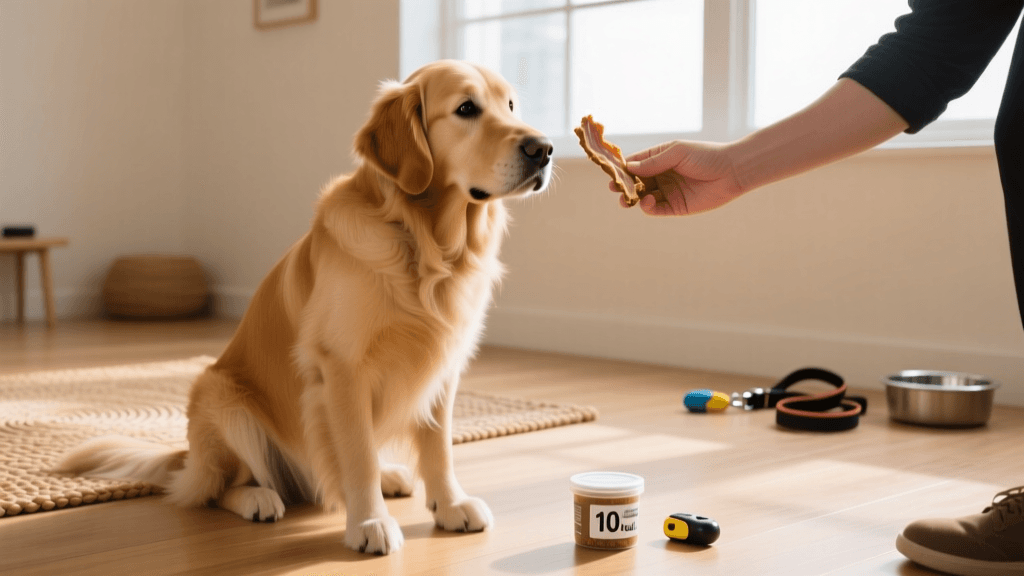
One of the most powerful ways to use strategic meal feeding for recall is the "Bowl Recall" protocol. This technique uses the dog's actual dinner bowl as the ultimate reward, capitalizing on their natural hunger right before mealtime.
- Preparation: Measure out your dog's evening meal. Have the bowl ready on the counter, and attach a leash to your dog's collar if you are working in an uncontained area.
- The Setup: Wait until your dog is slightly distracted but not overly hyper. Step back about 5 to 10 feet.
- The Cue: Say your recall cue ("Come!" or "Here!") exactly once in an enthusiastic, bright tone.
The Mark and Reward: The second your dog reaches you, use a marker word like "Yes!" and immediately present the food bowl. Allow them to eat their meal right there at your feet. - Repetition: Once the dog finishes, you can repeat this process by moving to a different room or increasing the distance slightly, using a small handful of kibble from the bowl if the whole bowl is too distracting to manage repeatedly.
Using Food Puzzles to Extend the Reward
Recall training doesn't end the moment the dog reaches you; it ends when the reward is fully consumed. If your dog gulps down a treat in one second, the training session is over too quickly. To extend the value of the reward and build deeper focus, incorporate food puzzles like the Kong Classic or a snuffle mat.
When your dog successfully completes a long-distance recall in the yard, mark the behavior, and instead of handing them a treat, direct them to a pre-stuffed Kong Classic hidden on the porch. This turns the recall into a treasure hunt, engaging their olfactory senses and keeping their brain actively engaged with the reward for 5 to 10 minutes. This prolonged engagement reinforces the positive association with the recall command far more effectively than a single, quickly swallowed treat.
Troubleshooting: When Food Isn't Working
If your dog is ignoring your recall command despite strategic meal feeding, consider the following troubleshooting steps:
- Is the dog truly hungry? Ensure you aren't training too soon after a meal. The optimal window is 12 to 18 hours after their last full meal.
- Is the environment too distracting? If a squirrel is present, even high-value beef liver might lose out to the prey drive. Lower your criteria, increase your distance from the distraction, and work on recall in a quieter setting first.
- Are you poisoning the cue? Never call your dog to you for something they perceive as negative, such as a bath, nail trimming, or being crated and left alone. If you must do these things, go and get the dog rather than using your recall command.
Fading the Lure and Maintaining Drive
As your dog's recall becomes more reliable, you must transition from a continuous reinforcement schedule (rewarding every single time) to a variable ratio schedule (rewarding randomly, like a slot machine). This prevents the dog from deciding whether or not to come based on whether they see you holding a treat.
Continue to use strategic meal feeding by making your dog "say please" before receiving their daily meals. Ask for a sit, a down, or a short recall before placing the bowl on the floor. This maintains the underlying food drive and keeps the dog's obedience sharp without requiring you to carry a treat pouch 24/7. Over time, the reward shifts from the food itself to the praise, play, and the privilege of freedom.
Conclusion
Recall training is a marathon, not a sprint, and your dog's nutrition is the fuel that will get you across the finish line. By abandoning free-feeding, adhering to the 10% treat rule, and strategically deploying high-value rewards and mealtime protocols, you turn basic biological needs into powerful behavioral conditioning tools. Remember that patience, consistency, and high-quality nutrition are the cornerstones of a reliable, joyful recall that will keep your dog safe and happy for a lifetime.
robin-maitland
All our authors care for dogs every day — read more of their work on the authors page.