Stop Puppy Biting: Expert Behavior Analysis & Training
Discover expert behavior analysis techniques to stop puppy biting. Learn actionable protocols, timing, and tools to teach bite inhibition effectively.
The Behavioral Science of Puppy Mouthing
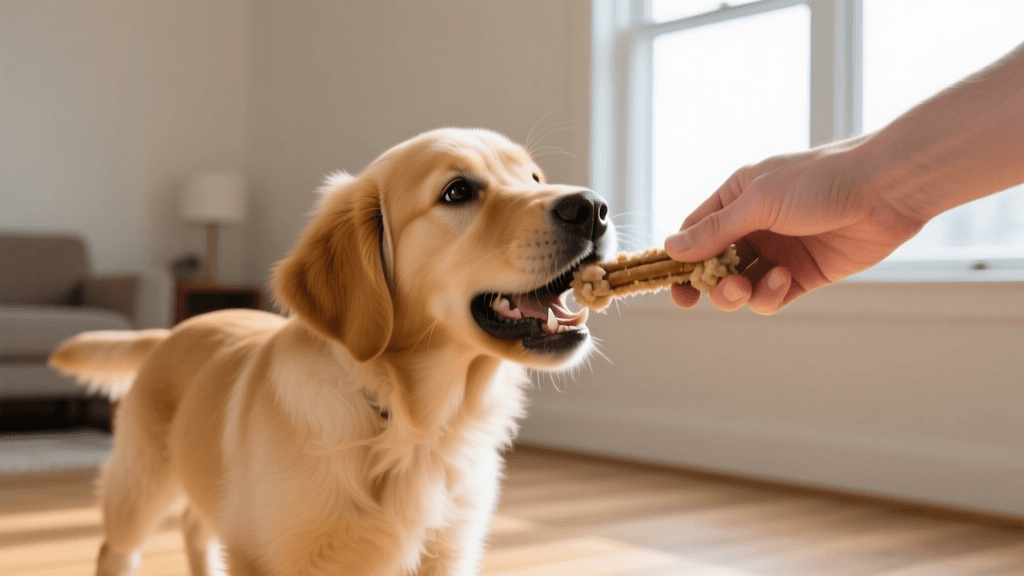
When a puppy sinks their needle-sharp teeth into your hand, it is easy to react with frustration. However, from an expert behavior analysis perspective, puppy mouthing is not an act of defiance or aggression. It is a highly reinforced, developmentally appropriate exploratory behavior. Puppies lack prehensile paws; they interact with, investigate, and manipulate their environment using their mouths. According to the ASPCA, mouthing and nipping are natural canine behaviors that must be carefully shaped rather than suppressed through fear.
Understanding the ABCs of Biting
In applied behavior analysis (ABA), every behavior is driven by the ABC model: Antecedent, Behavior, and Consequence. To modify puppy biting, we must first identify the environmental triggers (antecedents) and the reinforcing outcomes (consequences) that maintain the behavior.
| Component | Definition | Example in Puppy Biting |
|---|---|---|
| Antecedent | The environmental trigger preceding the behavior. | Owner moves hands rapidly during play; puppy is overtired. |
| Behavior | The observable action performed by the puppy. | Puppy lunges and clamps jaws onto the owner's wrist. |
| Consequence | The immediate result that dictates future behavior. | Owner yelps, pulls away rapidly, and engages in a game of chase. |
In the example above, the rapid movement of the hand triggered the prey drive (antecedent), the bite occurred (behavior), and the owner's reaction provided both physical stimulation and attention (consequence). Because the consequence was reinforcing, the probability of the puppy biting again in similar contexts increases. Behavior modification requires altering the antecedents and consequences to teach an incompatible alternative behavior.
The Critical Window for Bite Inhibition
Bite inhibition refers to a dog's ability to control the force of their mouthing. The American Veterinary Society of Animal Behavior (AVSAB) emphasizes that the primary window for teaching bite inhibition occurs during early socialization, typically before 16 weeks of age. During this sensitive period, puppies learn from their littermates that biting too hard results in the cessation of play. If a puppy is separated from their litter too early, or if human caregivers do not replicate this feedback loop, the puppy may fail to develop a 'soft mouth.'
Behavioral Rule: We do not aim to stop a puppy from using their mouth entirely during the early weeks; we aim to systematically reduce the bite pressure until teeth no longer make contact with human skin.
Evidence-Based Intervention Protocols
To effectively reduce and eliminate puppy biting, certified behaviorists rely on operant conditioning techniques. Below are two primary protocols utilized in professional behavior modification plans.
1. Negative Punishment: The Reverse Time-Out
In operant conditioning, negative punishment involves the removal of a desired stimulus to decrease the frequency of a behavior. When a puppy's teeth make contact with human skin or clothing, the game immediately ends. This is known as the Reverse Time-Out.
- Step 1: The moment teeth touch skin, emit a calm, neutral marker word like 'Oops' or 'Too bad.'
- Step 2: Immediately stand up, cross your arms, and look away. Do not yelp, as high-pitched noises can trigger a predatory drift or overstimulation in high-drive breeds.
- Step 3: Remain completely still and ignore the puppy for exactly 15 to 30 seconds.
- Step 4: If the puppy is calm, resume play. If they bite again, repeat the process. After three consecutive bites, calmly place the puppy in a safe playpen for a 2-minute decompression period.
2. Differential Reinforcement of Incompatible Behavior (DRI)
DRI involves reinforcing a behavior that cannot occur simultaneously with the problem behavior. A puppy cannot bite your hand if they are actively chewing on an appropriate toy.
- Antecedent Arrangement: Before initiating a petting or play session, have a high-value chew toy ready.
- Execution: As you reach out to pet the puppy, simultaneously present the toy. When the puppy engages with the toy, deliver a primary reinforcer (a high-value treat like boiled chicken breast) within 0.5 seconds.
- Shaping: Gradually increase the duration the puppy must interact with the toy before receiving the treat, building impulse control.
- Real-World Application: If your puppy typically bites your ankles when you walk down the hallway, the antecedent is your movement. The DRI protocol would involve tossing a handful of kibble onto the floor in the opposite direction before you take a step. The puppy engages in foraging (incompatible with chasing and biting ankles), allowing you to move freely. Over time, you fade the food toss and reinforce the puppy for simply watching you walk by.
Recommended Behavioral Tools & Costs
Successful behavior modification requires proper environmental management and enrichment tools. Below is a curated list of behaviorist-recommended products, including estimated costs and preparation metrics.
- KONG Classic (Red, Size Small): ~$15.00. Preparation: Plug the small hole with peanut butter (ensure it is xylitol-free), fill with a mixture of plain Greek yogurt and the puppy's daily kibble allotment, and freeze for 4 to 6 hours. The frozen matrix provides prolonged, soothing relief for teething puppies and encourages appropriate chewing.
- West Paw Toppl (Small): ~$22.00. An interlocking treat toy that requires the puppy to use their paws and tongue to extract food, engaging their foraging instincts and redirecting oral fixation away from human hands.
- SmartPetLove Snuggle Puppy: ~$40.00. While not a chew toy, this heartbeat-simulating plush reduces crate anxiety. Puppies often bite out of overtiredness or stress-induced arousal; providing a soothing anchor can lower baseline cortisol levels and reduce anxiety-driven mouthing.
- LickiMat Soother: ~$12.00. Spread with pureed pumpkin or low-sodium bone broth and freeze. Licking releases endorphins in the canine brain, promoting a calm behavioral state before high-risk mouthing situations (like grooming or guests arriving).
Navigating the Extinction Burst
When you first implement the Reverse Time-Out (removing attention), you will likely encounter an extinction burst. This is a well-documented behavioral phenomenon where the frequency, intensity, or duration of the unwanted behavior temporarily increases before it decreases. The puppy is essentially thinking, 'Usually, biting makes them interact with me. It isn't working, so I need to bite harder or jump higher to get the expected result.'
According to the Humane Society of the United States, consistency during this phase is critical. If you give in and push the puppy away or engage during an extinction burst, you have inadvertently reinforced a higher-intensity version of the biting behavior. You must remain a neutral, unresponsive statue until the puppy offers an alternative behavior, such as sitting or walking away. To mitigate the frustration of an extinction burst, ensure your puppy is receiving adequate mental enrichment. A puppy that has spent 20 minutes working on a frozen KONG or engaging in scent work will have a lower baseline arousal level and be less prone to intense extinction bursts compared to a puppy that has only engaged in high-octane physical play.
What to Avoid: The Fallout of Positive Punishment
Historically, trainers recommended holding a puppy's mouth shut, tapping their nose, or using bitter apple sprays on hands to stop biting. From a modern behavior analysis standpoint, these are forms of positive punishment (adding an aversive stimulus) that carry severe risks of behavioral fallout.
Applying physical aversives can result in:
- Hand-Shyness: The puppy learns to fear human hands approaching their face, leading to defensive aggression or avoidance during necessary husbandry tasks like veterinary exams.
- Suppression vs. Resolution: Punishment may suppress the outward warning signs of stress (the growl or the nip) without addressing the underlying emotional state, creating a dog that bites without warning.
- Erosion of Trust: The foundational bond between owner and puppy is built on trust and clear communication. Aversive methods muddy this communication, increasing baseline anxiety.
Tracking Progress: The Bite Pressure Scale
Behavior modification is a data-driven process. Keep a daily log of your puppy's bite pressure using a 1-to-5 scale to objectively measure progress:
- Level 1: Mouth open, licking, no teeth contact.
- Level 2: Teeth touch skin, but no pressure applied.
- Level 3: Mild pressure, leaves a temporary indentation but no pain.
- Level 4: Hard bite, causes mild pain, potential for slight redness.
- Level 5: Puncture or skin break (requires immediate professional behavioral intervention).
Your goal for the first 12 weeks is to move the puppy from Level 4 down to Level 2. By 16 to 18 weeks, the goal is Level 1 or complete cessation of mouthing on human skin.
Conclusion
Stopping puppy biting requires patience, precise timing, and a deep understanding of canine behavioral science. By managing the environment, utilizing negative punishment through reverse time-outs, and reinforcing incompatible behaviors, you can guide your puppy through this developmental phase without damaging your bond. Remember that every interaction is a training opportunity; consistency in your consequences will yield a well-mannered, bite-inhibited adult dog.
aaron-whyte
All our authors care for dogs every day — read more of their work on the authors page.