Best Dog Training Clickers and Treat Pouches Reviewed
Discover the best dog training clickers and treat pouches for positive reinforcement. Compare top picks, features, and prices to accelerate obedience.
The Foundation of Positive Reinforcement Training
When it comes to canine obedience and behavioral conditioning, the methodology you choose is just as important as the tools you use. Positive reinforcement, often referred to as marker training, relies on pinpoint accuracy to communicate to your dog exactly which behavior earned a reward. According to Karen Pryor Clicker Training, a marker signal bridges the gap between the desired behavior and the delivery of the reward, creating a clear line of communication that accelerates learning.
However, even the most skilled trainer will struggle without the right gear. Fumbling with a noisy treat bag or using a clicker that startles a sensitive dog can derail a training session. In this comprehensive buyer's guide, we review the best dog training clickers and treat pouches on the market, providing actionable advice on measurements, costs, and practical usage to help you build the ultimate training kit.
Top 3 Dog Training Clickers Reviewed
A clicker must be ergonomic, reliable, and produce a consistent sound. Here are the top three options for different training environments.
1. Karen Pryor Clicker Training i-Click
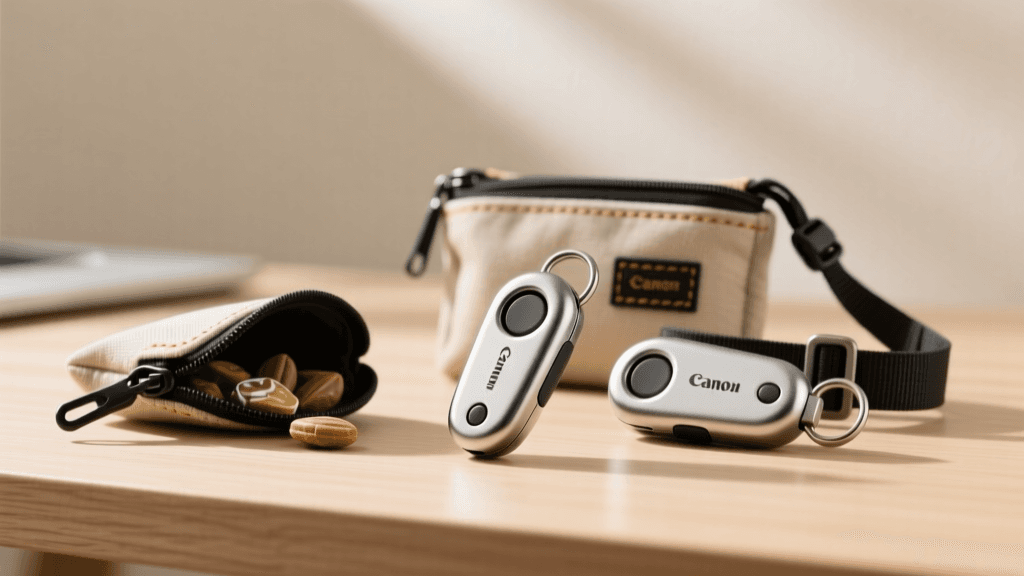
The i-Click is widely considered the gold standard for professional dog trainers. Measuring just 2.5 inches in length, its low-profile, ergonomic design allows you to palm it easily while holding a leash. The raised button requires very little pressure, making it ideal for trainers with arthritis or limited hand mobility. Crucially, the i-Click produces a softer, quieter 'click' than traditional box clickers, making it the perfect choice for noise-sensitive dogs or indoor apartment training. Estimated Cost: $5 to $8.
2. PetSafe Clik-R Dog Trainer
If you struggle with dropping small items, the PetSafe Clik-R is an excellent alternative. This clicker features an adjustable elastic finger loop that keeps the tool securely attached to your index or middle finger. The click is sharp and moderately loud, which cuts through ambient noise effectively. It is particularly useful for fast-paced trick training where you need your hands free to lure the dog but still require immediate access to your marker. Estimated Cost: $7 to $10.
3. Starmark Pro-Training Clicker
For outdoor obedience training, hiking, or recall practice in open fields, you need a clicker that can be heard over wind and traffic. The Starmark Pro-Training Clicker delivers a loud, crisp acoustic snap. It features an attached wrist coil, allowing you to drop it safely without losing it in the grass. While it may be too loud for timid puppies in quiet rooms, it is unparalleled for distance work and high-distraction environments. Estimated Cost: $5 to $7.
Top 3 Treat Pouches for Active Training
Treat timing is everything. The American Kennel Club emphasizes that rewards must be delivered within one to two seconds of the marker signal to reinforce the correct behavior. A fumbling closure can cost you that critical window.
1. Ruffwear Treat Trader
The Ruffwear Treat Trader is a premium pouch designed for seamless, one-handed operation. It features a brilliant magnetic hinge that snaps shut automatically when you release the edges, yet stays wide open when you need it. Measuring 7 x 5 x 3 inches, it holds roughly two cups of kibble or small training treats. The included adjustable waist belt sits comfortably on the hips, distributing weight evenly during long sessions. The interior liner is also removable and washable, a must-have for handling greasy or freeze-dried treats. Estimated Cost: $35 to $40.
2. Doggone Good Trainer's Pouch
This is the workhorse of the professional dog training world. The Doggone Good Trainer's Pouch offers a massive main compartment alongside multiple exterior pockets for clickers, waste bags, and a long-line. It features a unique 'bait magnet' closure—a flexible wire frame that keeps the bag open without the bulk of rigid hardware. While it lacks a modern magnetic snap, its sheer capacity (easily holding 4 cups of food) makes it ideal for multi-dog households or all-day training seminars. Estimated Cost: $25 to $30.
3. PetSafe Treat Pouch Sport
For casual pet owners focusing on basic manners or potty training, the PetSafe Sport Pouch is a budget-friendly winner. It utilizes a simple drawstring closure and includes a sturdy belt clip alongside a D-ring for attaching a clicker or keys. At 5 x 3 x 7 inches, it is compact and unobtrusive. While the drawstring requires two hands to close fully, the quick-access top allows for rapid treat retrieval during short, 5-minute living room sessions. Estimated Cost: $10 to $14.
Comparison Chart: Training Gear at a Glance
| Product Name | Category | Best For | Key Feature | Est. Price |
|---|---|---|---|---|
| Karen Pryor i-Click | Clicker | Quiet environments, sensitive dogs | Low-profile, quiet click | $5 - $8 |
| PetSafe Clik-R | Clicker | Trick training, hands-free luring | Elastic finger loop | $7 - $10 |
| Starmark Pro-Training | Clicker | Outdoor recall, high distraction | Loud snap, wrist coil | $5 - $7 |
| Ruffwear Treat Trader | Pouch | One-handed operation, premium feel | Auto-closing magnetic hinge | $35 - $40 |
| Doggone Good Trainer's | Pouch | High volume, multi-dog sessions | Massive capacity, bait magnet | $25 - $30 |
| PetSafe Sport Pouch | Pouch | Casual training, budget buyers | Drawstring, belt clip | $10 - $14 |
Selecting the Right Treats for Your Pouch
The best pouch in the world is useless if it is filled with the wrong rewards. When filling your newly purchased treat pouch, consider the 'hierarchy of rewards'. For low-distraction environments like your kitchen, use low-value treats such as your dog's standard daily kibble. This prevents satiation and keeps calorie counts in check.
For high-distraction environments, such as a busy park or a group obedience class, you must upgrade to high-value rewards. Freeze-dried liver, boiled chicken breast, or low-sodium string cheese work exceptionally well. Pro-Tip: Cut all treats into pea-sized pieces (approximately 1/4 inch cubes). Dogs are motivated by the frequency of the reward rather than the size. Feeding ten tiny pieces of chicken over a one-minute training session will yield better focus than feeding one large chunk.
How to 'Charge' Your New Clicker
Before you use your new clicker to teach a 'sit' or a 'stay', you must teach your dog what the sound means. This process is called 'charging the clicker' and takes only about 15 minutes.
- Step 1: Gather 20 pea-sized, high-value treats and place them in your Ruffwear or PetSafe pouch.
- Step 2: Sit in a quiet room with your dog. Have your clicker in one hand.
- Step 3: Press the clicker exactly once. Within half a second, reach into your pouch and deliver a treat.
- Step 4: Repeat this process 20 times. Do not ask your dog to perform any tricks or behaviors. You are simply wiring their brain to understand that 'Click = Treat'.
- Step 5: Test the association. Wait until your dog is looking away, then click. If their head immediately snaps toward you in anticipation of food, the clicker is successfully charged.
Maintenance and Hygiene
Treat pouches can quickly become breeding grounds for bacteria if not maintained, especially when using moist, high-value rewards like hot dogs or cheese. At the end of every training week, empty your pouch completely. If the pouch has a removable liner (like the Ruffwear Treat Trader), wash it in warm soapy water. For non-removable liners, turn the pouch inside out and wipe it down with a pet-safe enzymatic cleaner. Allow it to air dry completely in the sun to prevent mildew odors, which can actually deter your dog from reaching into the bag during future sessions.
Final Thoughts on Building Your Kit
Investing in high-quality training gear is an investment in your relationship with your dog. By pairing a reliable, ergonomic tool like the Karen Pryor i-Click with a fast-access treat delivery system like the Ruffwear Treat Trader, you eliminate the physical friction from your training sessions. This allows you to focus entirely on reading your dog's body language, timing your markers perfectly, and building a foundation of trust and obedience that will last a lifetime.
tom-renshaw
All our authors care for dogs every day — read more of their work on the authors page.