Step-by-Step Puppy Potty Training Guide Using Crates
Master puppy potty training with our step-by-step crate guide. Learn schedules, crate sizing, and actionable tips to stop accidents fast.
The Ultimate Step-by-Step Puppy Potty Training Guide Using Crates
Bringing a new puppy home is an exhilarating experience, but it quickly becomes a test of patience when puddles start appearing on your favorite rug. According to the ASPCA, house training is one of the most common challenges new dog owners face. Fortunately, crate training remains the most effective, science-backed method for teaching bladder control and establishing a reliable potty routine.
In this comprehensive guide, we will walk you through a step-by-step puppy potty training plan utilizing a crate. We will cover exact crate dimensions, daily schedules, specific treat recommendations, and how to handle inevitable accidents without setting back your progress.
Step 1: Selecting and Sizing the Right Crate
The foundation of this method relies on a dog's natural instinct to avoid soiling their sleeping area. However, this only works if the crate is sized correctly. If the crate is too large, your puppy will designate one corner for sleeping and another for eliminating.
Types of Crates and Costs
- Wire Crates (Recommended): Models like the MidWest Homes for Pets iCrate ($40–$70) are ideal because they offer maximum visibility and come with adjustable divider panels.
- Plastic Kennels: Options like the Petmate Sky Kennel ($30–$60) provide a den-like feel but lack dividers, meaning you may need to buy multiple sizes as your puppy grows.
- Soft-Sided Crates: Avoid these for potty training. Puppies can easily chew through the mesh, and accidents will ruin the fabric.
Proper Sizing Measurements
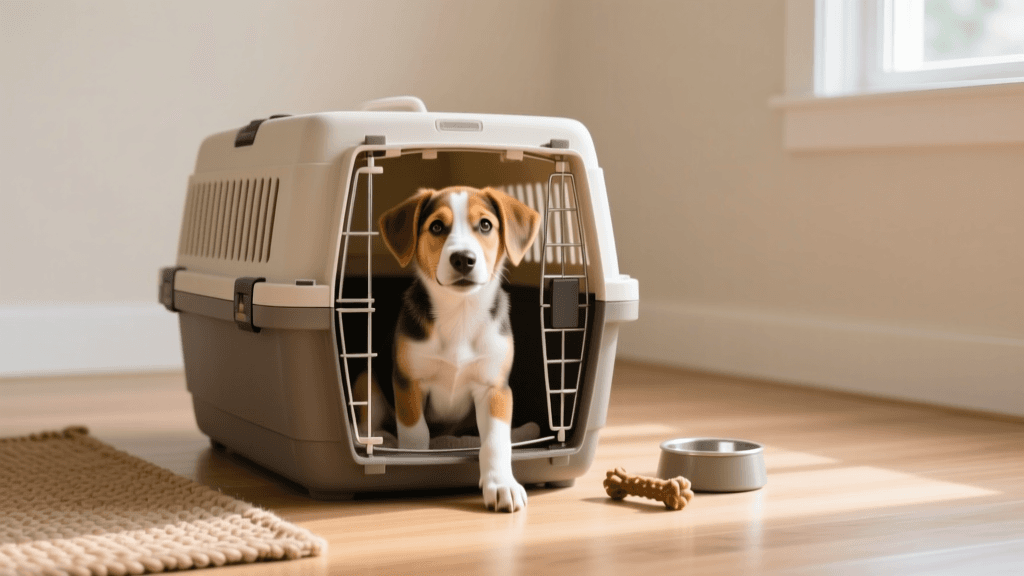
Your puppy should be able to stand up without hitting their head, turn around comfortably, and lie down stretched out. Use the included divider panel to block off excess space in a wire crate. As your puppy grows, move the divider back in 2-inch increments.
Step 2: Establishing a Potty Training Schedule
Puppies thrive on routine. A predictable feeding and potty schedule takes the guesswork out of when your puppy needs to go. The American Kennel Club (AKC) emphasizes that consistent scheduling is the secret to preventing indoor accidents.
Below is a general guideline for how long a puppy can hold their bladder while crated. Remember, these are maximums; active play and drinking water will decrease these times.
| Puppy Age | Maximum Crate Hold Time | Recommended Potty Break Frequency |
|---|---|---|
| 8–10 Weeks | 1 to 1.5 Hours | Every 30–60 minutes when awake |
| 11–14 Weeks | 2 to 3 Hours | Every 1–2 hours when awake |
| 15–16 Weeks | 3 to 4 Hours | Every 2–3 hours when awake |
| 4–6 Months | 4 to 5 Hours | Every 3–4 hours when awake |
Critical Timing Rule: Always take your puppy outside within 15 minutes of waking up from a nap, 15 minutes after eating a meal, and immediately after an intense play session.
Step 3: Introducing the Puppy to the Crate
Before using the crate for potty training, your puppy must view it as a safe haven, not a punishment zone. The Humane Society of the United States recommends making the crate a highly rewarding environment.
- Make it Cozy: Add a washable fleece blanket and a safe chew toy. Avoid thick, plush beds initially, as some puppies will chew and ingest the stuffing, or mistake it for a potty pad.
- Feed Meals Inside: Place their food bowl at the back of the crate so they must fully enter to eat.
- Use High-Value Distractions: When you need to leave the room, give your puppy a KONG Classic stuffed with dog-safe peanut butter and frozen overnight. This builds positive associations with extended crate time.
Step 4: The Outdoor Potty Routine
When it is time to eliminate, follow this exact sequence to build a strong behavioral chain.
- Leash Up: Even if you have a fenced yard, keep your puppy on a 4-to-6-foot nylon leash. This prevents them from wandering off to play and keeps them focused on the task.
- Go to the Same Spot: Take them to the exact same outdoor location every time. The lingering scent will trigger their urge to go.
- Use a Verbal Cue: Say a consistent phrase like 'Go potty' or 'Do your business' in a calm, encouraging tone right as they begin to eliminate.
- The 3-Second Reward Rule: The moment they finish, praise them enthusiastically and deliver a high-value treat within three seconds. We recommend Zuke's Mini Naturals (under 3 calories per treat) so you can reward frequently without causing weight gain.
Pro Tip: Do not bring the puppy inside immediately after they finish. If they learn that pottying equals the end of outdoor fun, they will start holding it to prolong their time outside. Play with them for 5 minutes after they eliminate before heading back in.
Step 5: Handling Accidents and Nighttime Training
Accidents will happen. How you react dictates how quickly your puppy learns from the mistake.
Cleaning Up Accidents
Never rub your puppy's nose in an accident or yell at them. Dogs do not associate punishment with an action that happened even a minute ago; they will only learn to fear you. Instead, interrupt them if you catch them in the act with a sharp 'Ah-ah!', scoop them up, and carry them outside to finish.
Clean indoor accidents thoroughly using an enzymatic cleaner like Nature's Miracle Advanced Stain and Odor Eliminator ($12–$15). Standard household cleaners do not break down uric acid crystals, meaning your puppy will still smell the urine and return to the same spot.
Nighttime Crate Training
Place the crate in your bedroom for the first few weeks. Puppies whine when they are lonely or need to potty. By keeping the crate near your bed, you can hear them stir. Set an alarm for 3:00 AM for the first two weeks to proactively take an 8-week-old puppy outside, preventing them from waking up in a soiled crate.
Essential Potty Training Supplies Checklist
Before starting your training journey, gather these specific supplies to ensure you are fully prepared:
- Adjustable Wire Crate: Sized for your dog's estimated adult weight (e.g., 36-inch for Golden Retrievers, 24-inch for Beagles).
- Enzymatic Cleaner: Crucial for destroying uric acid bonds. Avoid ammonia-based cleaners, as ammonia smells like urine to dogs.
- Long-Line Leash: A 15-foot biothane leash allows the puppy to wander to their preferred sniffing spot while maintaining your control.
- Treat Pouch: A wearable pouch (like the Kurgo Go-Treat Bag) ensures treats are accessible within the critical 3-second reward window.
- Logbook or App: Use a notebook or a pet tracking app to log potty times, meals, and accidents. Identifying patterns is key to adjusting your schedule.
Troubleshooting Common Issues
- Puppy cries in the crate: Ensure they have been exercised and have eliminated before crating. If they are just throwing a tantrum, wait for a brief moment of silence before letting them out so you do not reward the whining.
- Puppy refuses to potty outside: If they hold it outside and go immediately upon returning to the crate, your outdoor time may be too distracting. Find a quieter, more boring spot in the yard to encourage them to focus on their business.
- Regression at 4 months: It is common for puppies to experience potty training regression during teething or growth spurts. Revert to a stricter schedule and increase the frequency of potty breaks for one week to get back on track.
Final Thoughts
Step-by-step puppy potty training using a crate requires consistency, patience, and the right supplies. By adhering to a strict schedule, utilizing proper crate sizing, and rewarding outdoor elimination instantly, you will build lifelong habits for your dog. Remember that every puppy learns at their own pace, so celebrate the small victories and stay committed to the routine.
anouk-beaumont
All our authors care for dogs every day — read more of their work on the authors page.