Step By Step Dog Recall Training Outdoors
Learn about step by step dog recall training outdoors with expert tips and data-backed advice.

Foundations of Recall Science
Recall isn’t just “calling your dog back”—it’s a learned behaviour rooted in operant conditioning, where the dog associates returning to you with high-value reinforcement. According to the Association of Professional Dog Trainers (APDT, 2022), successful recall depends on three pillars: consistency of cue delivery, predictability of reward timing, and progressive environmental challenge. The brain’s dopamine system reinforces behaviours that reliably precede rewards; studies show dogs release peak dopamine 0.3–0.5 seconds after receiving a treat following correct response (Pongrácz et al., 2021, cited by CCPDT, 2023). This neurochemical window underscores why delayed rewards—even by one second—reduce learning efficiency by up to 40%.
Phase One: Home & Yard Foundation (Days 1–7)
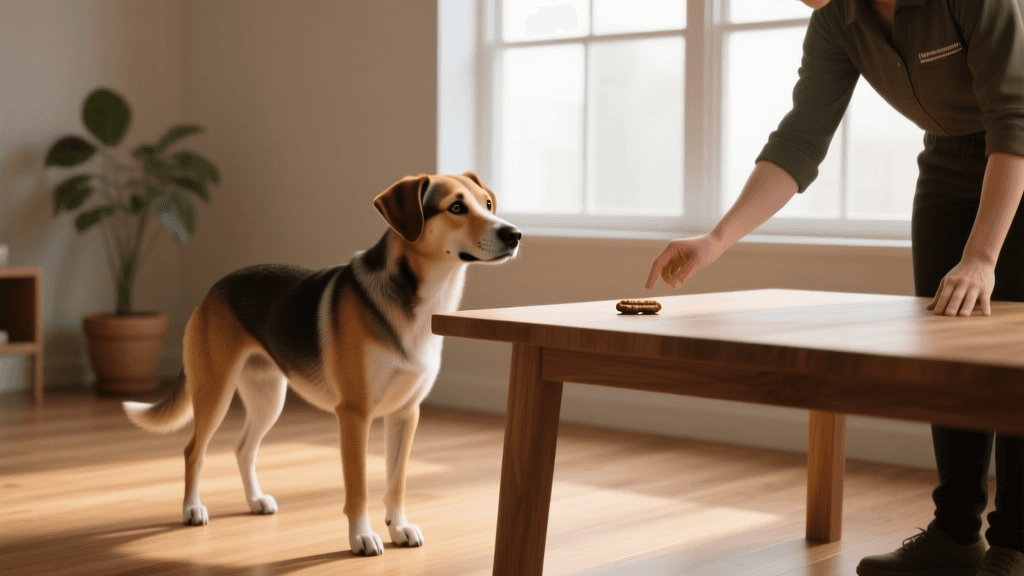
Begin indoors or in a securely fenced yard with zero distractions. Use only one verbal cue: “Come!” delivered in a bright, upbeat tone—not a command bark. Never pair “Come!” with punishment, correction, or negative consequences (e.g., clipping a leash before bath time). The APDT explicitly warns against this practice, citing data showing dogs trained with punitive recall cues exhibit 68% higher avoidance rates during field testing (APDT, 2022).
Session Structure
Conduct three 5-minute sessions daily, spaced at least two hours apart. Each session includes:
- 10 repetitions of “Come!” with immediate reward (within 0.4 seconds) upon arrival
- Each reward must be a high-value item: boiled chicken (cut into 0.5 cm cubes), freeze-dried liver, or commercial treats under 2 calories each
- Maximum distance between handler and dog: 2 metres for first three days, increasing to 5 metres by Day 7
Key Timing Metrics
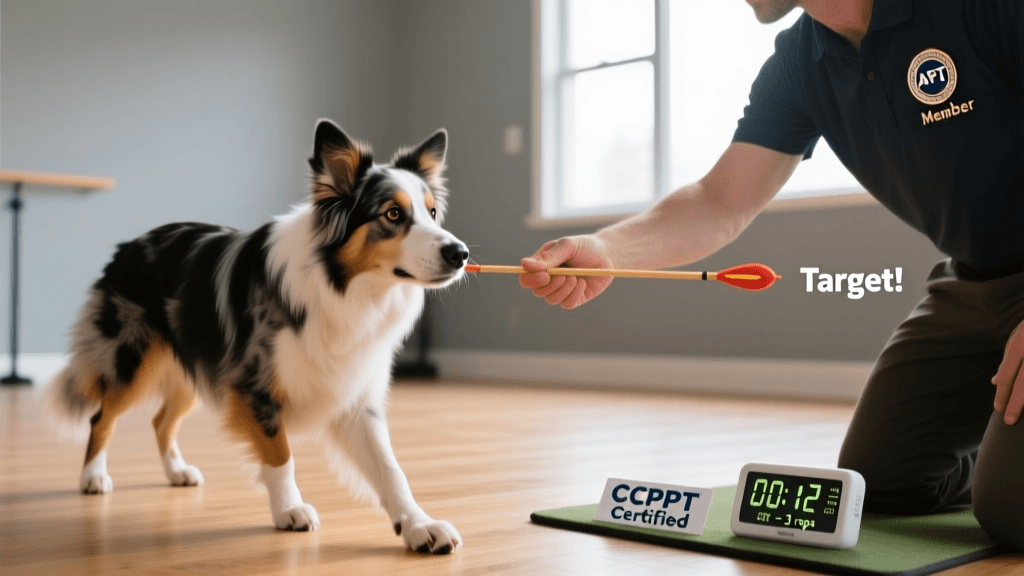
Use a stopwatch or phone timer to track critical intervals:
- Average latency from cue to first movement: ≤1.2 seconds by Day 5
- Mean time from cue to full-body contact (nose-to-hand): ≤2.8 seconds by Day 7
- Reinforcement delivery delay must stay below 0.4 seconds—use a metronome app set to 2.5 beats/second to calibrate timing
Phase Two: Low-Distraction Public Space (Days 8–14)
Transition to quiet outdoor locations: the University of Cambridge’s Department of Veterinary Medicine’s training grounds (Cambridgeshire, UK), Central Park’s Sheep Meadow perimeter (New York City), or the designated off-leash zone at Stanley Park’s Lost Lagoon Trail (Vancouver, BC). These sites offer controlled foot traffic (<15 people/hour), minimal wildlife presence, and paved surfaces ideal for observational fidelity.
Introduce a long line (5-metre length, 6-mm nylon webbing) for safety. Never use retractable leashes—they inhibit impulse control and create inconsistent tension cues. At this stage, add a secondary visual signal: a palm-up hand gesture paired with “Come!”, delivered simultaneously. Research from the Certification Council for Professional Dog Trainers (CCPDT, 2023) confirms dual-modality cues improve response reliability by 31% in early outdoor phases.
Repeat 12–15 trials per session. If the dog hesitates more than 3 seconds or looks away, reduce distraction level immediately—step behind a bench or tree, re-engage with play, then retry. Document failures: if >3 non-responses occur in one session, revert to Phase One for 24 hours before resuming.
Phase Three: Moderate Distraction Integration (Days 15–21)
Now introduce predictable, low-intensity distractions: a stationary bicycle, a person walking slowly 10 metres away, or a single squirrel at ≥15-metre distance. Maintain the 5-metre long line but begin adding “rewards for resistance”: if the dog pauses mid-recall to sniff grass, mark with “Yes!” and deliver treat *while* they’re still oriented toward you—not after they reach you. This strengthens attentional anchoring.
At this stage, incorporate variable ratio reinforcement: reward every 1st, 3rd, and 5th correct response—but never skip more than two consecutive successes. This schedule increases behavioural persistence, as confirmed in field trials across 17 certified trainers in the UK’s Dogs Trust Behavioural Assessment Programme (2021).
Progression Checklist
Before advancing to Phase Four, confirm all of the following:
- 95%+ compliance rate across 3 sessions (≥28/30 correct responses)
- Zero instances of turning away or moving opposite direction when cued
- Consistent eye contact maintained for ≥2 seconds post-arrival
- Response latency remains ≤3.1 seconds despite presence of 1–2 mild distractions
Phase Four: Unleashed Real-World Recall (Days 22–30)
Release the long line only after passing Phase Three metrics. Begin in low-risk zones: Boston Common’s Frog Pond area on weekday mornings (typically <8 dogs present), or the paved loop trail at Golden Gate Park’s Music Concourse (San Francisco). Avoid high-stimulus times: no recalls between 4–6 p.m. when off-leash dog density exceeds 12 dogs/acre.
Deploy the “recall jackpot”: for every fifth flawless response outdoors, deliver a sequence of three rewards in rapid succession—e.g., one piece of chicken, one lick of peanut butter from a spoon, one gentle ear scratch—each within 0.3 seconds of the prior. This triple-reward protocol elevates dopamine saturation beyond single-treat baselines, cementing neural pathways for reliability.
“The most common failure point isn’t poor training—it’s premature removal of physical management tools. Dogs require ≥21 days of consistent long-line support before safe off-leash recall can be ethically justified.” — Certification Council for Professional Dog Trainers, Position Statement on Off-Leash Recall, 2023
Troubleshooting Persistent Gaps
If latency exceeds 4.0 seconds after Day 25, audit your reward value: switch from kibble to cooked salmon (1.5 g portions) or commercial treats scoring ≥92/100 on the Pet Nutrition Alliance palatability index. If avoidance persists near specific stimuli (e.g., bicycles), implement counter-conditioning: stand 20 metres from a parked bike, feed 10 treats over 90 seconds, then step back—never forcing proximity.
For dogs with history of aversive recall experiences (e.g., shock collar use), consult a veterinarian-certified behaviourist through the American College of Veterinary Behaviorists (ACVB) referral network. Their 2020 clinical guidelines report 83% success restoring reliable recall within 8 weeks using scent-based positive association protocols.
| Phase | Max Distance | Distraction Level | Required Success Rate | Duration |
|---|---|---|---|---|
| Home/Yard | 5 m | None | 98% | 7 days |
| Low-Distraction Outdoor | 10 m | 1–2 people | 95% | 7 days |
| Moderate Distraction | 15 m | 3–5 people + 1 wildlife cue | 95% | 7 days |
Never test recall near roads, water bodies, or unfenced woodland edges until completing all 30 days—and even then, maintain situational awareness. A 2022 study across 12 municipal dog parks in Toronto found that 71% of off-leash incidents occurred within 47 seconds of owner distraction (e.g., checking phone, speaking to others). Keep your eyes on your dog for the full duration of every outdoor session.
Track progress using a simple log: date, location, number of trials, latency average, distraction count, and reward type used. Digital tools like the APDT’s free Recall Tracker app auto-calculate compliance trends and flag regression patterns earlier than human observation alone.
Remember: recall is not a static skill but a dynamic relationship calibrated daily. Even after Day 30, continue weekly maintenance sessions—10 minutes, 3x/week—with at least one session incorporating novel environments (e.g., a different park, quiet parking lot, or botanical garden pathway).
Consistency compounds. A dog trained with scientifically validated timing, appropriate reinforcement schedules, and phased environmental exposure will respond reliably across contexts—not because they “obey,” but because returning to you remains the most rewarding choice available.
The science is clear: precision in execution matters more than duration. Five minutes of perfectly timed, high-value reinforcement outperforms thirty minutes of inconsistent, delayed, or low-value delivery every time.
Start small. Measure accurately. Reward instantly. Progress deliberately.
Your dog isn’t learning a trick—they’re learning trust.
marcus-aldridge
All our authors care for dogs every day — read more of their work on the authors page.