Resource Guarding in Dogs: Expert Behavior Modification Guide
Discover expert behavior analysis techniques to safely modify resource guarding in dogs using counter-conditioning and desensitization protocols.
Understanding Resource Guarding Through a Behavioral Lens
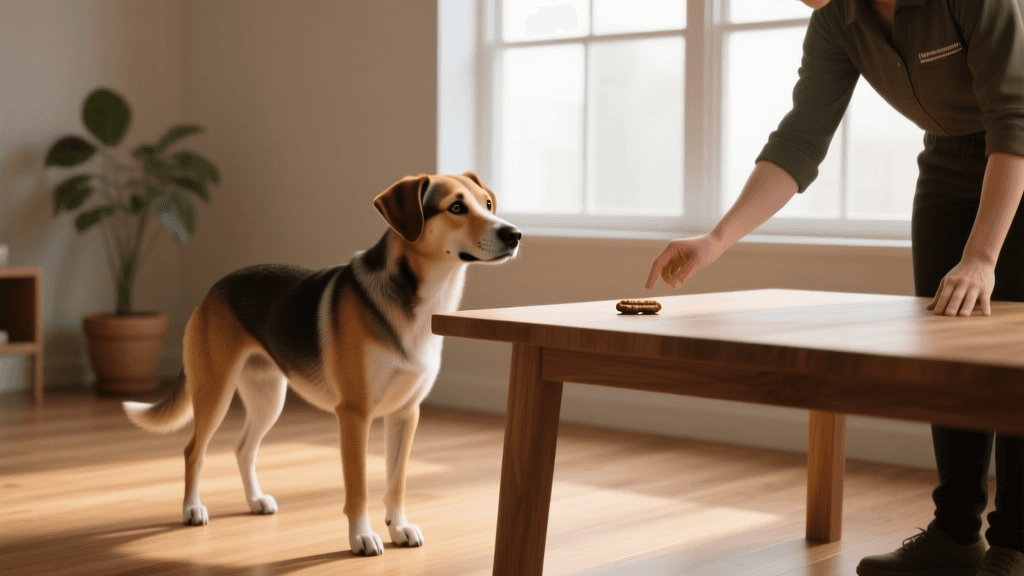
Resource guarding is a natural, adaptive behavior rooted in a dog’s evolutionary need to secure vital assets such as food, territory, and high-value objects. However, in a domestic environment, this behavior can become dangerous and maladaptive. From an expert behavior analysis perspective, resource guarding is not a symptom of a dog attempting to assert ‘dominance’ or achieve ‘alpha’ status. Instead, it is a fear-based response driven by the anticipation of resource loss. To effectively modify this behavior, we must discard outdated dominance-based theories and apply evidence-based principles of applied behavior analysis (ABA), specifically classical counter-conditioning and operant desensitization.
According to the ASPCA, resource guarding can manifest over food bowls, bones, toys, sleeping areas, or even specific people. When a dog perceives a threat to their resource, they escalate through a predictable sequence of distance-increasing behaviors: freezing, whale-eye (showing the whites of the eyes), lip curling, growling, snapping, and ultimately biting. Our goal as behavioral consultants is to intervene before the dog feels the need to escalate to a bite, altering their underlying emotional response to the presence of humans near their valued items.
Behavioral modification is not about asserting dominance; it is about altering the dog’s emotional response to a perceived threat through systematic desensitization and positive reinforcement.
The ABCs of Guarding: Antecedents, Behaviors, and Consequences
To design an effective modification plan, we must first conduct a functional assessment using the ABC model of behavior:
- Antecedent (The Trigger): A human approaches within 5 feet while the dog is chewing a bully stick.
- Behavior (The Response): The dog stiffens, lowers its head over the stick, and emits a low-frequency growl.
- Consequence (The Result): The human becomes startled and retreats from the room.
In this scenario, the growling behavior is maintained by negative reinforcement. The dog’s growl successfully removed the aversive stimulus (the approaching human), thereby increasing the likelihood that the dog will growl in the future under similar antecedent conditions. Punishing the growl—such as through yelling or physical corrections—does not eliminate the dog’s fear of losing the resource; it merely suppresses the warning signal. The American Veterinary Society of Animal Behavior (AVSAB) strongly advises against the use of punishment for fear-based behaviors, as it can lead to suppressed warning signs and result in a dog that bites without prior provocation.
Essential Tools for Behavior Modification
Successful implementation of a counter-conditioning and desensitization (CC&D) protocol requires precise timing, high-value reinforcers, and environmental management. Below are the specific tools required for this protocol:
- Treat Delivery System: Outward Hound Treat Tote (Approx. $12.99). A hands-free pouch with a wide opening allows for rapid treat retrieval, ensuring the reinforcer is delivered within 0.5 seconds of the marker word.
- High-Value Reinforcers: Ziwi Peak Venison Recipe or Stewart Pro-Treat Freeze-Dried Beef Liver (Approx. $25.00 - $35.00). Standard kibble is insufficient for CC&D. The unconditioned stimulus must be of such high biological value that it overrides the dog’s baseline anxiety.
- Environmental Management: Regalo Easy Step Walk Thru Baby Gate (Approx. $39.99). Used to create physical barriers during mealtimes or when providing long-lasting chews, preventing antecedent triggers from occurring while the modification protocol is underway.
- Measurement Tools: A 25-foot retractable measuring tape to accurately map the dog’s threshold distance during initial baseline assessments.
Step-by-Step Counter-Conditioning and Desensitization Protocol
The following protocol utilizes classical counter-conditioning to change the dog’s emotional response (Conditioned Response) to a human approaching their resource (Conditioned Stimulus). We pair the approach with the delivery of a superior food item (Unconditioned Stimulus).
Phase 1: Establishing a Baseline and Threshold
Threshold is the exact distance or intensity at which the dog notices the trigger but does not exhibit guarding behaviors (no freezing, whale-eye, or growling). Begin by giving the dog a mid-value chew (e.g., a carrot or a standard biscuit) in a quiet room. Using your measuring tape, identify the exact distance where the dog remains relaxed. If the dog tenses at 8 feet, your sub-threshold working distance is 10 feet.
Phase 2: The Approach and Retreat (Desensitization)
Stand at your sub-threshold distance (e.g., 10 feet). Take one calm step forward. The exact millisecond you step forward, use your marker word (e.g., ‘Yes!’) and toss a piece of freeze-dried liver directly to the dog. Immediately turn and walk away. The timing here is critical: the human’s approach must predict the arrival of the high-value treat. Repeat this 15 to 20 times per session, ensuring the dog remains under threshold. If the dog guards the liver you just tossed, you are working too close; increase your distance by 3 feet.
Phase 3: The 'Trade-Up' Game (Operant Conditioning)
Once the dog exhibits a positive conditioned emotional response (e.g., wagging tail, looking up expectantly when you approach), introduce the ‘Trade-Up’ game. Offer a piece of boiled chicken breast in exchange for a lower-value item like a Kong toy. As noted by the American Kennel Club (AKC), teaching a dog to voluntarily relinquish items in exchange for something better builds trust and eliminates the confrontation associated with forced item removal. Never reach into the dog’s mouth; simply present the high-value food near their nose, mark the release with ‘Yes!’, and allow them to eat while you calmly pick up the dropped item. After 5 seconds, return the original item to them so they learn that giving something up is temporary and highly profitable.
Data Table: Assessing Guarding Severity and Intervention Timelines
Behavioral modification is not a linear process. The timeline for desensitization depends heavily on the severity of the guarding behavior, the dog’s reinforcement history, and the consistency of the handler. The table below outlines the standard severity scale used in clinical behavior analysis.
| Severity Level | Behavioral Indicators | Primary Modification Strategy | Estimated Timeline |
|---|---|---|---|
| Level 1 | Freezing, hard stare, eating faster | Classical CC&D at close proximity | 2 - 4 Weeks |
| Level 2 | Lip curling, low-frequency growling | Sub-threshold CC&D, strict management | 1 - 3 Months |
| Level 3 | Lunging, snapping (no contact) | Desensitization, muzzle conditioning | 3 - 6 Months |
| Level 4 | Biting with inhibition (bruising/no puncture) | Professional intervention, environmental restructuring | 6 - 12 Months |
| Level 5 | Biting with intent to injure (deep punctures) | Veterinary behaviorist, strict lifetime management | Indefinite / Lifetime |
Antecedent Arrangement: Management vs. Modification
A common error made by novice owners is confusing management with modification. Management involves altering the environment to prevent the behavior from occurring, thereby preventing the neural pathways associated with guarding from being further reinforced. Modification is the active process of changing the dog’s emotional state. Both are required simultaneously.
For example, if your dog guards their food bowl from other household pets, you must implement antecedent arrangement by feeding the dogs in entirely separate rooms behind closed doors or baby gates. This management strategy ensures zero rehearsal of the guarding behavior while you actively work on your CC&D protocol during controlled training sessions. Failing to manage the environment will result in intermittent reinforcement of the guarding behavior, which is highly resistant to extinction.
Conclusion
Modifying resource guarding requires patience, precise timing, and a deep understanding of operant and classical conditioning. By identifying thresholds, utilizing high-value biological reinforcers, and systematically changing the dog’s emotional response to human proximity, we can transform a fearful, reactive dog into a confident and cooperative companion. Always prioritize safety, utilize management tools like baby gates and basket muzzles when necessary, and consult with a certified applied animal behaviorist (CAAB) or a veterinary behaviorist for cases involving Level 3 aggression or higher.
anouk-beaumont
All our authors care for dogs every day — read more of their work on the authors page.