A Step-by-Step Guide to Stress-Free Dog Nail Trimming
Master stress-free dog nail trimming with our step-by-step desensitization guide. Learn low-stress handling techniques to protect your dog's joint health.
Introduction to Canine Nail Care
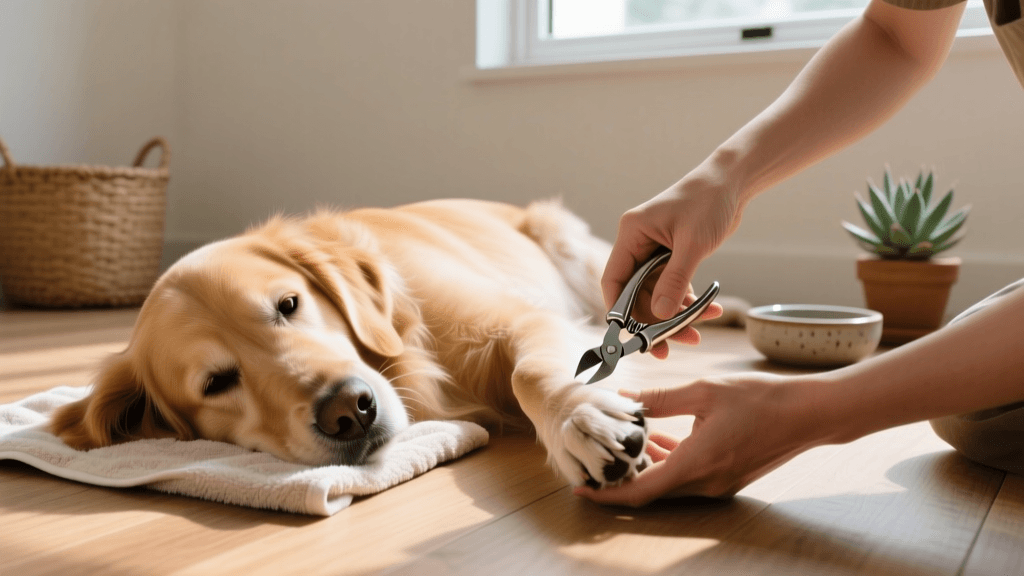
For many dog owners, nail trimming is the most dreaded item on the grooming checklist. The mere sound of clippers can send a normally relaxed pup hiding under the bed, leading to a stressful wrestling match that leaves both human and hound exhausted. However, avoiding this essential health maintenance is not an option. Overgrown nails are not just a cosmetic issue; they are a significant health hazard that can alter your dog's biomechanics and lead to chronic pain. According to the American Kennel Club (AKC), regular nail maintenance is a fundamental pillar of canine wellness. This comprehensive, step-by-step training guide will teach you how to desensitize your dog to nail trimming using low-stress, force-free handling techniques.
The Hidden Health Risks of Overgrown Nails
When a dog's nails grow too long, they make constant contact with the ground. This continuous pressure pushes the nail bed back into the toe joint, which is incredibly painful and comparable to a human wearing shoes that are two sizes too small. Over time, this pressure forces the dog to shift its weight backward, altering its natural posture and center of gravity. This unnatural stance places undue stress on the joints, ligaments, and tendons, eventually contributing to early-onset osteoarthritis, splayfoot, and spinal misalignment. Furthermore, long nails reduce traction on smooth surfaces like hardwood floors, increasing the risk of catastrophic slips, torn cranial cruciate ligaments (CCL), and severe musculoskeletal injuries. Keeping the nails trimmed so they do not click on the floor is a non-negotiable aspect of preventive veterinary care.
Essential Tools for Low-Stress Nail Trimming
Before beginning your training, you must gather the right equipment. Investing in high-quality tools reduces the physical effort required and minimizes the risk of crushing the nail, which causes pain and exacerbates fear.
- Scissor-Style Clippers: Brands like Millers Forge or Safari offer sharp, stainless-steel blades that cleanly slice through the keratin. Avoid cheap guillotine clippers, as they tend to crush the nail and require frequent blade replacements.
- Rotary Nail Grinder (Dremel): The Dremel PawControl 7760-PGK is a favorite among veterinary behaviorists. It slowly sands the nail down, eliminating the risk of cutting the quick and leaving a smooth edge.
- Lick Mat: A textured silicone mat, such as the Hyper Pet IQ Treat Mat, smeared with dog-safe peanut butter or plain Greek yogurt, provides powerful distraction and triggers endorphin release through licking.
- High-Value Treats: Soft, easily consumable treats like Zuke's Mini Naturals or boiled chicken breast allow for rapid reward delivery without filling the dog up too quickly.
- Styptic Powder: Kwik Stop or a generic styptic powder is mandatory to have on hand to instantly clot bleeding if the quick is accidentally nicked.
Nail Trimming Tools: Comparison Chart
| Tool Type | Best For | Pros | Cons | Estimated Cost |
|---|---|---|---|---|
| Scissor Clippers | Thick nails, quick trims | Fast, quiet, inexpensive | Higher risk of cutting the quick | $15 - $25 |
| Rotary Grinder | Nervous dogs, black nails | Precise, smooth edges, no crushing | Noise/vibration can scare dogs initially | $40 - $60 |
| Guillotine Clippers | Small dogs, thin nails | Compact design | Blades dull quickly, crushes thick nails | $10 - $15 |
Step-by-Step Desensitization Training Guide
Desensitization and counter-conditioning (DS/CC) is the gold standard for modifying fear-based behaviors. The goal is to change your dog's emotional response to the clippers from 'fear' to 'anticipation of a reward.' This process requires patience and should be broken down into distinct phases. Keep training sessions short—no more than 3 to 5 minutes at a time—to prevent cognitive overload.
Phase 1: Tool Introduction (Days 1-3)
Place the nail clippers or grinder on the floor next to you during a relaxed moment, such as when you are watching television. Do not attempt to touch your dog with the tool. Every time your dog looks at or sniffs the tool, mark the behavior with a verbal 'Yes!' or a clicker, and immediately toss a high-value treat. Repeat this until the dog happily approaches the tool expecting a reward. This phase builds a positive conditioned emotional response (+CER) to the visual presence of the grooming equipment.
Phase 2: Paw Handling and Touch (Days 4-7)
Many dogs are sensitive to having their paws handled due to the high concentration of nerve endings. Sit comfortably with your dog and gently touch their shoulder, slowly working your way down to their wrist (carpus). If they remain relaxed, touch the top of their paw for one second, mark, and treat. Gradually increase the duration of the touch and progress to gently squeezing individual toes. If your dog pulls away, you have moved too fast; return to the previous step where they were successful. Incorporate the lick mat during this phase to create a positive association with paw manipulation.
Phase 3: The Sound and Sensation (Days 8-11)
If using a rotary grinder, turn it on in another room at first, treating your dog for calm behavior. Gradually move closer over several sessions until the grinder is running in the same room. Next, introduce the sensation without trimming. Touch the back of the clippers or the turned-off grinder to your dog's nails for a fraction of a second, mark, and treat. If using a grinder, turn it on and gently tap the side of the grinder against the nail (without sanding) so they feel the vibration. Reward heavily for stillness.
Phase 4: The First Trim (Days 12-14)
Once your dog willingly offers their paw and shows relaxed body language (soft eyes, open mouth, relaxed ears), you are ready to trim. Isolate one single nail. Position the clipper and make a clean, swift cut, removing only 1 to 2 millimeters of the very tip. Immediately deliver a jackpot reward (3-5 treats in a row). End the session on this positive note. Do not attempt to trim all four paws in one sitting. Trimming one nail per day is vastly superior to wrestling your dog through all twenty nails once a month.
Understanding Nail Anatomy: Avoiding the Quick
The 'quick' is the living tissue inside the nail that contains blood vessels and nerves. Cutting into the quick causes sharp pain and profuse bleeding. According to VCA Hospitals, identifying the quick is relatively easy in dogs with white or clear nails, where it appears as a pinkish-red core. However, in dogs with black nails, the quick is hidden. To safely trim black nails, make multiple tiny micro-cuts (1mm at a time). After each cut, examine the cross-section of the nail. When you see a chalky white or grayish oval in the center, stop immediately. The next cut will likely expose the black, jelly-like center of the quick. Regular trimming actually encourages the quick to recede, allowing you to maintain shorter nails over time.
Emergency Protocol: What If You Cut the Quick?
Even professional groomers and veterinarians occasionally nick the quick. If this happens, remain completely calm. Your dog will react to your emotional state. Do not yell or panic. Gently restrain the paw, take a pinch of styptic powder, and press it firmly directly against the bleeding tip of the nail for 5 to 10 seconds. The powder will react with the blood to form an instant clot. If you do not have styptic powder, cornstarch or a bar of unscented soap can be used in a pinch by pressing the nail into the substance. Offer your dog a high-value treat immediately after the bleeding stops to prevent the session from ending on a negative note, and give them a break from grooming for at least 48 hours.
Conclusion
Transforming nail trimming from a traumatic ordeal into a cooperative care routine takes time, empathy, and consistency. By respecting your dog's threshold, utilizing positive reinforcement, and understanding their anatomy, you safeguard their long-term orthopedic health. For further reading on low-stress grooming techniques, the ASPCA offers excellent foundational guidelines on canine handling. Remember, the goal is not just short nails, but a confident, trusting dog who feels safe in your care.
anouk-beaumont
All our authors care for dogs every day — read more of their work on the authors page.