Station Training Multiple Dogs in a Multi-Pet Home
Learn how to teach the place command to multiple dogs simultaneously. Essential station training tips for harmony in multi-dog and multi-pet homes.

Mastering Station Training in a Multi-Dog, Multi-Pet Household
Living with multiple dogs alongside other pets like cats, birds, or rabbits is an incredibly rewarding experience. However, without proper boundaries and training, a multi-pet home can quickly devolve into chaos. Doorbells ring, dinner is prepared, and suddenly you have a traffic jam of paws and claws. The ultimate solution for maintaining household harmony is station training, also known as mat work or the "place" command. Station training teaches your dogs to go to a specific bed or mat and remain there until released, providing them with a safe zone and giving you peace of mind.
While teaching a single dog to stay on a mat is a common obedience goal, training multiple dogs to hold their stations simultaneously—especially while a cat wanders by or guests enter the home—requires a strategic, phased approach. According to training experts at the American Kennel Club (AKC), the "place" command is one of the most versatile tools in a dog owner's repertoire, essential for managing excitement and preventing resource guarding in busy environments.
Why Station Training is Crucial for Multi-Pet Homes
In a single-dog home, a dog underfoot while you cook is a nuisance. In a multi-dog and multi-pet home, it is a severe safety hazard. Station training provides several critical benefits:
- Prevents Resource Guarding: Dogs remain on their separate mats during human mealtimes or when high-value chews are distributed.
- Protects Smaller Pets: When your cat needs to cross the room or your toddler is learning to walk, dogs on their stations cannot engage in chase behaviors.
- Reduces Canine Arousal: Multi-dog households often suffer from "pack mentality" arousal. Stationing forces dogs to self-soothe and practice impulse control independently of the pack.
- Manages Doorway Chaos: Prevents door-dashing and overwhelming guests when visitors arrive.
"The goal of station training in a multi-pet home isn't just obedience; it is about teaching each dog that their mat is the most rewarding, relaxing place in the house, regardless of what the other animals are doing."
Essential Gear for Multi-Dog Mat Work
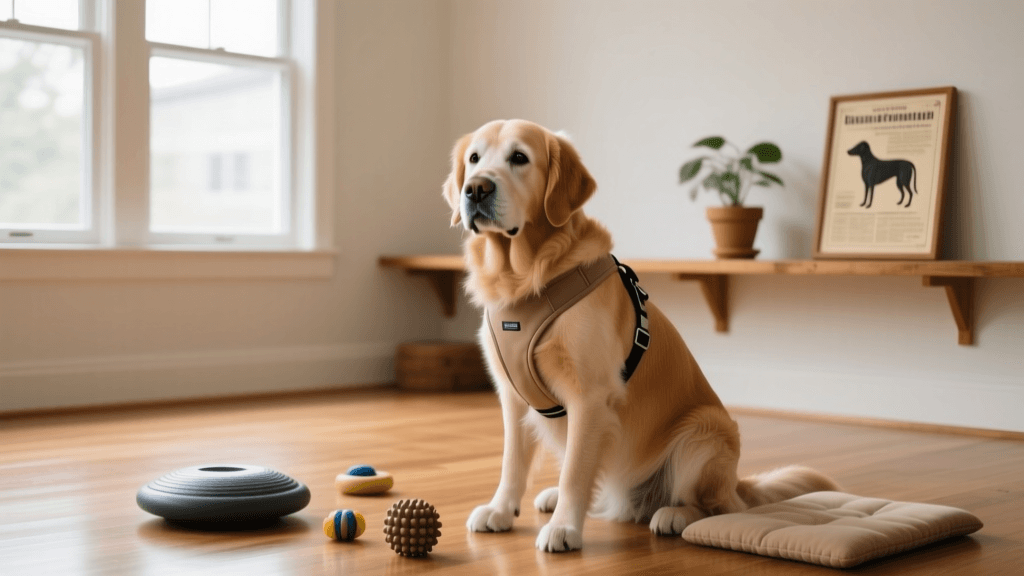
To set your pack up for success, you need the right equipment. Do not use towels or blankets that can be easily dragged around. You need distinct, immobile stations.
1. The Stations (Beds and Mats)
For medium to large dogs, raised cot-style beds are highly recommended because they provide a clear physical boundary. The Kuranda Chewproof Cot (approx. $130-$150) is an industry standard for durability. For smaller dogs or apartment living, a heavy-duty flat mat like the Gorilla Grip Durable Rug (approx. $25-$40, 24x36 inches) works well due to its non-slip rubber backing. Ensure each dog has their own dedicated station; never force two dogs to share a single mat.
2. High-Value Training Treats
When competing with the distraction of other pets, kibble will not suffice. Use Zuke's Mini Naturals (approx. $6 for a 6oz bag) for repetitive clicking and rewarding, and reserve boiled chicken breast or string cheese for massive distractions like the cat running past.
3. Treat Pouches and Long Lines
Wear a dedicated treat pouch on your hip. For the initial phases of group training, keep a 15-foot lightweight training leash attached to each dog's harness to prevent them from breaking their station and self-rewarding.
Phase 1: Individual Foundation Training
Before you can train the pack, you must train the individual. The ASPCA emphasizes that dogs must fully understand a behavior in isolation before introducing environmental distractions—especially other animals.
Spend two weeks training each dog individually in a quiet room, away from the other pets. Follow these steps:
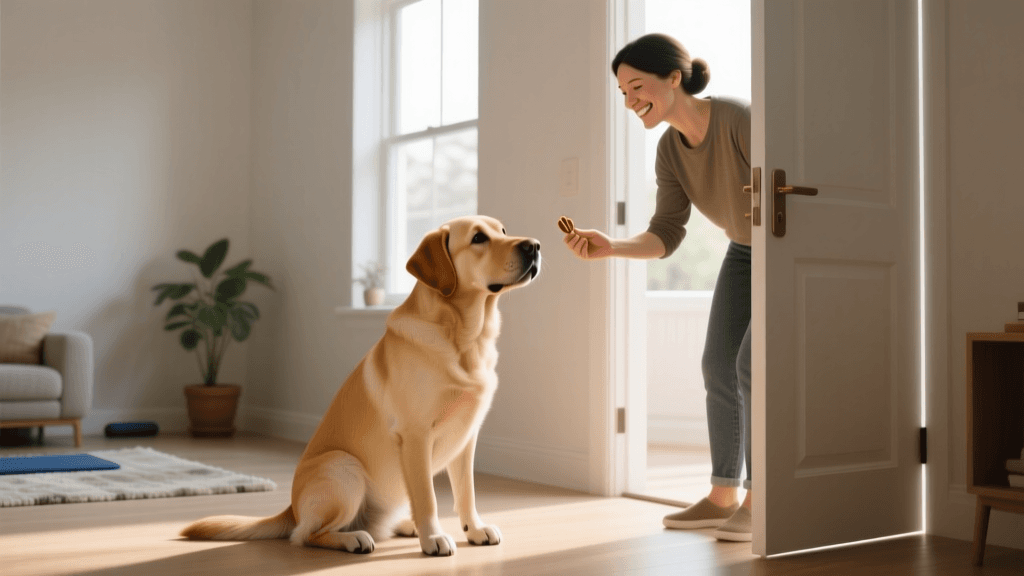
- Lure and Capture: Toss a treat onto the mat. When all four paws are on the mat, mark with a "Yes!" or a clicker, and deliver a second treat directly on the mat.
- Add the Cue: Once the dog is reliably stepping onto the mat for the tossed treat, add the verbal cue "Place" just before they step on.
- Build Duration: Stop tossing the treat. Ask for "Place," feed treats continuously every 2 seconds while they remain on the mat, then use your release word ("Free" or "Break") to let them off.
- Add Distance: Take one step back, call them to "Place," reward, and gradually increase the distance until you can send them to their mat from across the room.
Phase 2: Adding the Pack Dynamic
Once Dog A and Dog B can individually hold their "Place" for 3 minutes with a 10-foot distance from you, it is time to bring them together. Spatial arrangement is critical here. Place the mats at least 8 feet apart initially. If the mats are too close, dogs will experience frustration and compete for your attention.
Send Dog A to their place and reward heavily. Then, send Dog B to their place. The moment Dog B hits their mat, toss a treat to Dog A to reward them for holding their stay while the other dog moved. This is called differential reinforcement. You are teaching Dog A that Dog B moving is a cue to stay put and earn a treat.
Managing the 3 Ds in a Multi-Dog Context
When training multiple dogs, you must carefully manage Duration, Distance, and Distraction. If you increase the distraction (e.g., the cat enters the room), you must temporarily decrease the duration (reward every 2 seconds instead of 10) and decrease the distance (stand right next to the mats). Never increase more than one "D" at a time across the pack.
Phase 3: Multi-Pet Distraction Proofing
This is where the real magic happens for multi-pet households. You must systematically introduce your other pets as controlled distractions.
- The Feline Factor: Have a family member carry the cat across the room, or allow the cat to walk by at a distance. The moment your dogs look at the cat but keep their paws on their mats, mark and reward heavily with high-value chicken.
- The Dinner Rush: Begin prepping your dogs' dinner bowls while they are on their stations. If a dog breaks their station, immediately stop prepping, stand up straight, and wait. Do not scold. Simply wait for them to return to the mat, then resume. This teaches them that staying on the mat makes the food appear, while breaking the mat makes the food disappear.
- The Doorbell Drill: Record the sound of your doorbell on your phone. Play it at a low volume while dogs are stationed. Reward for staying. Gradually increase the volume over several weeks.
Troubleshooting Common Multi-Dog Station Issues
Even with careful planning, multi-dog dynamics can cause hiccups. Use this troubleshooting chart to diagnose and fix common problems.
| Issue Observed | Likely Cause | Actionable Solution |
|---|---|---|
| Dog A breaks stay when Dog B gets a treat. | Jealousy or lack of impulse control regarding the other dog's reward. | Practice "Zen Bowl" exercises. Teach Dog A that watching Dog B eat is a cue to look at you for a separate reward. |
| Dogs whine or vocalize while on their mats. | Arousal levels are too high; duration was increased too quickly. | Reduce the time requirement to 10 seconds. Reward only for moments of total silence and relaxed body posture (e.g., a deep sigh or hip roll). |
| Dog steals the other dog's mat. | Mats are too close together or one mat is significantly more comfortable. | Increase spacing to 10+ feet. Ensure both mats are identical in size, texture, and comfort level. |
| Dog breaks stay to chase the household cat. | Predatory drift; the distraction was introduced before the foundation was solid. | Keep the dog on a 15-foot leash during cat introductions. Step on the leash to prevent the chase, and reward the dog for re-orienting to you. |
Final Thoughts on Household Harmony
Station training multiple dogs in a multi-pet home is not an overnight process. It requires consistency, high-value motivation, and a deep understanding of your dogs' individual thresholds. Aim for three 5-minute training sessions per day rather than one long, exhausting session. Over time, the mats will become a magnetic default behavior. When the doorbell rings, or the cat gets the zoomies, your dogs will instinctively head to their stations, transforming your chaotic multi-pet home into a sanctuary of calm and mutual respect.
robin-maitland
All our authors care for dogs every day — read more of their work on the authors page.