Start Button Training 2026: Build Trust During Dog Grooming
Discover how start button cooperative care training builds trust during dog grooming in 2026. Learn step-by-step techniques and top tools for success.
The Evolution of Canine Husbandry in 2026
As we navigate through 2026, the veterinary and behavioral communities have overwhelmingly shifted away from forced restraint and dominance-based handling. Today, the gold standard for dog grooming, veterinary care, and routine husbandry is cooperative care. At the heart of this movement is the concept of the 'start button'—a training technique that gives your dog the agency to consent to handling. According to the Fear Free Pets initiative, reducing fear, anxiety, and stress during routine care is not just a moral imperative; it is a medical necessity that improves long-term health outcomes and deepens the human-animal bond.
For decades, dog owners were taught to simply 'hold still' or pin their dogs down for nail trims, ear cleanings, and teeth brushing. While this might get the job done in the short term, it systematically erodes trust. In 2026, modern dog training recognizes that forcing a dog to endure uncomfortable procedures spikes cortisol levels and creates lasting negative associations. By implementing start button training, you transform grooming from a battleground into a collaborative bonding experience.
What Exactly is a 'Start Button'?
In cooperative care, a start button is a specific, trained behavior or physical object that signals the dog's willingness to participate in a procedure. When the dog interacts with the start button, the handler may proceed. If the dog stops interacting with the button, moves away, or offers an 'opt-out' behavior, the handler must immediately stop the procedure. This binary communication system gives the dog a voice. Counterintuitively, giving a dog the power to say 'no' makes them far more likely to say 'yes.' When dogs realize they are not trapped, their defensive fight-or-flight responses diminish, replaced by curiosity and cooperation.
Start buttons can take many forms. For some dogs, it is a chin rest on a grooming table. For others, it is a specific lick mat, a target stick, or a designated mat on the floor. The key is consistency and absolute respect for the opt-out. If you violate the opt-out rule by continuing to trim nails after the dog has lifted their head off the chin rest, the start button loses its meaning, and trust is broken.
Choosing Your Start Button: 2026 Tool Comparison
Selecting the right start button depends on your dog's temperament, the specific grooming task, and your home environment. Below is a comparison of the most effective start button tools utilized by certified behaviorists in 2026.
| Tool Type | Best For | Pros | Cons |
|---|---|---|---|
| LickiMat Soother | Nail grinding, ear cleaning, brushing | Provides high-value distraction; promotes calming endorphins through licking. | Can be messy; requires freezing or preparing spreads in advance. |
| Karen Pryor Target Stick | Positioning, paw handling, vet exams | Highly precise; keeps the handler's hands free; excellent for shaping complex movements. | Requires foundational clicker training; less inherently soothing than food-based buttons. |
| Chin Rest (Hand or Prop) | Eye drops, teeth brushing, head handling | Builds profound trust; keeps the dog's head perfectly still without physical restraint. | Takes the longest to train; requires the dog to be comfortable with close facial proximity. |
| Stationary Target Mat | Full-body brushing, desensitization to clippers | Easy to set up anywhere; creates a clear 'work zone' for the dog. | Dogs with high food drive may break the station if not proofed against distractions. |
Step-by-Step Cooperative Nail Grinding Protocol
Nail trims are notoriously stressful, but they are the perfect candidate for start button training. For this protocol, we will use a stationary target mat paired with a Dremel PawControl 7760-PGK, which retails around $55 in early 2026 and remains the industry favorite for its quiet motor and pet-safe guard.
Step 1: Mat Stationing and Duration
Begin by teaching your dog to lie on a specific, textured mat (like a silicone grooming mat). Use high-value treats to reward them for staying on the mat. Do not introduce the Dremel yet. The goal is to build a positive emotional response to the mat itself. Practice this in short, three-minute sessions daily until your dog eagerly runs to the mat when you bring it out.
Step 2: Introducing the Start Button Cue
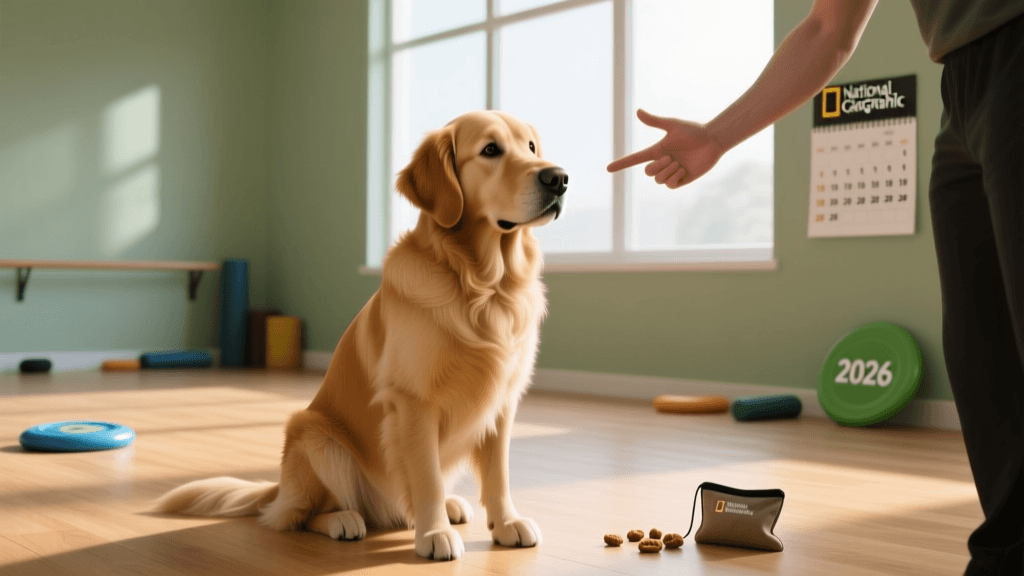
Once your dog is comfortable on the mat, introduce your start button cue. This could be a verbal cue like 'Ready?' or a hand signal. When you give the cue, wait for your dog to settle onto the mat and offer eye contact. The moment they do, mark the behavior with a clicker or a verbal 'Yes!' and deliver a treat. If your dog steps off the mat, simply wait. Do not lure them back. They must choose to return.
Step 3: Desensitizing the Dremel
With the dog on the mat, turn the Dremel on at the lowest setting, keeping it several feet away. Treat continuously while the sound is on, and stop treating the second you turn it off. Gradually decrease the distance over multiple sessions. According to ASPCA grooming guidelines, gradual desensitization to the sound and vibration of grooming tools is critical for preventing noise phobias and handling sensitivity.
Step 4: The Touch and the Opt-Out
Give your start button cue. Once the dog is settled, bring the turned-off Dremel to touch a single nail. Treat immediately. Next, turn the Dremel on and touch the nail for exactly one second. Treat. If at any point the dog lifts their paw, turns their head away, or steps off the mat, immediately turn off the Dremel, step back, and wait. This is the opt-out. Respect it completely. When the dog resets on the mat, you may begin again. Over weeks, you will chain these one-second touches into full nail grinds.
The Neurochemistry of Trust and Bonding
The magic of start button training lies in neurochemistry. When a dog feels trapped, the amygdala triggers a flood of cortisol and adrenaline, preparing the body to fight or flee. In this state, learning is impossible, and the bond between dog and owner suffers. However, when a dog is given agency and successfully navigates a challenging situation through positive reinforcement, the brain releases dopamine and oxytocin. Oxytocin, often called the 'bonding hormone,' is released in both the dog and the human during cooperative, low-stress interactions.
By prioritizing your dog's emotional state over the immediate completion of a grooming task, you are actively wiring their brain to associate you with safety and predictability. The AKC Training Experts consistently emphasize that dogs trained with force-free, choice-based methods exhibit higher levels of resilience and a stronger working relationship with their handlers in all aspects of life, from obedience trials to everyday household manners.
Troubleshooting Common Setbacks
Even with the best intentions, you may encounter roadblocks. If your dog repeatedly opts out and refuses to return to the start button, you have likely pushed too far, too fast. This is not a failure; it is valuable data. It means the criteria for the next step was too high. Return to the previous step where your dog was successful and build duration or proximity more slowly.
Another common issue is the 'fake opt-out,' where a dog takes a treat from the lick mat, turns their head, but doesn't actually leave the station. In this case, you must define clear parameters for the opt-out. If using a chin rest, the chin must remain physically touching the target. If using a mat, all four paws must remain on the surface. Consistency in your criteria helps the dog understand exactly how to communicate their boundaries.
Conclusion: A Lifetime of Consent
Start button training is not a quick fix for a dog who hates the groomer; it is a fundamental shift in how you communicate with your canine companion. By embracing the cooperative care standards of 2026, you are investing in a relationship built on mutual respect rather than compliance through coercion. The time you spend teaching your dog how to say 'no' will ultimately result in a dog who eagerly says 'yes,' turning routine husbandry into a profound opportunity for bonding and trust-building.
priya-sutaria
All our authors care for dogs every day — read more of their work on the authors page.