French Bulldog vs. Pug: The Ultimate Apartment Guide
Deciding between a French Bulldog and a Pug for apartment living? Compare costs, space needs, health, and exercise to find your perfect small-space dog.
The Appeal of Compact Companions in Urban Spaces
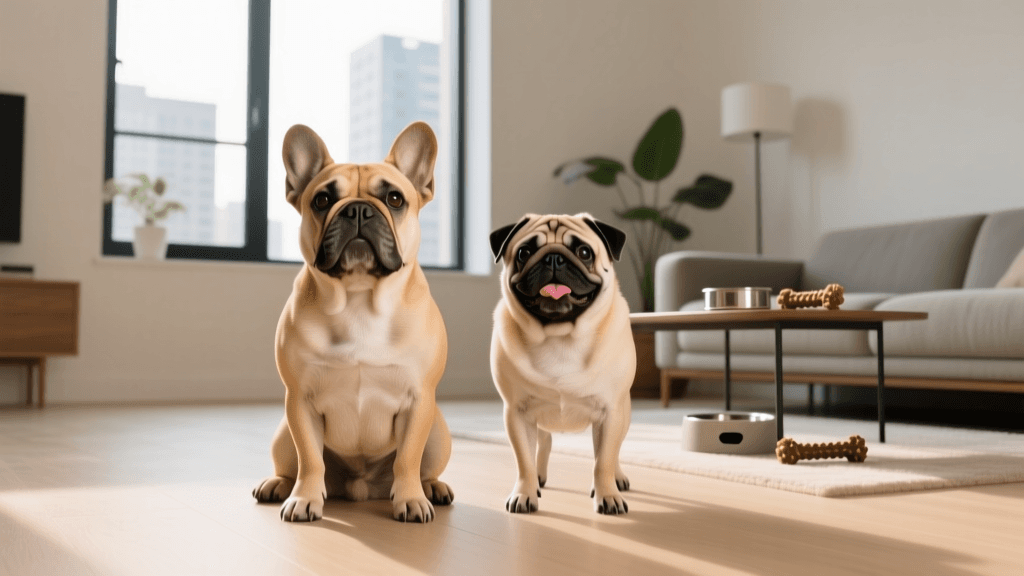
When navigating the complexities of apartment living, finding the right canine companion is a delicate balancing act. You need a dog that thrives in smaller square footage, respects shared walls with reasonable noise levels, and adapts to elevator rides and concrete potty breaks. Enter the French Bulldog and the Pug: two of the most popular brachycephalic (flat-faced) breeds in the world. According to the American Kennel Club (AKC), both breeds consistently rank in the top tier of urban dog ownership. But which one is truly the superior roommate for your 600-square-foot apartment? This comprehensive guide breaks down the daily realities, financial commitments, and lifestyle adjustments required for each breed.
Space and Exercise: Couch Potatoes or Closet Athletes?
A common misconception is that small dogs require less space and virtually no exercise. While neither breed is built for marathon running, their daily routines differ significantly.
The French Bulldog's Routine
Frenchies are notoriously low-energy indoors. A daily walk of 20 to 30 minutes, split into two shorter sessions to prevent overheating, is usually sufficient. In an apartment setting, a Frenchie will happily claim a designated dog bed or a corner of the sofa and remain there for hours. However, they are prone to weight gain, which can exacerbate their breathing issues. Indoor enrichment, such as sniffing games or a KONG Classic stuffed with frozen peanut butter, is essential to keep their minds active without requiring a large backyard.
The Pug's Routine
Pugs, while still relatively low-energy, possess a slightly higher stamina threshold and a more playful, sometimes clownish, demeanor. They typically require 30 to 45 minutes of daily exercise. Pugs are more likely to engage in 'zoomies' down your apartment hallway and enjoy interactive play sessions like tug-of-war or chasing a flirt pole. If you live in a walk-up apartment without an elevator, a Pug's slightly higher endurance makes navigating three or four flights of stairs multiple times a day a bit easier for them than for the stockier Frenchie.
Health Considerations: The Brachycephalic Reality
Sharing your life with a flat-faced dog means accepting specific health vulnerabilities, primarily Brachycephalic Obstructive Airway Syndrome (BOAS). The Orthopedic Foundation for Animals (OFA) notes that BOAS affects the dog's ability to breathe efficiently, regulate body temperature, and exercise safely.
Climate Control is Non-Negotiable
In an apartment, you have the advantage of climate control. Both breeds are highly sensitive to heat and humidity. During the summer months, your apartment's air conditioning must be maintained between 68°F and 72°F (20°C - 22°C). Never leave either breed on a balcony or in a sunroom, as temperatures can spike rapidly, leading to fatal heatstroke.
Routine Wrinkle Maintenance
Both breeds feature deep facial folds that trap moisture, dirt, and bacteria, leading to intertrigo (skin fold dermatitis). Apartment dwellers must establish a strict grooming routine. Using a canine-safe wipe, such as Vetericyn Plus Antimicrobial Pet Wound and Skin Care or a chlorhexidine-based wipe, you must clean their facial wrinkles every single evening. Neglecting this 5-minute daily task will result in foul odors that can quickly permeate a small living space, alongside painful skin infections for your dog.
Financial Breakdown: What Will Your Wallet Endure?
The financial reality of owning these breeds in an urban environment extends far beyond the initial purchase or adoption fee. According to the ASPCA, the average annual cost of dog ownership hovers around $1,500 to $2,000, but brachycephalic breeds frequently shatter this baseline due to specialized healthcare and insurance premiums.
Initial and Ongoing Costs
- Purchase Price: French Bulldogs typically range from $2,000 to $4,500 from a reputable breeder, while Pugs generally cost between $1,000 and $2,500.
- Pet Insurance: Because of their predisposition to BOAS, spinal issues (especially in Frenchies), and eye conditions, pet insurance is mandatory. Expect to pay $70 to $150 per month for a Frenchie, compared to $40 to $80 per month for a Pug.
- Pet Rent and Deposits: Many apartment complexes charge a monthly 'pet rent' of $35 to $50, plus a non-refundable pet deposit of $250 to $500.
- Dog Walkers: If you work long hours in the city, hiring a midday dog walker (typically $20 to $30 per 30-minute walk) is necessary, adding roughly $500 to $750 to your monthly budget.
Side-by-Side Breed Comparison Chart
To help you visualize the differences, here is a structured comparison tailored specifically to the apartment living experience.
| Feature | French Bulldog | Pug |
|---|---|---|
| Average Weight | 16 - 28 lbs | 14 - 18 lbs |
| Daily Exercise Need | 20 - 30 mins | 30 - 45 mins |
| Barking Level | Low to Moderate | Moderate to High |
| Tolerance to Being Alone | Moderate (prone to separation anxiety) | Low (highly prone to separation anxiety) |
| Stair Climbing Ability | Poor (heavy front, weak rear) | Fair (more balanced structure) |
| Estimated Annual Vet Cost | $1,200 - $2,500+ | $800 - $1,500 |
| Grooming Frequency | Weekly brushing, daily wrinkle care | Weekly brushing, daily wrinkle care |
Temperament and Noise Levels: Keeping the Peace with Neighbors
In an apartment, your dog's volume is directly tied to your relationship with your neighbors and your standing with your landlord.
The Vocal Pug
Pugs are expressive, communicative dogs. While they are not typically nuisance barkers like some terriers, they are known to grunt, snort, sneeze, and bark when excited or when someone approaches the apartment door. If you live in a building with paper-thin walls or strict noise ordinances, a Pug's vocalizations might require active training to manage. Teaching a 'quiet' command and using white noise machines near your front door can help mitigate trigger barking at hallway footsteps.
The Stoic Frenchie
French Bulldogs are generally much quieter. They tend to observe their surroundings with a stoic, almost stubborn, demeanor. A Frenchie is more likely to let out a low grumble or a sigh than a sharp bark. This makes them exceptionally well-suited for high-density apartment buildings where noise complaints can lead to eviction or forced rehoming. However, their quiet nature does not mean they lack personality; they are deeply affectionate and form intense bonds with their owners.
Potty Training Logistics in High-Rises
Potty training a puppy in a high-rise apartment is a notorious challenge. The time it takes to grab the leash, wait for the elevator, and reach the designated outdoor relief area can result in accidents.
Success in high-rise potty training relies on anticipating your dog's biological clock rather than waiting for them to signal they need to go.
French Bulldogs can be notoriously stubborn, making housebreaking a test of patience. Many Frenchie owners in high-rises opt to use indoor grass patches (like Fresh Patch or DoggieLawn) placed on a balcony or in a bathroom as a secondary relief option during extreme weather or late-night emergencies. Pugs, being slightly more eager to please, often catch onto the outdoor potty routine faster, though they still require a strict, timed schedule of outdoor trips every 2 to 3 hours during their puppy months.
Final Verdict: Which Breed Fits Your Apartment Lifestyle?
Choosing between a French Bulldog and a Pug ultimately comes down to your specific apartment layout, your daily schedule, and your financial flexibility.
If you live in a walk-up apartment, work a standard schedule that allows you to come home for lunch, and prefer a dog with a slightly more playful, interactive personality, the Pug is an outstanding choice. They are resilient, deeply loving, and slightly more forgiving of the physical demands of urban staircases.
Conversely, if you reside in a luxury high-rise with strict noise policies, have the financial means to absorb higher veterinary and insurance costs, and prefer a quieter, more sedentary companion to lounge with while you work from home, the French Bulldog is your ideal match.
Whichever breed you choose, remember that successful apartment living with a brachycephalic dog requires a commitment to climate control, rigorous wrinkle hygiene, and a deep understanding of their unique physical limitations. By preparing your home and your budget, you can ensure a harmonious, joyful life with your new compact companion.
beth-carrasco
All our authors care for dogs every day — read more of their work on the authors page.