Solving First-Week Puppy Night Crying and Crate Anxiety
Discover proven solutions for new puppy night crying and crate anxiety. Learn how to diagnose the cause and soothe your dog for peaceful sleep.
The Reality of the First Week: Diagnosing Puppy Night Crying
Bringing a new puppy home is a joyous milestone, but the first week often introduces a jarring, exhausting reality: sleepless nights filled with whining, barking, and frantic scratching. If you are currently battling new puppy night crying and crate anxiety, you are not alone. According to the American Kennel Club (AKC), nighttime vocalization is one of the most common behavioral challenges faced by new dog owners. The key to solving this problem is not simply ignoring the noise or giving in to it, but accurately diagnosing the root cause and implementing targeted, compassionate solutions.
Puppies cry for specific reasons. They are not trying to manipulate you; they are communicating a physical or emotional need. Because puppies lack the emotional regulation of adult dogs, the transition from a warm pile of littermates to a solitary crate in a quiet house can trigger severe separation anxiety. To solve the problem, we must first play detective.
Diagnostic Checklist: Why is Your Puppy Crying?
Before attempting to soothe your puppy, run through this diagnostic matrix to identify the probable trigger. Addressing the wrong trigger (e.g., offering a toy when the puppy needs to eliminate) will only reinforce the crying behavior.
| Symptom / Behavior | Probable Cause | Immediate Solution |
|---|---|---|
| Frantic scratching at the door, sudden waking after 2-3 hours of sleep, pacing. | Elimination Need (Full bladder/bowels) | Silently carry the puppy outside to their potty spot. Do not speak or play. Return to crate immediately. |
| High-pitched, continuous whining, trembling, refusing to settle even after a potty break. | Fear / Isolation Anxiety | Introduce a heartbeat toy, an item with your scent, and white noise to simulate littermates. |
| Chewing on crate bars, biting bedding, sudden yelps followed by chewing. | Teething Pain / Boredom | Provide a frozen, food-stuffed rubber chew toy to numb gums and redirect energy. |
| Shivering, curling into a tight ball, crying softly. | Temperature Discomfort (Too cold) | Check room temp (ideal is 68°F-72°F). Add a safe, chew-proof blanket or move crate away from drafts. |
Solution 1: Optimizing the Sleep Environment
A crate should be a den, not a dungeon. If the crate is improperly sized or located, it will exacerbate anxiety rather than cure it. The ASPCA guidelines on crate training emphasize that a crate must be just large enough for the dog to stand up, turn around, and lie down comfortably. If the crate is too large, the puppy may designate one corner for sleeping and another for eliminating, which ruins house-training and causes distress.
Proper Crate Sizing and Setup
- Measurement Rule: Measure your puppy from the tip of their nose to the base of their tail, then add 2 to 4 inches. This is the maximum length the crate should be.
- Use a Divider: If you purchased a large wire crate (like the MidWest Homes for Pets iCrate) to accommodate your dog's adult size, use the included wire divider panel to shrink the space to the correct puppy dimensions.
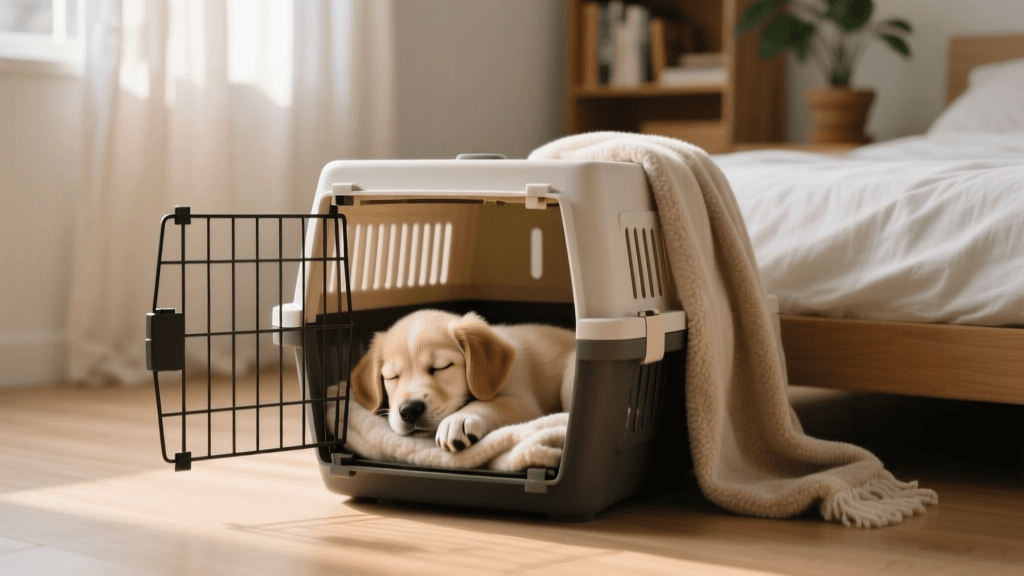
- Location Matters: During the first two weeks, place the crate in your bedroom, ideally within arm's reach of your bed. Puppies are pack animals; hearing your breathing and smelling your scent drastically reduces isolation panic. You can gradually move the crate to its permanent location over several weeks.
- Visual Barriers: Drape a breathable cotton sheet over the top and sides of the crate to block visual stimuli. This creates a secure, cave-like environment and prevents the puppy from barking at shadows or moving objects.
Solution 2: The Pre-Bedtime Routine and Timeline
Nighttime success begins at dinner time. A structured pre-bedtime routine regulates the puppy's digestive system and ensures they are physically tired and empty before the crate door closes. The Humane Society of the United States notes that strict feeding schedules are the cornerstone of successful house-training and uninterrupted sleep.
The 8:00 PM to 10:30 PM Protocol
Assuming a target bedtime of 10:30 PM, follow this strict timeline:
- 5:00 PM - Final Meal: Serve the puppy's dinner. Remove the bowl after 15 minutes, even if food remains. This prevents late-night digestion and bowel movements.
- 6:30 PM - Water Cutoff: Pick up the water bowl. Offer only small ice cubes or tiny sips of water if the puppy seems excessively thirsty after play. This ensures the bladder is empty by bedtime.
- 7:30 PM to 9:30 PM - Active Play and Training: Engage in mentally and physically stimulating activities. Fetch, tug-of-war, and 10 minutes of clicker training will drain their energy reserves much faster than physical exercise alone.
- 10:00 PM - Wind Down: Transition to calm petting and gentle chewing (like a frozen KONG Classic Dog Toy stuffed with plain pumpkin puree). Lower the lights and turn on a white noise machine.
- 10:25 PM - The Final Potty Trip: Carry the puppy outside (do not let them walk, to prevent playful distraction). Use a specific cue word like "Go Potty." Reward heavily with a high-value treat immediately upon elimination.
- 10:30 PM - Crate and Sleep: Place the sleepy puppy in the crate, turn off the main lights, and go to sleep.
Solution 3: Soothing Sensory Inputs and Separation Anxiety
If you have ruled out potty needs and the puppy is still crying due to isolation, you must bridge the sensory gap between their littermates and their new solitary life.
Recommended Sensory Products
- Heartbeat Toys: Products like the SmartPetLove Snuggle Puppy include a battery-operated heartbeat simulator and a heat pack. Tuck this under the puppy's bedding to mimic the physical sensation of sleeping against a mother or sibling.
- Scent Transfer: Sleep with a cheap cotton t-shirt or a small fleece blanket in your bed for two nights, then place it in the puppy's crate. Your scent is the most powerful calming agent available to your dog.
- White Noise: A mechanical white noise machine (like the Marpac Dohm) or a fan placed near the crate masks household noises (like the refrigerator humming or a car driving by) that might startle the puppy awake. It also mimics the ambient rustling sounds of a litter pile.
Solution 4: Daytime Desensitization (The Missing Link)
You cannot expect a puppy to love the crate at night if they are only placed inside it when it is time to sleep or when you leave the house. The crate must be associated with high-value rewards during the day.
Pro Tip: Feed your puppy all of their daily meals inside the crate with the door open during the first week. Toss high-value treats (like boiled chicken or freeze-dried liver) into the back of the crate and let them retrieve them. Never use the crate as a place for punishment or time-outs.
Practice "micro-departures" during the day. Put the puppy in the crate, give them a long-lasting chew, close the door, and sit in the room reading a book. Once they are relaxed, leave the room for 10 seconds, then return. Gradually increase the time you are out of sight. This builds the neurological pathway that "owner leaving" always results in "owner returning."
Essential Night-Survival Gear and Estimated Costs
Investing in the right tools upfront will save you hours of lost sleep and prevent the development of chronic behavioral issues. Below is a breakdown of the essential gear for solving night crying.
| Product Category | Specific Recommendation | Estimated Cost | Purpose |
|---|---|---|---|
| Adjustable Wire Crate | MidWest Homes for Pets iCrate (with Divider) | $45 - $70 | Provides secure den; divider prevents potty accidents in oversized crates. |
| Heartbeat Soother | SmartPetLove Snuggle Puppy | $40 - $50 | Simulates littermate heartbeat and body heat to reduce isolation panic. |
| Enzymatic Cleaner | Nature's Miracle Advanced Stain & Odor Eliminator | $15 - $20 | Completely destroys urine proteins so the puppy isn't triggered to re-soil the crate. |
| Long-Lasting Chew | KONG Classic (Red or Black) + Dog-safe Peanut Butter | $15 - $25 | Licking and chewing release endorphins, naturally sedating the puppy before sleep. |
| White Noise Machine | Marpac Dohm or Hatch Restore | $45 - $60 | Drowns out startling environmental noises that trigger night waking. |
What NOT to Do: Avoiding Common Mistakes
When you are exhausted at 3:00 AM, it is easy to make mistakes that will set your training back by weeks. Avoid these critical errors:
- Do NOT let the puppy out while they are crying. If you open the crate door while the puppy is vocalizing, you have just taught them that crying is the key to unlocking the door. Wait for a minimum of 3 to 5 seconds of absolute silence before opening the latch.
- Do NOT yell at the puppy. Shouting "Quiet!" from your bed sounds like you are barking back. This validates the puppy's anxiety and escalates the noise.
- Do NOT bring the puppy into your bed. While it provides immediate relief, it creates a precedent. The puppy will learn that persistent crying eventually results in sleeping in the soft, warm human bed, making future crate training nearly impossible.
Conclusion: Patience and Consistency
Solving first-week puppy night crying and crate anxiety requires a blend of environmental management, strict scheduling, and emotional patience. Remember that your puppy has just experienced a massive life upheaval. By diagnosing the specific cause of their distress—whether it is a full bladder, teething pain, or simple loneliness—and applying the targeted solutions outlined above, you will help your dog build confidence and security. Stick to the routine, utilize the right sensory tools, and trust the process. Within 7 to 14 days of consistent application, the whining will fade, replaced by the quiet, peaceful sleep that both you and your new best friend deserve.
aaron-whyte
All our authors care for dogs every day — read more of their work on the authors page.