Diagnosing and Solving New Puppy Nighttime Crying Issues
Discover how to diagnose the root causes of new puppy nighttime crying and apply proven, actionable solutions to restore sleep for you and your dog.
The Reality of the First Week: Why Puppies Cry at Night
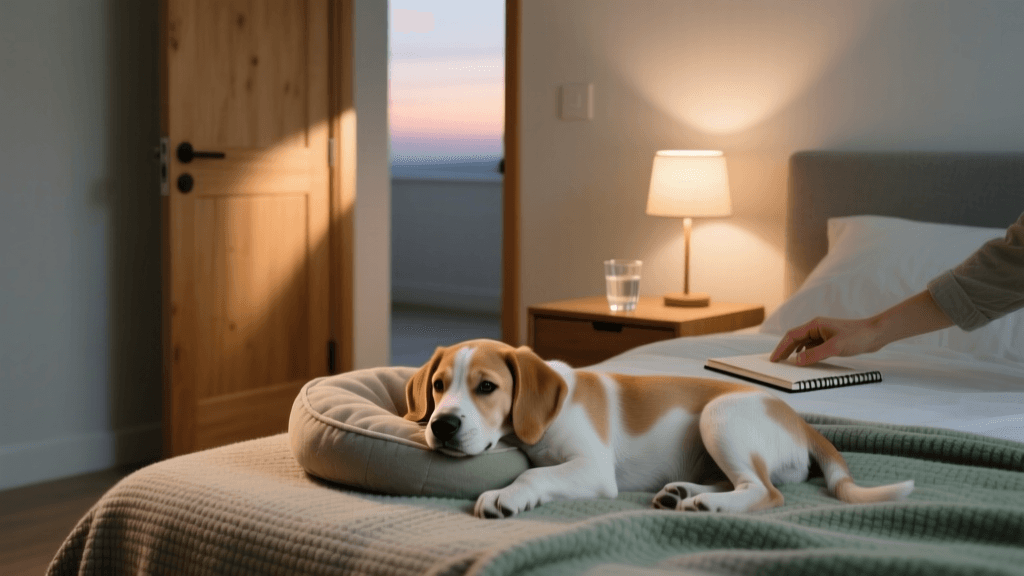
Bringing a new puppy home is an exhilarating milestone, but the romanticized vision of a peacefully sleeping pup often collides with the exhausting reality of the first few nights. Nighttime crying, whining, and crate scratching are among the most common behavioral hurdles new dog owners face. Rather than viewing this as simple disobedience, it is crucial to approach the issue through the lens of problem diagnosis. Puppies cry to communicate unmet physical or psychological needs. By accurately diagnosing the root cause of the distress, you can implement targeted, effective solutions that restore sleep for your household and build your puppy's long-term confidence.
According to the American Kennel Club (AKC), puppies require between 18 to 20 hours of sleep per day. However, their sleep cycles are fragmented, and transitioning from a litter of siblings to a solitary crate in a strange environment triggers profound stress. Understanding the mechanics of this transition is the first step toward solving the problem.
Diagnosing the Root Cause of Nighttime Whining
Before attempting to soothe a crying puppy, you must identify the specific trigger. Guessing leads to inconsistent responses, which can inadvertently reinforce the crying behavior. Here are the four primary diagnoses for nighttime distress.
1. The Potty Pressure (Biological Urgency)
A puppy's bladder control is directly tied to its age. The general veterinary rule of thumb is that a puppy can hold its bladder for one hour per month of age, plus one. Therefore, a two-month-old puppy has a maximum daytime capacity of roughly three hours. At night, while metabolism slows, a young puppy will still likely need to eliminate at least once or twice between 10:00 PM and 6:00 AM. If the crying is accompanied by pacing, sniffing the crate floor, or sudden restlessness, biological urgency is the most likely diagnosis.
2. Separation Anxiety and Littermate Loss
For the first eight weeks of life, a puppy sleeps in a warm, breathing pile of littermates. The sudden isolation of a wire crate can trigger acute separation distress. This type of crying usually begins the moment the lights go out and the owner leaves the room. It is characterized by a rhythmic, mournful howling or high-pitched whining that does not easily subside with simple verbal reassurance.
3. Overstimulation and Overtiredness
Much like human toddlers, puppies lack the emotional regulation to put themselves to sleep when they are overtired. If a puppy has been played with, handled, or exposed to novel stimuli right up until bedtime, their nervous system becomes flooded with cortisol and adrenaline. This results in 'puppy zoomies' or frantic, aggressive biting and crying in the crate. The diagnosis here is not loneliness, but neurological overstimulation.
4. Environmental Discomfort
Puppies cannot regulate their body temperature as efficiently as adult dogs. A drafty room, a crate placed directly under an air conditioning vent, or bedding that is too thin can cause physical discomfort. Conversely, heavy blankets in a warm room can cause overheating. Environmental distress usually presents as shifting, panting, and intermittent, frustrated barking.
The Nighttime Puppy Troubleshooting Matrix
Use this diagnostic chart to quickly identify the probable cause of your puppy's nighttime waking and apply the correct immediate solution.
| Time of Crying | Sound Type & Behavior | Probable Diagnosis | Immediate Solution |
|---|---|---|---|
| Within 30 mins of sleep | High-pitched whining, scratching at door | Separation anxiety, fear of isolation | Introduce heartbeat toy, cover crate with breathable sheet |
| 1 to 3 hours after sleep | Sudden waking, pacing, sniffing corners | Biological urgency (need to potty) | Silent, boring potty trip on a leash; return directly to crate |
| Erratic, shortly after bedtime | Frantic barking, biting bedding, zoomies | Overstimulation, overtiredness | Provide a frozen KONG, enforce a 60-min wind-down routine |
| Early morning (4:00 AM+) | Whining, looking at owner, play-bowing | Sleep cycle complete, seeking attention | Ignore until 5 seconds of silence, then initiate morning routine |
Actionable Solutions and First-Night Essentials
Once you have diagnosed the underlying issue, you must equip your home with the right tools and routines to solve it. Relying on willpower or ad-hoc comforting will only prolong the adjustment period.
The 'Snuggle Puppy' and Heartbeat Toys
To solve separation distress, replicate the physical sensation of a littermate. The SmartPetLove Snuggle Puppy (retailing around $40) is an industry-standard tool that features a battery-operated heartbeat simulator and a heat pack. Place the heartbeat device inside the toy's velcro pouch and position it in the back corner of the crate. The rhythmic thumping tricks the puppy's nervous system into believing it is resting against a sibling, drastically reducing the duration and intensity of isolation-induced crying.
Precision Crate Sizing and Setup
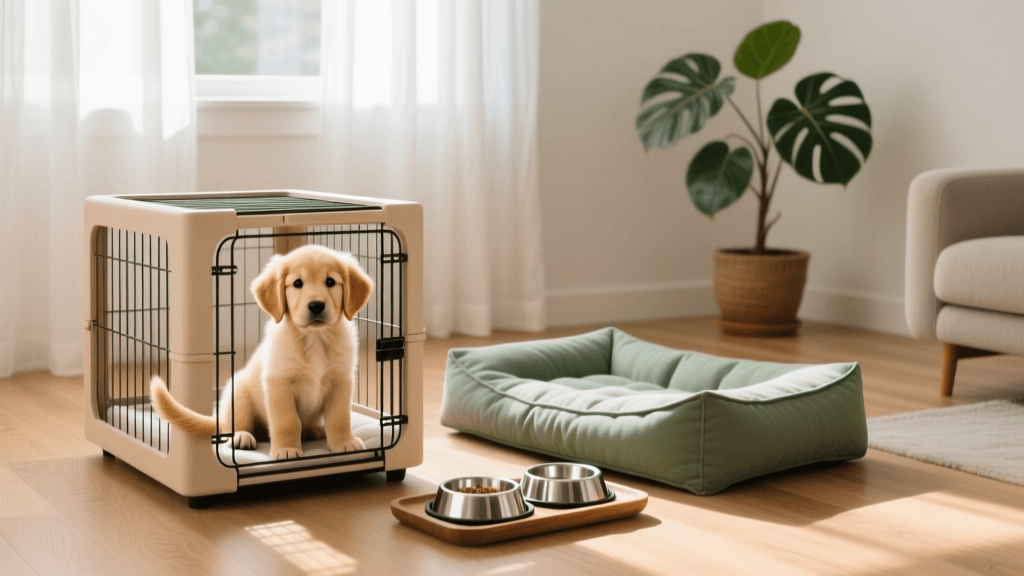
A crate that is too large allows a puppy to soil one corner and sleep in the other, ruining house-training efforts. A crate that is too small causes physical cramping and distress. Purchase an adjustable crate, such as the MidWest iCrate, and use the included metal divider panel. The Measurement Rule: Measure your puppy from the tip of their nose to the base of their tail (do not include the tail length), and add 2 to 4 inches. Set the divider to allow only this much space. As the puppy grows, move the divider back. For bedding, avoid fluffy, destructible beds that pose an intestinal blockage risk if ingested. Instead, use a tightly woven, chew-resistant veterinary bed or a simple, tightly folded cotton towel.
The 8:00 PM Water Cut-Off Rule
To minimize biological urgency wakings, you must manage the puppy's input. The ASPCA emphasizes the importance of strict scheduling for house training. Implement a rigid evening timeline:
- 5:00 PM: Serve the final meal of the day.
- 7:30 PM: Pick up the water bowl. (Provide only a few ice cubes to lick if the puppy seems excessively thirsty).
- 8:30 PM: Begin the wind-down period. Dim the lights, cease active play, and offer a frozen, peanut-butter-stuffed KONG toy in the crate to encourage calm chewing.
- 10:30 PM: Take the puppy outside on a leash for the final potty break. Keep the interaction entirely silent and boring.
The 'Extinction Burst' and Medical Rule-Outs
When you correctly diagnose that a puppy is crying for attention rather than a physical need, the prescribed solution is active ignoring. However, new owners must be prepared for the extinction burst. In behavioral psychology, an extinction burst is a temporary, sudden increase in the frequency and intensity of a behavior when the expected reward (your attention) is withheld. If your puppy usually cries for five minutes before you give in, they may cry for fifteen minutes the first night you ignore them. You must outlast the burst; giving in during this peak teaches the puppy that crying louder and longer is the new key to unlocking the crate.
Finally, if your puppy is waking up every 45 minutes with urgent diarrhea, straining to urinate, or crying while assuming a hunched posture, stop behavioral troubleshooting and consult a veterinarian. VCA Animal Hospitals notes that puppies from shelters or breeders are highly susceptible to stress-induced urinary tract infections (UTIs) and intestinal parasites like Giardia or Coccidia. These medical conditions cause severe physical urgency that no amount of crate training or heartbeat toys can solve. A simple fecal float and urinalysis can rule out these biological culprits.
Conclusion
Solving new puppy nighttime crying requires shifting your mindset from frustration to forensic diagnosis. By matching the specific sound and timing of the cry to its biological or psychological root cause, and by utilizing precise tools like heartbeat toys, crate dividers, and strict water schedules, you can guide your puppy through the decompression period. Consistency in your response will not only secure a full night's sleep but also lay the foundation for a confident, securely attached adult dog.
anouk-beaumont
All our authors care for dogs every day — read more of their work on the authors page.