Diagnosing and Solving First-Week Puppy Crate Whining
Struggling with puppy crate whining at night? Learn how to diagnose the root cause and apply proven solutions for peaceful sleep in the first week.
The Exhausting Reality of the First Week
Bringing a new puppy home is a monumental milestone filled with joy, cuddles, and exciting firsts. However, for many new dog owners, the first week quickly devolves into an exhausting battle of sleep deprivation. The primary culprit? Nighttime crate whining. When you are woken up at 2:00 AM, 4:00 AM, and 5:30 AM by a crying puppy, it is easy to feel overwhelmed, frustrated, and desperate for a solution. According to the American Kennel Club (AKC), crate training is one of the most valuable tools for housebreaking and keeping your puppy safe, but the initial adjustment period is notoriously difficult.
To solve the problem of first-week puppy crate whining, we must move away from generic advice like 'just let them cry it out' and instead adopt a problem-diagnosis approach. By identifying the specific root cause of the vocalization, you can apply targeted, actionable solutions that promote peaceful sleep for both you and your new dog.
Diagnosing the Root Cause of Crate Whining
Not all whines are created equal. A puppy vocalizing in the crate is trying to communicate a specific need or discomfort. Before you can implement a solution, you must accurately diagnose the problem. Here are the four primary reasons a newly adopted puppy will whine in their crate at night.
1. The Biological Need to Eliminate (Potty)
Young puppies have incredibly small bladders and underdeveloped sphincter muscles. An eight-week-old puppy can typically only hold their bladder for two to three hours, even while sleeping. If your puppy wakes up whining after a couple of hours of silence, the most likely diagnosis is a biological need to eliminate. Ignoring this whine will result in a soiled crate, which severely sets back your housebreaking progress and creates an unsanitary sleeping environment.
2. Separation Distress and Isolation Anxiety
For the first eight weeks of life, your puppy slept in a warm, noisy pile of littermates and their mother. Suddenly, they are alone in a quiet, dark room. This sudden environmental shift triggers separation distress. The whining associated with this is often high-pitched, frantic, and accompanied by scratching at the crate door or biting the bars. The Humane Society of the United States emphasizes that a crate should be a safe den, not a place of isolation, making the placement of the crate critical in the first week.
3. Physical Discomfort or Temperature Issues
Puppies cannot regulate their body temperature as efficiently as adult dogs. A wire crate in a drafty room can leave a puppy shivering, while a plastic crate in a warm room might cause overheating. Additionally, hard plastic crate pans without adequate bedding can cause joint discomfort, leading to restless shifting and low-level grumbling.
4. Learned Behavior (Attention-Seeking)
If you have previously responded to your puppy's whining by letting them out to play, offering treats, or providing verbal reassurance ('It's okay, go to sleep!'), you have inadvertently diagnosed the puppy with a successful strategy. Dogs are opportunistic learners; if whining yields attention, they will continue to whine to get it.
Proven Solutions for Nighttime Crate Whining
Once you have identified the likely triggers, you can implement a structured environment that sets your puppy up for success. Below is a comprehensive, actionable guide to solving first-week sleep issues.
Optimize the Crate Setup and Sizing
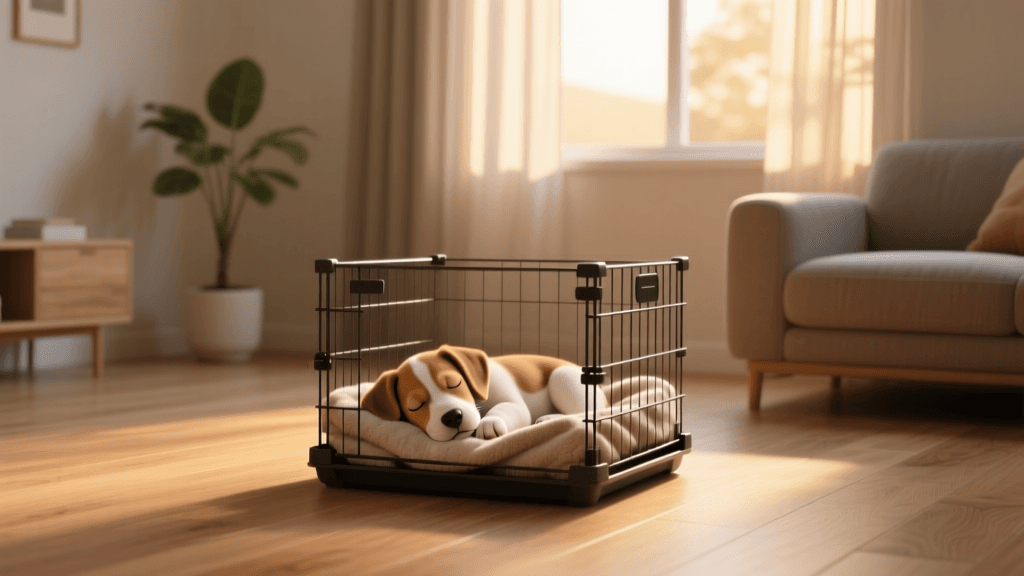
A common mistake new owners make is buying a large crate to accommodate the puppy's adult size without using a divider. If a crate is too large, the puppy will designate one corner for sleeping and the opposite corner for a bathroom, triggering whining when they soil their space and want to escape the mess.
- The Fix: Use a wire crate with an adjustable divider panel (e.g., the MidWest Homes for Pets iCrate, costing approximately $45 to $60).
- The Measurement: Adjust the divider so the puppy has just enough room to stand up, turn around in a full circle, and lie down comfortably. No more, no less.
- Bedding: Avoid plush, easily shredded beds in the first week. Use a tightly woven fleece blanket or a specialized chew-proof cot to prevent ingestion hazards.
Implement the Midnight Potty Schedule
Do not wait for the puppy to wake you up; preempt the biological need. For an 8-to-10-week-old puppy, set a silent vibrating alarm on your phone or smartwatch.
- 11:00 PM: Final potty break right before bed.
- 2:00 AM: Carry or leash the puppy outside. Keep the lights dim and do not speak or play. Once they eliminate, immediately return them to the crate.
- 5:00 AM: Repeat the boring potty routine.
By taking them out before they reach the point of desperation, you eliminate the potty-related whining entirely.
Soothe the Senses to Combat Separation Distress
To replicate the feeling of littermates and mask household noises that might startle the puppy, invest in sensory soothing tools.
- Tactile/Auditory Comfort: The SmartPetLove Snuggle Puppy (approx. $39.95) features a simulated heartbeat and heat pack. This mimics the physical presence of a mother dog and drastically reduces isolation anxiety in the first 72 hours.
- White Noise: Place a white noise machine (like the LectroFan Evo, approx. $35) near the crate. The continuous sound of a fan or ocean waves drowns out sudden noises (like a closing door or a barking neighbor) that trigger alarm barking.
- Crate Placement: For the first week, keep the crate in your bedroom, right next to your bed. Letting the puppy see and smell you provides immense security. You can gradually move the crate to its permanent location in week two.
Daytime Crate Conditioning
Nighttime success is built during the day. If the puppy only goes into the crate when it is time to sleep, they will associate it with isolation. Feed all daily meals inside the crate with the door open. Toss high-value treats (like freeze-dried liver) into the back of the crate during play sessions. Build positive emotional responses to the space so that when nighttime comes, entering the crate is a welcomed routine rather than a punishment.
Troubleshooting Chart: Whine Type vs. Solution
Use this diagnostic chart to determine your immediate action when the whining starts in the middle of the night.
| Whine Characteristic | Likely Cause | Immediate Action Required | What to Avoid |
|---|---|---|---|
| High-pitched, frantic, scratching at the door | Urgent potty need or panic | Leash and take outside immediately; keep interaction completely silent and boring. | Turning on bright lights, talking in a high-pitched voice, or playing. |
| Low, intermittent grumbling or sighing | Settling in, mild protest, seeking comfort | Ignore the vocalization. Wait for 10 seconds of silence, then quietly drop a treat through the crate bars. | Opening the crate door or verbally reprimanding the puppy. |
| Sudden sharp crying after hours of deep sleep | Biological bathroom emergency | Carry or quickly leash outside to the designated potty spot. | Assuming they are 'just faking it' and ignoring the plea. |
| Whining only when you leave the room or turn off the light | Separation distress / Fear of the dark | Move crate to bedroom, use a heartbeat toy, and leave a dim nightlight on. | Leaving the puppy in a pitch-black, isolated room on the first night. |
The 'Cry It Out' Myth: A Word of Caution
'While ignoring attention-seeking whining is a valid behavioral strategy, applying the 'cry it out' method blindly to a young puppy is dangerous. You must first rule out biological needs and genuine panic. Forcing a puppy to soil their crate and sleep in it because you assumed they were just throwing a tantrum will cause severe setbacks to house training and create long-term crate aversion.'
Diagnosis must always precede intervention. Always ensure the puppy has had a recent potty break and is physically comfortable before deciding to ignore a vocalization.
First-Week Crate Essentials: Cost Breakdown
Preparing for a new dog requires a financial investment in the right tools. Here is a realistic budget for solving first-week sleep issues:
- Adjustable Wire Crate (MidWest iCrate): $45 - $65
- Snuggle Puppy (Heartbeat & Heat Toy): $35 - $45
- White Noise Machine: $25 - $40
- Enzyme Cleaner (Nature's Miracle): $12 - $15 (Essential for accidental midnight spills)
- Long Training Leash (for midnight potty trips): $10 - $15
- Total Estimated Investment: $127 - $180
This upfront cost is minimal compared to the value of your sleep, your sanity, and the rapid housebreaking progress your puppy will make.
When to Seek Professional Help
Most puppies will show a significant reduction in nighttime whining by day four or five as they adjust to their new routine and environment. However, if your puppy is exhibiting signs of extreme panic—such as breaking teeth on the crate bars, excessive drooling, self-mutilation, or refusing to eat or drink during the day—these are red flags for severe separation anxiety or confinement distress. In these cases, stop crate training immediately and consult a certified veterinary behaviorist or a Fear Free certified trainer to develop a modified desensitization protocol.
Conclusion
The first week of getting a dog is a test of endurance, but it is also the foundation of your lifelong bond. By accurately diagnosing why your puppy is whining and applying targeted, empathetic solutions, you can transform the crate from a scary isolation chamber into a beloved sanctuary. Stick to the midnight potty schedule, utilize sensory soothing tools, and remember that this sleep-deprived phase is temporary. With consistency and patience, peaceful nights are just around the corner.
beth-carrasco
All our authors care for dogs every day — read more of their work on the authors page.