First 48 Hours With a Rescue Dog: A First-Time Guide
Bring your rescue dog home with confidence. Learn essential tips, setup advice, and a step-by-step timeline for the first two days with your new pet.

Welcome Home: Navigating the Rescue Dog Transition
Bringing a rescue dog into your life is a profound commitment and an incredibly rewarding experience. However, for first-time dog owners, the initial days can feel overwhelming. Shelter environments are highly stressful, and transitioning to a quiet home is a massive environmental shift for any dog. Understanding how to manage this transition is the key to building a lifelong bond based on trust and security.
Before diving into the hourly timeline, first-time owners must understand the '3-3-3 Rule' of rescue dog decompression. According to Best Friends Animal Society, the adjustment period generally follows this timeline: 3 Days to decompress from the stress of the shelter or transport; 3 Weeks to learn your household routine, rules, and boundaries; and 3 Months to fully settle in, build trust, and feel completely at home. The first 48 hours fall squarely into that critical initial decompression phase, where your primary goal is not obedience training, but rather providing safety, predictability, and low-stress environments.
Before Arrival: Setting Up the Decompression Zone
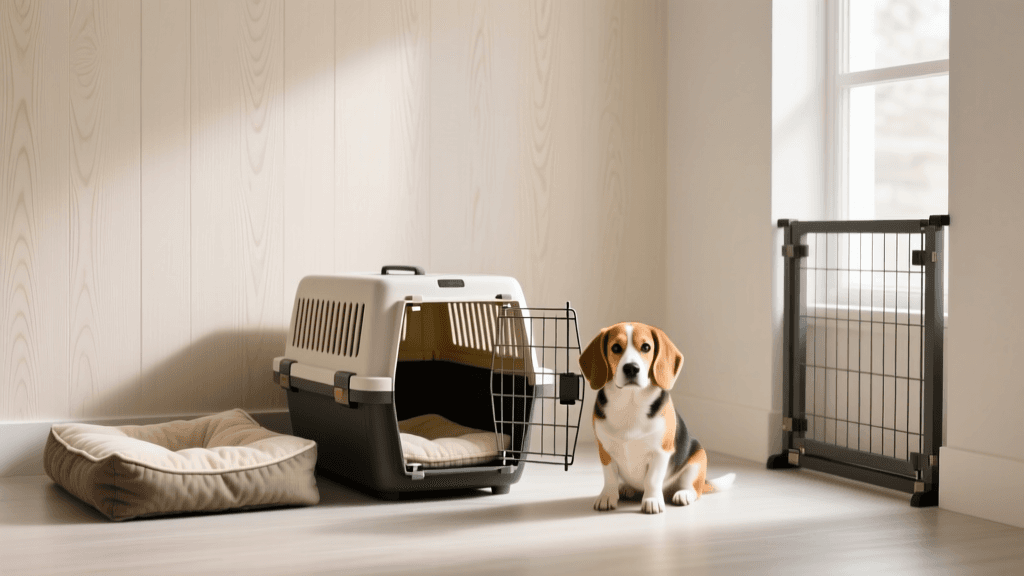
Do not wait until the dog is in your living room to figure out where they will sleep or eat. Preparation is essential for a smooth transition. Set up a 'safe room' or a designated decompression zone. This should be a quiet, low-traffic area of your home, such as a spare bedroom or a gated-off section of the living room.
Essential Gear and Measurements
- The Crate: A crate serves as a den and a safe haven. To find the correct size, measure the dog from the tip of their nose to the base of their tail, and add 4 inches. For height, measure from the floor to the top of their head (or ears if they are erect) and add 2 inches. A wire crate like the Midwest Homes for Pets iCrate is ideal because it allows for visibility and airflow.
- Bedding: Avoid plush, easily destructible beds initially. Opt for a durable, washable cot or a tightly woven fleece blanket. If the dog is highly anxious, the Snuggle Puppy Heartbeat Toy (approx. $40) mimics the feeling of littermates and can drastically reduce nighttime whining.
- Enzymatic Cleaner: Accidents will happen. Purchase a high-quality enzymatic cleaner like Nature's Miracle Advanced Stain and Odor Eliminator before arrival. Standard household cleaners do not break down uric acid, meaning the dog will still smell the accident and return to the same spot.
- Leash and Harness: Ditch the retractable leash. A standard 6-foot leather or biothane leash (like those from Mendota Pets) provides the control needed to prevent a fearful dog from bolting if they slip their collar.
The First 24 Hours: A Step-by-Step Timeline
The American Kennel Club (AKC) emphasizes that the first day should be kept as quiet and uneventful as possible. Resist the urge to invite friends and family over to meet the new dog. This is a time for bonding, not socializing.
Hours 1-2: The Arrival and Potty Break
When you arrive home, do not immediately bring the dog inside. Keep them on their 6-foot leash and immediately walk them to the designated potty spot in your yard. Stand still, give them a 10-foot radius to sniff, and wait. When they eliminate, offer calm, quiet praise and a high-value treat (like boiled chicken or freeze-dried liver). After the potty break, calmly lead them inside to their pre-established safe zone.
Hours 3-6: Exploration and Decompression
Allow the dog to explore their safe room at their own pace. Do not force interaction. If they choose to hide in their crate or under a table, let them be. This is known as 'shutdown' behavior and is a normal stress response. To build positive associations without forcing physical contact, offer a Kong Classic (Red) stuffed with dog-safe peanut butter and frozen overnight. Licking and chewing are naturally soothing activities that release endorphins in a dog's brain.
Hours 7-12: Evening and Nighttime Routine
Keep the evening calm. Dim the lights and avoid loud noises like the television or vacuuming. Feed them their dinner in their crate to build a positive association with the space. When it is time for bed, place the crate in your bedroom if possible. Dogs are social animals, and hearing your breathing can help them feel secure. Set an alarm to take them out for a potty break once during the night (around 3:00 AM) to prevent accidents and build trust.
Day Two: Establishing a Predictable Routine
Dogs thrive on predictability. On the second day, your focus shifts to gently introducing a structured routine. According to the ASPCA, establishing a consistent schedule for feeding, potty breaks, and sleep is the foundation of a well-adjusted rescue dog.
The Potty and Enrichment Schedule
- 7:00 AM: Wake up, leash, and immediate potty break. Follow with breakfast.
- 9:00 AM: Potty break followed by 10 minutes of mental enrichment. Physical exercise (like long walks) can overstimulate a decompressing dog. Instead, use a Snuffle Mat or scatter their kibble in the grass to encourage natural foraging behaviors.
- 12:00 PM: Midday potty break and a chew toy in the crate for downtime.
- 3:00 PM: Potty break and a short, 15-minute decompression walk in a quiet area. Allow the dog to sniff extensively; sniffing lowers a dog's heart rate.
- 6:00 PM: Dinner and evening potty break.
- 9:00 PM: Final potty break, water bowl removed, and bedtime in the crate.
First-Time Rescue Owner Budget Breakdown
Preparing for a rescue dog requires a financial investment to ensure you have the right tools for a successful transition. Below is a realistic cost breakdown for essential first-48-hour gear for a medium-sized dog (30-50 lbs).
| Item | Estimated Cost | Purpose and Recommendation |
|---|---|---|
| Wire Crate (36-inch) | $60 - $90 | Safe den space; Midwest Homes for Pets |
| 6-Foot Leather Leash | $25 - $40 | Secure control; Mendota Pets or similar |
| Front-Clip Harness | $30 - $50 | Prevents pulling and escape; Ruffwear or PetSafe |
| Enzymatic Cleaner | $15 - $20 | Accident cleanup; Nature's Miracle |
| Kong Classic & Treats | $20 - $30 | Mental enrichment and soothing chew |
| Snuggle Puppy Toy | $40 - $50 | Anxiety relief via simulated heartbeat |
| Total Estimated Setup | $190 - $280 | Essential gear for the first 48 hours |
Normal Decompression vs. Behavioral Red Flags
First-time owners often panic when their new rescue dog exhibits strange behaviors. It is vital to differentiate between normal decompression and true behavioral red flags.
Normal Decompression Behaviors
- Lethargy or Sleeping Excessively: The dog is finally in a safe place and is catching up on sleep debt from the noisy shelter.
- Loss of Appetite: Stress can cause a temporary decrease in appetite. Try mixing warm water or low-sodium chicken broth into their kibble.
- Clinginess or Following You Everywhere: Often called 'Velcro dog' syndrome, this is a trauma response stemming from a fear of abandonment.
When to Seek Professional Help
While some behaviors are normal, others require immediate intervention from a certified professional dog trainer or veterinary behaviorist. If your dog exhibits severe resource guarding (snapping when you approach their food or toys), extreme fear aggression (lunging and biting when cornered), or self-mutilation, do not attempt to correct these behaviors on your own. Reach out to your veterinarian for a referral to a behaviorist who uses force-free, fear-free training methodologies.
Final Thoughts for First-Time Owners
The first 48 hours with a rescue dog are about laying a foundation of trust, not teaching commands. By preparing your home, managing your expectations, and adhering to a predictable, low-stress routine, you set your new companion up for long-term success. Remember the 3-3-3 rule, give your dog the grace and time they need to process their transition, and celebrate the small victories. The patience you show in these first two days will be rewarded with a loyal, loving companion for years to come.
marcus-aldridge
All our authors care for dogs every day — read more of their work on the authors page.