Top Puppy Puzzle Toys for Teething & Brain Games in 2026
Discover the best mental enrichment puzzle toys and DIY snuffle games to soothe your teething puppy's gums and boost brain development in 2026.
The Intersection of Teething and Cognitive Development
Welcome to the chaotic, joyful, and sometimes destructive world of raising a puppy. If you are currently navigating the three-to-six-month teething phase in 2026, you already know that puppy teeth are like tiny, razor-sharp needles seeking out your favorite shoes, furniture legs, and fingers. However, teething is not just a physical milestone; it is a critical window for cognitive development. Puppies explore the world primarily through their mouths, and providing appropriate outlets for this behavior is essential for their mental well-being.
Mental enrichment is no longer just a trendy buzzword in the canine community; it is a biological necessity. According to the ASPCA's Puppy Care Guidelines, early socialization and environmental enrichment are foundational to preventing behavioral issues later in life. When a puppy is teething, their gums are inflamed, sore, and itchy. Combining soothing chew textures with brain-stimulating puzzle mechanics creates a dual-action therapy that tires them out mentally while providing physical relief.
"Fifteen minutes of intense mental stimulation and puzzle-solving can tire a young puppy out just as much as an hour of vigorous physical exercise, making brain games an indispensable tool for teething pups."
In this comprehensive guide, we will explore the best commercial and DIY mental enrichment puzzle toys available in 2026, specifically curated to be safe for sensitive puppy gums while promoting crucial cognitive milestones.
Developmental Milestones and Puzzle Progression
Before diving into specific toys, it is vital to understand how your puppy's brain is developing during their first year. Matching the puzzle difficulty to their cognitive stage prevents frustration and encourages confidence.
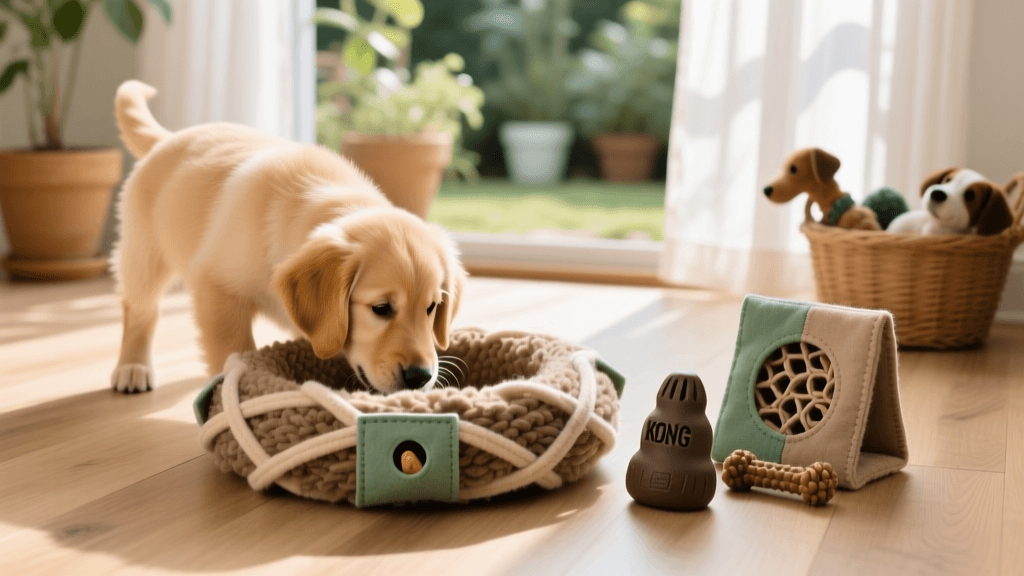
- 8 to 12 Weeks (Sensory Exploration): At this stage, puppies are learning how to manipulate objects. Puzzles should be incredibly simple, focusing on scent and basic paw-nose coordination. Snuffle mats and open-top foraging boxes are ideal.
- 3 to 4 Months (The Teething Peak): Baby teeth begin to fall out, and adult teeth push through. Puppies need to chew aggressively to relieve pressure. Puzzles must be made of soft, yielding rubber or plush materials that will not damage emerging adult teeth.
- 5 to 6 Months (Problem-Solving Peak): Your puppy is now capable of multi-step reasoning. They can learn to slide, lift, and flip compartments. This is the time to introduce composite wood and sturdy plastic puzzle boards.
Top Commercial Puzzle Toys for Puppies in 2026
The pet care market in 2026 has seen incredible innovations in eco-friendly materials and canine ergonomics. Here are the top-rated commercial puzzles that bridge the gap between teething relief and mental enrichment.
1. KONG Puppy Teething Stick
The KONG brand remains a gold standard, and their specialized Puppy Teething Stick is engineered specifically for the 3-to-6-month window. Unlike the classic KONG, the teething stick features patented dental ridges that clean teeth and soothe gums as the puppy chews. By stuffing the ridges with a mixture of plain Greek yogurt and mashed sweet potato, and then freezing it overnight, you create a long-lasting, cooling puzzle that requires intense focus to extract. Retailing at an average of $16.99 in 2026, it is an affordable, high-yield investment.
2. Outward Hound Hide A Squirrel Plush Puzzle
For puppies who are motivated by prey drive and soft textures, the Hide A Squirrel puzzle is a phenomenal choice. The plush tree trunk acts as the base, and the squeaky squirrels are the targets. This toy encourages gentle extraction and problem-solving without requiring hard chewing that could hurt sore gums. It is particularly excellent for the 8-to-12-week sensory exploration phase. Priced around $18.50, it offers great replay value, though it should always be used under strict supervision to prevent the puppy from ingesting the plush fabric.
3. Nina Ottosson Dog Smart Composite Puzzle
When your puppy reaches the 5-to-6-month mark and their adult teeth are mostly set, the Nina Ottosson Dog Smart (Level 2) puzzle is the perfect next step. Made from a sustainable, BPA-free composite material in 2026, it features nine removable bone-shaped pegs that hide treats underneath. The puppy must learn to lift and remove the pegs to access the kibble. This toy teaches cause-and-effect reasoning and is currently available for roughly $22.00.
DIY Mental Enrichment Games Safe for Sore Gums
You do not need to spend a fortune to provide top-tier cognitive enrichment. Many of the most effective brain games can be created using household items. The American Kennel Club's guide on Brain Games heavily advocates for DIY foraging activities to build a dog's natural scent-tracking abilities.
The Frozen Broth Towel Twist
This is the ultimate soothing puzzle for peak teething pain. Take a clean, medium-sized microfiber or cotton towel and soak it in low-sodium, onion-free chicken bone broth. Twist the towel tightly into a rope shape, tie it into a loose knot, and freeze it solid. The frozen broth provides a flavorful, hydrating challenge, while the textured fabric massages inflamed gums. As the towel thaws, the puppy must work to untie the knot, engaging both their brain and their jaw muscles.
The Muffin Tin Kibble Snuffle
Take a standard metal or silicone muffin tin and place a few pieces of your puppy's daily kibble into the cups. Next, cover each cup with a tennis ball or a crumpled ball of parchment paper. The puppy must use their nose to locate the food and their paws or snout to dislodge the obstacles. This game is incredibly easy to set up, costs nothing, and slows down fast eaters while stimulating their olfactory senses.
Cardboard Box Foraging
Save your delivery boxes for an afternoon of destruction and discovery. Remove all packing tape, staples, and plastic labels to ensure safety. Place a few high-value treats inside a small box, close the flaps, and place that box inside a slightly larger box. Repeat this nesting process two or three times. Your puppy will have to tear, shred, and problem-solve their way to the center. The act of shredding cardboard is deeply satisfying for teething puppies and mimics the natural tearing of prey.
2026 Puppy Puzzle Toy Comparison Chart
| Toy / Game Name | Type | Teething Safety | Cognitive Difficulty | Avg 2026 Price |
|---|---|---|---|---|
| KONG Puppy Teething Stick | Commercial Rubber | Excellent (Soothing) | Low to Medium | $16.99 |
| Outward Hound Hide A Squirrel | Commercial Plush | Good (Soft Textures) | Medium | $18.50 |
| Nina Ottosson Dog Smart | Commercial Composite | Fair (Harder Material) | High | $22.00 |
| Frozen Broth Towel Twist | DIY Fabric | Excellent (Cold Relief) | Medium | Under $2.00 |
| Muffin Tin Kibble Snuffle | DIY Household | Excellent (No Chewing) | Low | Free |
Safety First: Supervision and Calorie Tracking
While mental enrichment is incredibly beneficial, it must be managed responsibly. Never leave a teething puppy unattended with puzzle toys, especially those involving plush fabrics, cardboard, or removable plastic pieces. Puppies are notorious for swallowing non-food items, which can lead to life-threatening intestinal blockages. Always inspect commercial toys for signs of wear and tear, discarding them immediately if pieces begin to break off.
Furthermore, puzzle games often involve food. In 2026, veterinary nutritionists continue to warn against the rising rates of canine obesity. When using treats, peanut butter, or broth for enrichment, you must deduct those calories from your puppy's daily meals. The best practice is to use a portion of their measured daily kibble as the reward inside the puzzle toys. This ensures they receive the mental stimulation they crave without exceeding their caloric limits, setting the stage for a healthy, happy, and brilliantly engaged adult dog.
robin-maitland
All our authors care for dogs every day — read more of their work on the authors page.