Puppy Separation Anxiety: 2026 Flitting Method & Camera Guide
Discover the 2026 flitting desensitization method and Furbo camera treat routines to effectively cure puppy separation anxiety and build alone-time confidence.
Navigating Puppy Separation Anxiety in 2026
As we navigate the hybrid work landscapes of 2026, more puppy owners are facing the harsh reality of leaving their new companions at home. Unlike the early 2020s, when remote work meant puppies were rarely left alone, today's flexible schedules require dogs to be comfortable with solitude from a very young age. Separation anxiety in puppies is not just about missing their owners; it is a profound state of panic triggered by isolation. According to the ASPCA, separation anxiety is triggered when a dog becomes upset because of separation from their guardians, often resulting in destructive behavior, excessive vocalization, and house soiling. Left untreated, this anxiety can escalate into severe behavioral issues that strain the human-animal bond.
Fortunately, modern veterinary behaviorists have refined desensitization protocols that, when combined with 2026's advanced smart pet cameras, offer a highly effective roadmap to raising a confident, independent puppy. In this comprehensive guide, we will explore the 'Flitting' desensitization method and how to integrate treat-tossing cameras like the Furbo 360 to build your puppy's alone-time confidence.
The Science Behind the 'Flitting' Desensitization Method
Puppies are incredibly observant and quickly learn the associative chain of events that lead to your departure. Picking up your keys, putting on your shoes, and grabbing your coat become 'predictors' of isolation. For a puppy with developing separation anxiety, these predictors trigger a cortisol spike before you have even opened the front door. The Flitting method is a systematic desensitization technique designed to break this associative chain.
Flitting involves performing your pre-departure cues in a randomized, non-linear fashion while remaining inside the home. By repeatedly exposing your puppy to these triggers without the consequence of you actually leaving, you strip the triggers of their emotional weight. Over time, the sound of jingling keys or the squeak of rubber shoes becomes meaningless background noise rather than a panic-inducing alarm.
Integrating Smart Cameras for Real-Time Intervention
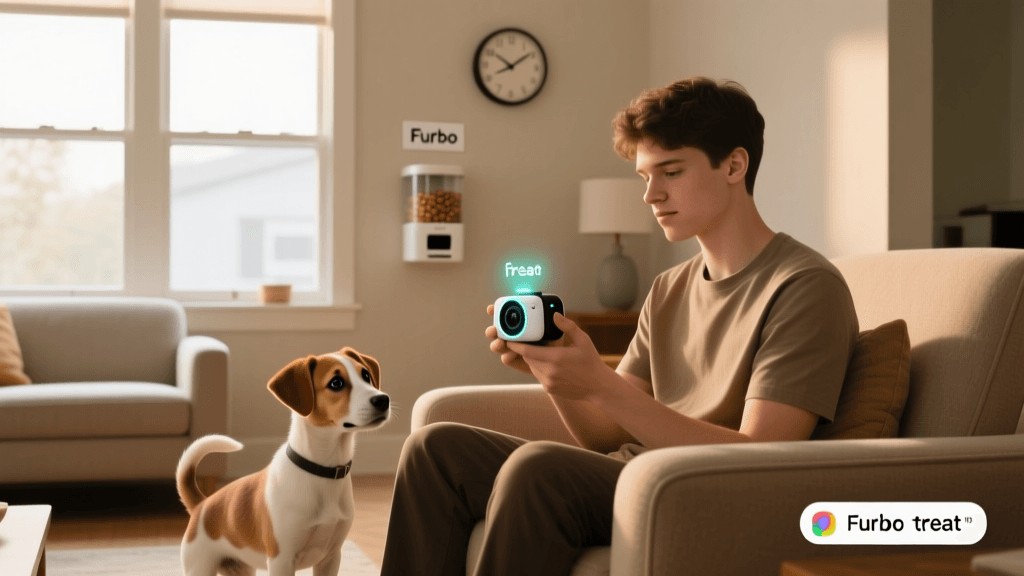
In 2026, relying solely on guesswork is no longer necessary. Smart pet cameras allow you to monitor your puppy's body language, assess their stress levels, and intervene with positive reinforcement before a full-blown panic attack occurs. Two of the leading devices in the current market are the Furbo 360 Dog Camera and the Eufy Security Pet Camera D605. Both offer treat-tossing capabilities, but they serve slightly different training needs.
| Feature | Furbo 360 Dog Camera (2026 Model) | Eufy Security Pet Camera D605 |
|---|---|---|
| View Angle | 360-degree auto-rotating pan | Fixed 170-degree wide-angle lens |
| Treat Tossing | Adjustable distance, holds up to 1.5 cups | Fixed distance, holds up to 1 cup |
| AI Alerts | Dog activity, barking, and vomiting alerts | Dog barking and crying detection |
| Subscription | Furbo Care required for cloud history | Free local storage via HomeBase |
| Best For | Puppies who pace or move out of frame | Puppies who settle in a designated crate/playpen |
Using a camera like the Furbo 360 allows you to reward your puppy for calm behavior while you are out of the room. The American Kennel Club (AKC) emphasizes that rewarding quiet, settled behavior is crucial for teaching puppies that being alone is a safe and positive experience.
The 4-Week Flitting and Camera Protocol
To successfully cure and prevent puppy separation anxiety, you must follow a structured, incremental protocol. Never rush the timeline; let your puppy's body language dictate your progression.
Week 1: Indoor Flitting (No Exits)
- Day 1-3: Pick up your keys, jingle them, and sit back down on the couch. Repeat 10-15 times a day. If your puppy remains calm, use your smart camera's treat tosser (or toss a treat manually) to reward their neutrality.
- Day 4-5: Put on your shoes, walk to the kitchen, make a cup of coffee, and take the shoes off. Do not approach the front door.
- Day 6-7: Combine cues. Put on your coat, pick up your keys, touch the doorknob, and then immediately take the coat off and sit down. Reward calmness.
Week 2: Micro-Exits and Camera Treats
- Day 8-10: Perform your full departure routine, step outside the front door, and immediately step back in (1-3 seconds). Do not make a big deal upon returning; ignore the puppy until they are calm.
- Day 11-14: Step outside, close the door, and wait 10 seconds. Use your smartphone app to watch the camera. If the puppy sits or lies down, toss a treat via the camera. If they whine or scratch, wait for a brief 2-second pause in the behavior before re-entering so you do not reward the panic.
Week 3: Short Absences and Enrichment
- Day 15-18: Build absences to 1-5 minutes. Before leaving, provide a high-value, long-lasting enrichment toy, such as a frozen West Paw Toppl filled with goat's milk and kibble, or a Kong Classic stuffed with peanut butter.
- Day 19-21: Leave the house for 10-15 minutes. Run errands nearby. Monitor the camera to ensure the puppy is engaging with the enrichment toy rather than pacing or staring at the door.
Week 4: Building to 30 Minutes
- Day 22-28: Gradually extend your absences by 5-minute increments. Continue to use the camera to intermittently reward quiet resting. By the end of Week 4, your puppy should be comfortable resting alone for 30 to 45 minutes without vocalizing or exhibiting destructive behavior.
Creating the Perfect 'Safe Zone' for Alone Time
A critical component of managing alone time in 2026 is the physical environment. Leaving a young puppy with free roam of the house is a recipe for disaster, both for your belongings and the puppy's stress levels. Instead, utilize a modular playpen setup attached to a properly sized wire crate. This 'safe zone' should be located in a quiet, low-traffic area of your home, away from direct sunlight and drafty windows.
Outfit the safe zone with an orthopedic bed, a snuffle mat for foraging, and a secure water bowl that cannot be tipped over. Playing white noise or classical music specifically designed for canine relaxation (such as the 'Through a Dog's Ear' audio series) can help mask outside environmental triggers like delivery trucks or neighborhood noise, which are common catalysts for reactive barking and subsequent anxiety.
Managing Setbacks: The Extinction Burst
When implementing the Flitting method and alone-time training, you will likely encounter an 'extinction burst.' This is a psychological phenomenon where a behavior temporarily worsens before it improves. When a puppy realizes that their usual whining or scratching at the door is no longer resulting in your immediate return, they will often escalate the behavior—barking louder, throwing themselves against the playpen, or pacing frantically.
It is vital that you do not give in during an extinction burst. Returning to the puppy while they are in a state of high arousal reinforces the panic. You must wait for a moment of calm, even if it is just a three-second pause, before re-entering the room or offering a treat via your camera.
If the puppy becomes so distressed that they are panting heavily, drooling excessively, or injuring themselves, you have pushed the timeline too fast. In this case, calmly re-enter, reset the environment, and return to the previous week's micro-exit duration. Patience and consistency are your most valuable tools.
Supplements and Calming Aids for 2026
For puppies who struggle with severe baseline anxiety, training alone may need to be supported by veterinary-approved calming aids. In 2026, pheromone therapy and nutraceuticals are widely recommended by veterinary behaviorists as adjuncts to behavioral modification.
- Adaptil Optimum Diffusers: These plug-in diffusers release synthetic versions of the dog-appeasing pheromone, mimicking the comforting signals a mother dog gives to her nursing puppies. Place the diffuser in the room where the puppy's safe zone is located.
- L-Theanine and Colostrum Chews: Products like Solliquin or Zylkene contain active ingredients that promote serotonin production and reduce cortisol levels without causing drowsiness. Consult your veterinarian before introducing any new supplement to your puppy's diet.
- Compression Wraps: While more commonly used for noise phobias, lightweight compression shirts can provide a soothing, swaddling effect for highly anxious puppies during their initial micro-exits.
Final Thoughts on Raising an Independent Dog
Curing and preventing puppy separation anxiety is a marathon, not a sprint. By utilizing the Flitting desensitization method, leveraging the real-time feedback and treat-tossing capabilities of modern smart cameras, and creating a secure, enriched safe zone, you are setting your puppy up for a lifetime of confidence. Remember that alone time is a learned skill. With the structured 2026 protocol outlined above, your puppy will soon learn that your departure is simply a cue to relax, chew on a favorite toy, and enjoy some well-deserved peace and quiet.
aaron-whyte
All our authors care for dogs every day — read more of their work on the authors page.