Sniffari Decompression Walks: Canine Bonding Guide 2026
Discover how Sniffari decompression walks deepen your bond in 2026. Learn canine olfactory psychology, long-line techniques, and body language cues.
The Neuroscience of the Sniff: Understanding the Olfactory Brain
To truly bond with your dog in 2026, we must first look beyond basic obedience and understand the fundamental way they process the universe. For decades, dog walking was viewed merely as a physical exercise—a way to burn off excess energy and maintain cardiovascular health. However, modern canine psychology has revealed that physical exhaustion without mental stimulation often leads to a frustrated, hyperactive dog. The secret to profound relationship building lies in the canine olfactory system. According to the American Kennel Club's research on canine senses, a dog's olfactory bulb is roughly 40 times larger than a human's, and they possess up to 300 million olfactory receptors in their nasal cavity.
When your dog stops to sniff a seemingly mundane patch of grass, they are not just smelling dirt; they are reading a complex chemical newspaper. They can determine the age, sex, diet, and emotional state of every animal that has passed through that area. More importantly, the act of deep, sustained sniffing engages the parasympathetic nervous system. This means that allowing your dog to sniff actually lowers their heart rate and reduces cortisol levels. By facilitating this natural behavior, you transition from being a mere leash-holder to a trusted partner who provides psychological enrichment and emotional safety.
What Exactly is a Sniffari Decompression Walk?
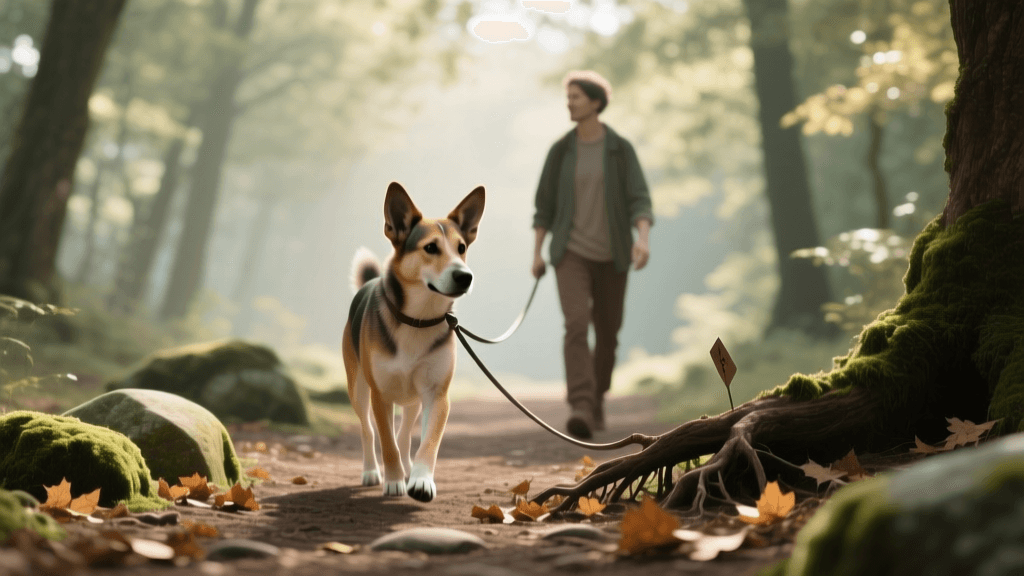
A 'Sniffari' or decompression walk is a dog-led, low-stress exploration session where the primary goal is sensory engagement rather than physical distance or heel-walking compliance. Unlike structured urban walks where the dog is expected to ignore distractions and walk politely by your side, a Sniffari takes place in a quiet, natural environment where the dog is given the freedom to roam, sniff, and investigate at their own pace.
This technique is particularly transformative for rescue dogs, reactive dogs, or dogs suffering from chronic urban overstimulation. By removing the pressure of performance and allowing the dog to make choices, you build a foundation of deep trust. In 2026, top behavioral veterinarians widely recommend decompression walks as the cornerstone of anxiety management and human-canine bonding. It signals to your dog that you respect their biological needs and are willing to share space with them on their terms.
Essential Gear for 2026 Sniffari Walks
To execute a proper Sniffari, you must abandon standard short leashes and restrictive collars. The goal is to provide a 'bubble of freedom' while maintaining safety. Below is a comparison of the most effective long-line materials available on the market in 2026, alongside recommended harness styles.
| Long-Line Material | Pros for Sniffaris | Cons & Considerations | 2026 Average Price |
|---|---|---|---|
| Biothane (15-30ft) | Waterproof, mud-proof, doesn't tangle easily, durable. | Can be stiff in extreme cold; heavier than nylon. | $45 - $75 |
| Nylon Webbing (20ft) | Lightweight, inexpensive, soft on the hands. | Absorbs water and mud, drags heavily when wet, tangles. | $20 - $35 |
| Leather (15ft) | Excellent grip, natural feel, ages beautifully. | Requires maintenance, ruined by heavy rain/mud. | $80 - $120 |
For harnesses, the 2026 editions of the Ruffwear Flagline or the Perfect Fit Modular Harness are highly recommended. These models feature a dorsal (back) handle and a rear leash attachment point, which prevents the long line from tangling around the dog's front legs and allows for a natural, unrestricted gait while they explore.
Step-by-Step Guide to Executing the Perfect Sniffari
Step 1: Select the Right Environment
Choose a location with minimal triggers. An empty field, a quiet wooded trail, or a secluded park edge is ideal. Avoid high-traffic dog parks or busy urban sidewalks. The environment must allow your dog to feel safe enough to lower their guard and engage their nose.
Step 2: The Decompression Threshold
When you arrive at the location, do not immediately unclip the leash and expect relaxation. Stand still and allow your dog to observe their surroundings. Wait for a voluntary 'check-in'—a moment where your dog looks back at you or offers a relaxed posture. This acknowledges your presence before the exploration begins.
Step 3: Master the Long-Line Slack
Attach the 20-to-30-foot line to the back of the harness. As your dog moves forward, feed the line through your hands to maintain a constant 'J-shape' slack. The line should only become taut if the dog is about to hit the end of the radius or if there is an emergency. Never use the long line to jerk, correct, or steer the dog.
Step 4: Silent Observation and Mirroring
Put your phone away. Use this time to practice silent observation. Watch where your dog goes, and gently follow their path. If they stop to sniff a tree for three minutes, you stand three minutes. By mirroring their pace and respecting their chosen focal points, you engage in a powerful form of non-verbal communication that validates their instincts.
Reading Your Dog's Decompression Signals
Understanding your dog's body language is critical to knowing if the Sniffari is working. As the ASPCA notes in their guide to canine body language, dogs communicate their internal emotional state through subtle physical shifts. During a successful decompression walk, look for the following signs of parasympathetic engagement:
- The Deep Sigh: Often occurring after a period of intense sniffing, a long, audible exhale indicates the release of physical and mental tension.
- The Shake-Off: If your dog suddenly shakes their entire body from nose to tail (as if wet), they are actively 'shaking off' residual stress or overstimulation.
- Soft Eyes and Ears: The facial muscles relax, the eyes lose their hard, focused stare, and the ears rest in a neutral, comfortable position.
- Curved Movement: Instead of walking in rigid, straight lines, a decompressed dog will move in curves and arcs, sniffing in wide, sweeping patterns.
True bonding occurs not when we force our dogs to adapt to our human world, but when we willingly step into theirs and honor their biological imperatives.
Common Mistakes That Sabotage the Bonding Process
Even well-meaning owners can accidentally ruin a Sniffari by falling back into traditional training habits. Avoid these critical errors:
1. Rushing the Sniff: Never tug the leash or use verbal cues like 'let's go' while your dog is actively processing a scent. Interrupting olfactory work is the equivalent of someone snatching a book out of your hands mid-sentence.
2. Using Retractable Leashes: While they offer length, the thin cord and heavy plastic handle create constant, low-level tension. Dogs are highly sensitive to leash pressure, and the mechanical humming of a retractable leash prevents true physical decompression. Always use a static, lightweight long line.
3. Demanding Eye Contact: Some handlers try to combine Sniffaris with focus training, asking the dog to 'watch me' periodically. This defeats the purpose. A decompression walk is about environmental engagement, not handler focus. Allow your dog to ignore you; paradoxically, this freedom will make them seek you out more willingly when the walk concludes.
Measuring the Long-Term Impact on Your Relationship
Integrating two to three Sniffari walks into your weekly 2026 routine will yield noticeable changes in your dog's baseline behavior at home. Owners consistently report a decrease in destructive chewing, attention-seeking behaviors, and leash reactivity. By fulfilling your dog's deepest neurological need to gather information, you eliminate the frustration that drives behavioral issues.
Furthermore, the co-regulation effect is profound. As your dog's nervous system settles into a calm, rhythmic state, your own heart rate and blood pressure will naturally synchronize and lower. This shared state of physiological calm is the ultimate biological foundation for the human-animal bond. For further reading on integrating mental enrichment with physical routines, the AKC's resources on balancing leash skills provide excellent complementary strategies for transitioning between structured walking and free-roaming sniffaris.
Ultimately, the Sniffari is more than just a walk; it is a daily practice of empathy. By giving your dog the time and space to be a dog, you forge an unbreakable bond built on mutual respect, deep understanding, and shared peace.
anouk-beaumont
All our authors care for dogs every day — read more of their work on the authors page.