Canine OA Treatment 2026: Decoding Pain Behavior Signs
Discover how canine osteoarthritis alters behavior and body language. Explore 2026 OA treatments like Librela to restore your dog's comfort and joy.
The Hidden Psychology of Canine Osteoarthritis
When we think of canine osteoarthritis (OA), we typically picture physical symptoms: a stiff gait, difficulty rising, or a reluctance to climb stairs. However, as we advance through 2026, veterinary behaviorists and pain management specialists emphasize a critical paradigm shift. Canine OA is not merely a physical ailment; it is a profound psychological stressor that fundamentally alters your dog's behavior, body language, and emotional baseline. Understanding your dog requires recognizing that chronic pain rewires the canine brain, often manifesting as behavioral issues long before severe physical lameness becomes obvious.
Dogs are stoic by nature, an evolutionary trait designed to hide vulnerability from predators and pack rivals. Because of this instinct, dogs rarely whine or cry when suffering from degenerative joint disease. Instead, they exhibit subtle behavioral modifications. Chronic nociceptive input from deteriorating cartilage elevates baseline stress hormones, such as cortisol. This constant state of physiological stress leads to irritability, resource guarding, withdrawal from family interactions, and even uncharacteristic aggression. In many cases, what an owner perceives as "stubbornness" or "slowing down with age" is actually a complex coping mechanism for untreated chronic pain.
Decoding OA Body Language: Signs You Might Miss
To effectively treat canine OA, you must first become fluent in the subtle body language of pain. Dogs communicate discomfort through micro-expressions and postural shifts that are easily overlooked in the hustle of daily life. According to the Orthopedic Foundation for Animals, osteoarthritis is a progressive, degenerative disease that affects the majority of senior dogs, making early behavioral detection vital for preserving their quality of life.
Below is a comparison chart to help you differentiate between normal aging behaviors and hidden OA pain signals:
| Observed Behavior | Owner's Common Misinterpretation | The OA Pain Reality |
|---|---|---|
| Hesitation at stairs or car doors | "They are just being lazy or stubborn today." | Anticipatory anxiety and sharp joint pain upon loading the hindquarters or cervical spine. |
| Excessive licking of wrists (carpi) or knees (stifles) | "They have allergies or are just grooming." | Localized self-soothing behavior to cope with deep, aching joint inflammation. |
| "Whale eye" or avoiding eye contact when petted | "They are ignoring me or feeling guilty." | A calming signal indicating fear of being touched in a painful area (often the hips or lower back). |
| Restlessness at night, frequent repositioning | "They have too much energy or need to go outside." | Inability to find a comfortable position due to joint stiffness and localized pressure pain. |
| Uncharacteristic snapping or growling | "They are developing behavioral or aggression issues." | A defensive reflex triggered by sudden, unexpected pain when approached or handled. |
The Role of Calming Signals in Pain Communication
When a dog is experiencing OA flare-ups, you will frequently observe "calming signals"—a term coined by canine behaviorists to describe body language used to de-escalate stress. If your dog repeatedly yawns, licks their lips, or turns their head away when you reach for their harness or collar, they are not simply being disobedient. They are communicating that the anticipated movement or pressure causes them distress. Recognizing these signals is the first step in implementing a compassionate, effective 2026 OA treatment protocol.
2026 Canine OA Treatment Protocols: A Multimodal Approach
The landscape of canine OA treatment has evolved dramatically. The American College of Veterinary Surgeons notes that early intervention and multimodal pain management are the gold standards for preserving joint function and behavioral health. In 2026, treating OA is no longer about simply masking pain with traditional medications; it is about targeting the biological pathways of pain while supporting the dog's psychological well-being.
Biologics and Monoclonal Antibodies: The Librela Revolution
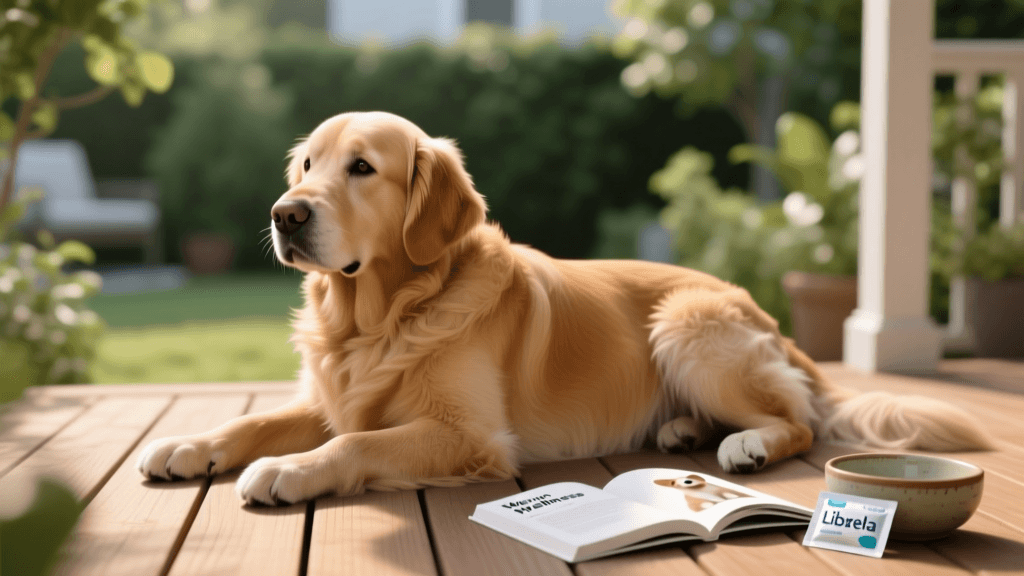
The most significant advancement in recent years is the widespread adoption of anti-Nerve Growth Factor (NGF) monoclonal antibodies, specifically Librela (bedinvetmab). NGF is a protein that becomes overexpressed in osteoarthritic joints, amplifying pain signals sent to the brain. Librela works by binding to and neutralizing NGF, effectively turning down the "volume" of pain before it reaches the central nervous system.
From a behavioral perspective, Librela has been revolutionary. Because it does not carry the hepatic or renal risks associated with long-term NSAID use, it can be administered safely to senior dogs with comorbidities. Owners frequently report a "puppy-like" return in their dog's demeanor within 14 to 30 days of the first monthly injection. The reduction in chronic pain lowers cortisol levels, resolving secondary behavioral issues like irritability and nighttime pacing. As of 2026, the average cost for a monthly Librela injection ranges from $80 to $140, depending on the dog's weight and regional veterinary pricing.
Targeted Pharmacological Support
While biologics are at the forefront, traditional pharmacology still plays a role in a multimodal 2026 protocol:
- Galliprant (grapiprant): Unlike traditional NSAIDs that inhibit COX enzymes (which protect the stomach and kidneys), Galliprant specifically blocks the EP4 receptor, which is the primary mediator of OA pain and inflammation. This makes it a safer option for long-term behavioral and physical comfort.
- Gabapentin and Amantadine: For dogs with severe, chronic OA, the central nervous system can become "wind-up," leading to neuropathic pain. Gabapentin helps calm this nerve hyperactivity, while Amantadine blocks NMDA receptors, preventing pain tolerance. These medications are particularly useful for dogs exhibiting severe anxiety or sleep disturbances related to pain.
Biomechanical and Environmental Modifications
Medical treatment must be paired with environmental empathy. Modifying your home reduces the physical strain on your dog's joints and the psychological anxiety of navigating a challenging environment.
- Orthopedic Support: Invest in high-density, therapeutic memory foam beds. In 2026, the best orthopedic beds feature dual-layer foam (a supportive base layer and a pressure-relieving top layer) with a minimum thickness of 4 to 6 inches for large breeds. This prevents the joints from pressing against the hard floor, reducing morning stiffness.
- Mobility Ramps: Never force an OA dog to jump into an SUV or onto a bed. Use ramps with a gentle incline (ideally an 18-to-22-degree angle) covered in high-traction, ribbed rubber. This prevents slipping, which can cause micro-tears in compromised joints and severe psychological fear of the ramp itself.
- Floor Traction: Hardwood and tile floors are the enemy of the OA dog. The constant micro-slipping forces stabilizing muscles to overwork, leading to fatigue and pain. Use interlocking foam mats or secure, non-slip area rugs in your dog's primary pathways and resting areas.
Behavioral Rehabilitation and Confidence Building
When a dog has lived with untreated OA pain for months or years, they develop "learned helplessness" or fear-based avoidance behaviors. Even after starting Librela or Galliprant, the psychological memory of pain remains. Behavioral rehabilitation is a crucial component of 2026 OA treatment.
Start by implementing Fear-Free handling techniques. Avoid reaching over your dog's head or pulling their collar, which puts pressure on the cervical spine. Instead, use a supportive, front-clip harness that distributes weight evenly across the chest. Reintroduce physical touch slowly, using high-value treats to create positive associations with being handled.
Controlled, low-impact exercise is also vital for behavioral health. Hydrotherapy (underwater treadmills) and structured leash walks on soft surfaces help rebuild muscle mass without the concussive force of running. As your dog regains physical strength, their confidence will naturally rebound, replacing anxiety and withdrawal with engagement and joy.
Conclusion
Understanding your dog means looking beyond the surface of their behavior to identify the root causes of their actions. Canine osteoarthritis is a complex intersection of physical degeneration and psychological stress. By learning to decode the subtle body language of pain and leveraging advanced 2026 treatments like NGF-inhibiting biologics, targeted NSAIDs, and environmental modifications, you can do more than just manage a disease. You can restore your dog's comfort, rebuild their confidence, and give them back the vibrant, joyful life they deserve.
beth-carrasco
All our authors care for dogs every day — read more of their work on the authors page.