Small vs. Large Breed Puppies: First-Year Care Guide
Compare small and large breed puppies to find your perfect match. Discover first-year care differences in feeding, training, and vet costs.
Choosing the Right Puppy: Small vs. Large Breed Considerations
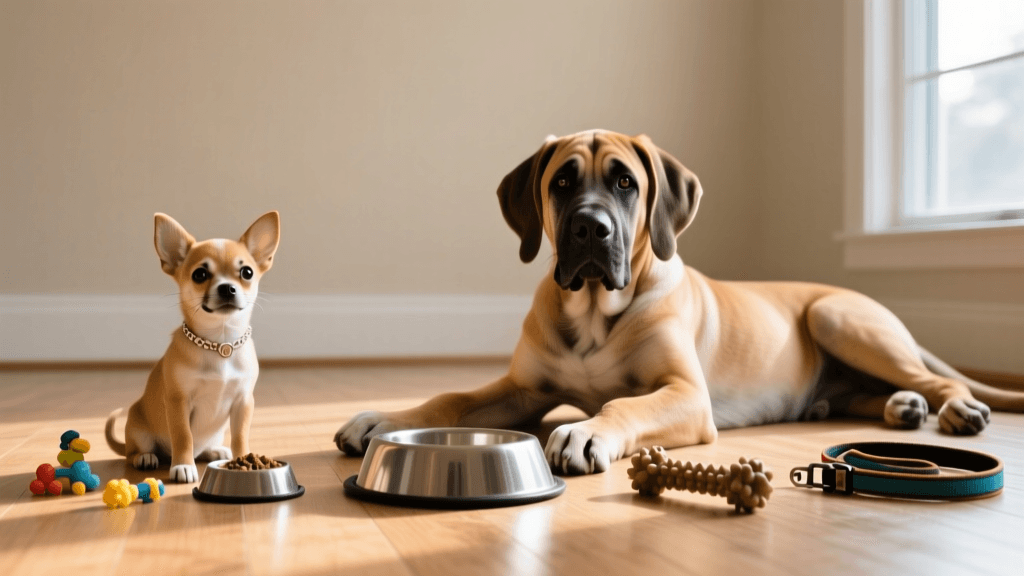
Bringing a puppy home is a monumental decision that shapes the next decade or more of your life. When navigating the "Puppy Care" category of your new journey, one of the most critical early choices is selecting a breed that aligns with your lifestyle, living space, and budget. While every puppy requires love, patience, and training, the first-year care protocols for a 5-pound Chihuahua differ vastly from those of a 100-pound Great Dane. Understanding these differences in feeding schedules, potty training timelines, and developmental milestones is essential for setting your new companion up for a lifetime of health and happiness.
Small vs. Large Breed Puppies: At a Glance
Before diving into the daily care routines, it is helpful to understand the biological and developmental differences between small and large breed puppies. The following table outlines the core distinctions you will encounter during the first twelve months.
| Trait | Small Breeds (Under 20 lbs) | Large/Giant Breeds (Over 60 lbs) |
|---|---|---|
| Growth Rate | Rapid; reach adult size by 9-12 months | Slow; may grow until 18-24 months |
| Caloric Needs | High per pound; prone to hypoglycemia | Controlled; strict calcium/phosphorus limits |
| Potty Training | Smaller bladders; require frequent trips | Larger bladders; can hold it slightly longer |
| Joint Vulnerability | Low risk of dysplasia; prone to luxating patellas | High risk of hip/elbow dysplasia and osteochondrosis |
| Crate Size (Adult) | 18 to 24 inches | 42 to 48 inches |
Feeding Schedules and Nutrition Needs
Nutrition is the cornerstone of first-year puppy care, and breed size dictates both the frequency and composition of meals. According to the American Kennel Club, puppies require more frequent meals than adult dogs to sustain their rapid growth and high metabolic rates. However, the approach varies drastically by size.
Small Breed Feeding Protocols
Small and toy breed puppies (like Yorkshire Terriers and Pomeranians) have exceptionally fast metabolisms and minimal fat reserves. This makes them highly susceptible to hypoglycemia (low blood sugar) during their first few months. To prevent this, you must feed them three to four times a day until they are at least six months old. Choose a kibble specifically formulated for small jaws and high energy needs, such as Royal Canin Size Health Nutrition X-Small Puppy. The kibble size is tiny, preventing choking, and the caloric density is high. Expect to feed roughly 1/4 to 1/2 cup per meal, depending on the pup's exact weight.
Large Breed Feeding Protocols
Conversely, large and giant breed puppies (like Labrador Retrievers and Mastiffs) face a different nutritional peril: growing too quickly. Rapid growth can lead to severe orthopedic issues, including hip dysplasia and osteochondrosis. The VCA Hospitals emphasize that large breed puppies must be fed a diet with strictly controlled calcium and phosphorus levels to ensure their bones grow at a safe, measured pace. Opt for a dedicated large-breed formula like Purina Pro Plan Large Breed Puppy. Feed them three meals a day until six months, then transition to two meals. A typical 10-week-old large breed puppy might consume 1.5 to 2.5 cups per meal, but always measure using a standard 8-ounce measuring cup rather than guessing.
Potty Training and Bladder Capacity
Potty training is often the most frustrating aspect of early puppy care, and your expectations must be calibrated to your dog's physical size. The general rule of thumb is that a puppy can hold their bladder for one hour per month of age (e.g., a 3-month-old puppy can hold it for 3 hours). However, this is a maximum limit, not a daily guideline.
Small breed puppies have tiny bladders and higher metabolic rates, meaning they process water and food much faster. A 2-month-old Chihuahua may need to eliminate every 45 to 60 minutes during active play. You will need to set a strict timer and carry them to their potty spot (such as a Porch Potty or an outdoor grass patch) to avoid accidents. In contrast, a 2-month-old Golden Retriever has a larger physical capacity but is highly easily distracted.
For crate training, sizing is critical. A crate should be just large enough for the puppy to stand, turn around, and lie down. If it is too large, they will soil one corner and sleep in the other. For small breeds, a MidWest iCrate measuring 18x12x14 inches is perfect for the first few months. For large breeds, purchase a 42x28x30 inch crate but use the included divider panel to shrink the space as they grow, saving you from buying multiple crates throughout the first year.
Teething and Chew Toys
Teething typically begins around 12 to 16 weeks of age and concludes when the puppy is about 6 months old. During this window, puppies will chew relentlessly to soothe their aching gums. The breed size determines the type of chew toys you should provide to ensure safety and dental health.
Small breed puppies have crowded jaws and more delicate teeth. Hard nylon bones or antlers can easily cause slab fractures in their premolars. Instead, offer softer, smaller alternatives like the KONG Puppy Toy (Size Small) stuffed with frozen plain Greek yogurt, or the Nylabone Puppy Chew Teething Dinosaur, which has gentle nubs designed for tender gums.
Large breed puppies possess immense jaw strength even at a young age. They can destroy plush toys and soft rubber in minutes, posing a severe intestinal blockage risk. Invest in the KONG Puppy Toy (Size Large or XL) made from a slightly more durable rubber formula, or the Goughnuts MAXX ring for supervised chewing sessions. Always inspect toys daily for signs of wear and tear, and discard any pieces that have been chewed off.
Early Socialization and Exercise Limits
The socialization window—typically between 3 and 14 weeks of age—is a critical developmental milestone. The ASPCA notes that positive exposure to various people, sounds, surfaces, and other animals during this period is vital for preventing fear and aggression later in life. However, how you exercise your puppy during this first year must be carefully managed based on their breed size.
Veterinarians widely recommend the "5-minute rule" for structured walks: five minutes of exercise per month of age, up to twice a day. Therefore, a 4-month-old puppy should have no more than 20 minutes of continuous leash walking. This is especially crucial for large and giant breeds. Their growth plates (the areas of developing cartilage at the ends of long bones) do not fully close until they are 18 to 24 months old. Forced running, jogging, or repetitive jumping (like catching frisbees) before the growth plates close can cause irreversible joint damage and microfractures. Stick to sniffari walks, mental enrichment puzzles, and free play in a fenced yard. Small breeds' growth plates close much earlier, usually between 8 to 12 months, but they still require protection from joint stress and rough handling by larger dogs during socialization outings.
Financial Considerations for the First Year
Selecting a puppy breed also means selecting a financial commitment. The first year of puppy care is universally the most expensive, but the costs scale with the dog's size.
- Food: A bag of premium small-breed puppy food (e.g., 10 lbs) costs around $45 and may last two months. A large-breed puppy will consume a 35 lb bag (approx. $80) every three to four weeks. First-year food costs: $250 (Small) vs. $900+ (Large).
- Preventative Medications: Flea, tick, and heartworm preventatives (like NexGard or Heartgard Plus) are priced by weight tiers. A puppy that will eventually weigh 100 lbs will require the highest, most expensive dosage tier, costing roughly $200 more annually than a toy breed.
- Spay/Neuter Surgery: Veterinary clinics charge based on the animal's weight and the complexity of the procedure. Spaying a large, deep-chested breed often requires more anesthesia and takes longer, costing between $400 and $800, compared to $200 to $400 for a small breed.
- Gear and Accessories: Large crates, heavy-duty harnesses (like the Kurgo Tru-Fit), and oversized orthopedic beds (like the Big Barker Puppy Bed) will easily double or triple your initial setup budget compared to small-breed equivalents.
Conclusion
Choosing between a small and large breed puppy is about more than just aesthetics or living space; it is a commitment to a specific set of first-year care protocols. Small breeds demand vigilant monitoring of their blood sugar and frequent potty breaks, while large breeds require strict dietary control and careful exercise management to protect their developing joints. By understanding these distinct developmental milestones, feeding schedules, and financial requirements, you can confidently select the perfect puppy to match your lifestyle and provide them with the exceptional care they deserve during their crucial first year.
hannah-wickes
All our authors care for dogs every day — read more of their work on the authors page.