Puppy Proofing Your Home Room By Room
Learn about puppy proofing your home room by room with expert tips and data-backed advice.
Before Your Puppy Comes Home
Bringing a new puppy home is one of the most rewarding experiences a dog owner can have — and one of the most chaotic if you haven't prepared your space. Puppies explore the world with their mouths, have no concept of danger, and can squeeze into gaps you'd never think to check. A thorough room-by-room safety audit before their arrival isn't just good practice; it's the difference between a smooth first week and an emergency vet visit.
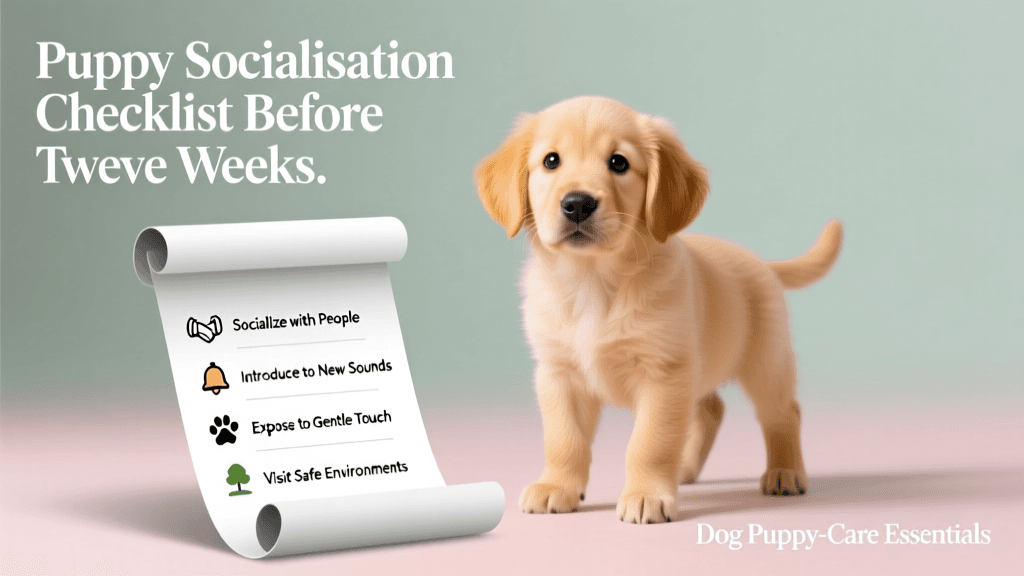
The American Veterinary Medical Association (AVMA, 2023) recommends that new puppy owners complete a full home safety check at least one week before bringing a dog home, giving time to source any additional safety equipment and make structural changes. This timeline also aligns with the critical socialization window: most veterinary behaviorists agree that puppies are most receptive to new environments between 3 and 14 weeks of age, making early positive exposure to a safe home environment foundational to long-term temperament.
Understanding Puppy Development and Risk
Not all puppies present the same level of risk to themselves. A 7-week-old Labrador Retriever puppy weighing around 5–6 kg is physically capable of pulling items off low shelves, chewing through thin electrical cables in under 2 minutes, and ingesting small objects that can cause intestinal blockages. By 12 weeks, that same puppy may weigh 10–12 kg and be able to reach countertops if it jumps.
Understanding developmental milestones helps you anticipate hazards before they become incidents. The Cornell University College of Veterinary Medicine outlines the following key stages in early puppy development:
- 2–4 weeks (Transitional period): Eyes and ears open; puppies begin to stand and walk. Still fully dependent on the mother.
- 3–14 weeks (Socialization period): The most critical window for exposure to people, environments, sounds, and surfaces. Fear responses are not yet fully developed.
- 8–11 weeks (Fear imprint period): A single frightening experience can have lasting behavioral effects. Avoid startling or overwhelming the puppy during this window.
- 12–16 weeks: Puppy begins testing boundaries, chewing intensifies, and physical coordination improves significantly.
- 6–18 months (Adolescence): Hormonal changes, increased independence, and renewed chewing behavior — especially in large breeds.
Knowing where your puppy sits developmentally tells you which hazards are most pressing. A 9-week-old puppy needs protection from floor-level dangers; a 5-month-old needs barriers to prevent counter surfing and access to upper shelves.
The Kitchen: Highest-Risk Room in the House
The kitchen contains more puppy hazards per square metre than any other room. Food toxicity is the most immediate concern. According to the ASPCA Animal Poison Control Center (2022), the top food-related calls involving dogs include grapes and raisins, xylitol (found in sugar-free gum and some peanut butters), chocolate, onions, and macadamia nuts. Even small quantities of xylitol — as little as 0.1 g per kg of body weight — can cause life-threatening hypoglycemia in dogs.
Securing Cabinets and Bins
Standard kitchen cabinet latches are not puppy-proof. A determined 12-week-old can paw open magnetic closures and lever-style handles. Install child-proof cabinet locks on any cabinet containing cleaning products, medications, or food. Rubbish bins should be secured inside a locked cabinet or replaced with a model that requires two-step opening — a simple foot pedal is not sufficient for a curious adolescent dog.
Keep the following items stored above 1.2 metres or in locked storage at all times:
- All cleaning products, including dishwasher tablets (which contain concentrated alkaline compounds)
- Medications, including vitamins and supplements
- Plastic bags and cling film (suffocation and intestinal obstruction risk)
- Rubber bands, twist ties, and bottle caps
- Aluminium foil and sharp utensils
Appliance and Electrical Safety
Trailing appliance cords from kettles, toasters, and coffee machines are a serious chewing hazard. Route all cords through cable management channels fixed to the wall or countertop edge. The space behind the refrigerator and oven should be blocked with rigid panels — these gaps are warm, dark, and attractive to puppies, and contain compressor coils and gas connections that can cause serious injury.
Living Room and Common Areas
The living room presents a different category of hazard: it's where puppies spend the most unsupervised time, and where owners are most likely to underestimate risk because the space looks benign. Sofas, rugs, and coffee tables feel safe — but the details matter.
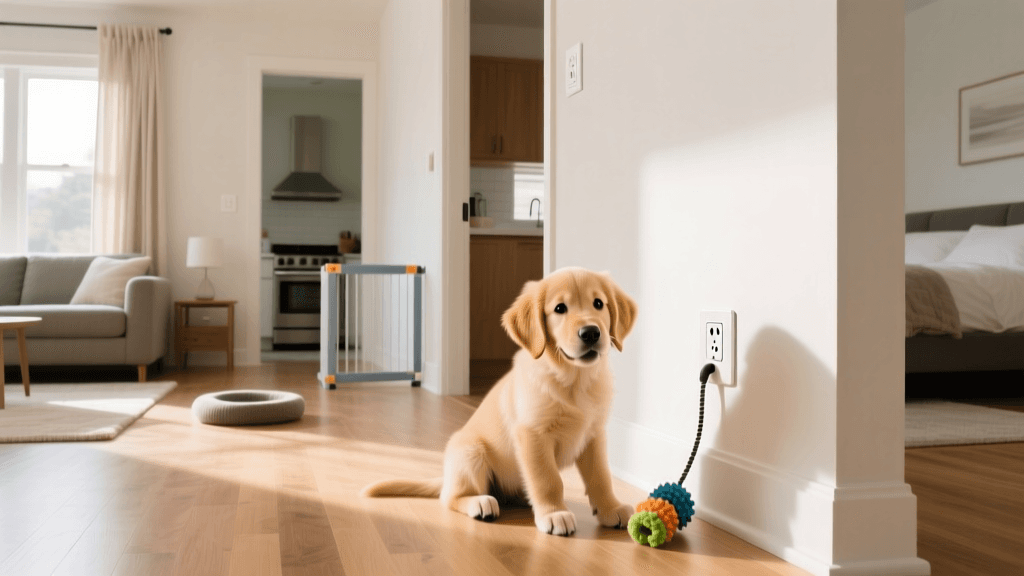
Electrical cables behind entertainment units are among the most commonly cited causes of puppy electrocution injuries. A puppy chewing through a live 240V cable can receive a shock sufficient to cause cardiac arrhythmia. Use spiral cable wrap or rigid conduit to protect all floor-level cables, and consider a cable management box for power strips. The Blue Cross animal welfare charity (2023) recommends treating all floor-level cables as if they are already chewed through — meaning the circuit should be off or the cable inaccessible, not merely hidden under a rug.
Furniture and Fall Hazards
Puppies should not be allowed on sofas or beds unsupervised until they are physically capable of getting down safely — typically around 16 weeks for small breeds and 20+ weeks for large breeds. A fall from a standard sofa height of 45–50 cm can fracture a small breed puppy's leg. Use foam ramps or steps if you want your puppy to access furniture, and always supervise until the behavior is reliable.
Houseplants are a frequently overlooked hazard. The Royal Veterinary College in London maintains a list of toxic plants that includes common household varieties such as peace lily (Spathiphyllum), pothos (Epipremnum aureum), and sago palm (Cycas revoluta). Sago palm is particularly dangerous — ingestion of even a single seed can cause fulminant liver failure. Move all plants to rooms the puppy cannot access, or replace them with pet-safe alternatives.
Bedrooms and Bathrooms
Bathrooms are often left open by habit, but they contain a concentrated set of hazards: medications in low cabinets, toilet bowl cleaners, razors, and the toilet itself. Puppies can drown in a toilet bowl — this is not a theoretical risk, particularly for toy breeds under 3 kg. Keep the toilet lid closed and the bathroom door shut when not in use.
Bedrooms present a subtler challenge. Laundry on the floor, particularly socks and underwear, is one of the leading causes of intestinal foreign body surgery in dogs. The Veterinary Emergency Group (VEG, 2023) reports that fabric foreign bodies — primarily socks — account for approximately 18% of all gastrointestinal obstruction surgeries in dogs under 2 years of age. A laundry basket with a lid is a simple, effective solution.
Medications on bedside tables must be moved to a locked drawer or high shelf. A single acetaminophen (paracetamol) tablet can cause fatal liver damage in a dog. Ibuprofen toxicity begins at doses as low as 25 mg per kg of body weight — a standard 200 mg tablet is a lethal dose for a 4 kg puppy.
Puppy Sleep and Feeding Schedules by Age
A well-rested, well-fed puppy is a calmer, safer puppy. Hunger and fatigue both increase destructive behavior and reduce a puppy's ability to learn boundaries. The following table provides general guidance based on widely accepted breeder and veterinary recommendations:
| Age | Meals per day | Sleep (hours/day) | Active periods |
|---|---|---|---|
| 8–10 weeks | 4 | 18–20 | 4–6 short bursts of 10–15 min |
| 10–12 weeks | 4 | 16–18 | Slightly longer play sessions |
| 3–6 months | 3 | 14–16 | 2–3 structured sessions of 20–30 min |
| 6–12 months | 2–3 | 12–14 | 2 sessions of 30–45 min |
Overexercising a young puppy is a genuine risk. Large and giant breed puppies have open growth plates until 12–18 months of age. Repetitive high-impact exercise before growth plates close can cause permanent joint damage. The general rule recommended by most veterinary orthopedic specialists is 5 minutes of structured exercise per month of age, twice daily — so a 3-month-old puppy should have no more than 15 minutes of leash walking per session.
"The single most effective thing an owner can do to prevent puppy injuries at home is to treat the first 16 weeks like a continuous supervision exercise. If you can't watch the puppy, confine the puppy. There is no middle ground during this developmental window." — Dr. Sarah Caney, Veterinary Specialist in Internal Medicine, Vet Professionals Ltd.
Outdoor Spaces and Garden Safety
Gardens and yards require the same systematic approach as indoor rooms. Fencing should be checked for gaps wider than 10 cm at ground level — a 9-week-old puppy can squeeze through surprisingly small openings. Check the base of fences for soft soil that allows digging underneath, and consider a concrete or paving border along fence lines for persistent diggers.
Garden chemicals — fertilizers, pesticides, slug pellets, and weed killers — must be stored in a locked shed or garage. Metaldehyde slug pellets are acutely toxic to dogs and have a sweet smell that actively attracts them. Even iron-based "pet-safe" slug pellets can cause gastrointestinal upset if consumed in quantity. Remove all pellets from areas the puppy can access and switch to physical barriers or copper tape as alternatives.
Water features, including garden ponds and paddling pools, should be fenced off or emptied until the puppy is a confident swimmer and can reliably exit the water unaided. A puppy that falls into a pond with steep sides may be unable to climb out and can drown within minutes. This applies equally to swimming pools — pool covers that appear solid can trap a puppy underneath if they walk onto the surface.
Puppy-proofing is not a one-time task. As your puppy grows, their reach, strength, and problem-solving ability increase. Revisit your safety setup at 12 weeks, 6 months, and again at 12 months. What was safe for an 8-week-old may be entirely inadequate for a 6-month-old adolescent with a full set of adult teeth and the determination to use them. Building the habit of regular safety audits — combined with consistent supervision, appropriate confinement, and a structured daily routine — gives your puppy the best possible foundation for a long, healthy life in your home.
Priya Sutaria
All our authors care for dogs every day — read more of their work on the authors page.