How To Spot And Treat Dog Ear Infections
Learn about how to spot and treat dog ear infections with expert tips and data-backed advice.
Recognising the Early Signs of a Dog Ear Infection
Ear infections are among the most common reasons dog owners visit their vet. According to the British Small Animal Veterinary Association (BSAVA, 2022), otitis externa — infection of the outer ear canal — accounts for approximately 7.5% of all small animal consultations in the UK each year. Catching the problem early makes treatment faster, cheaper, and far less distressing for your dog.
The ear canal of a dog is shaped like an L, with a long vertical section dropping down before turning horizontally toward the eardrum. This anatomy traps moisture, debris, and wax far more readily than the human ear, creating an environment where bacteria and yeast thrive. Certain breeds are particularly vulnerable: dogs with floppy ears such as Cocker Spaniels, Basset Hounds, and Labrador Retrievers are at significantly higher risk than prick-eared breeds like German Shepherds.
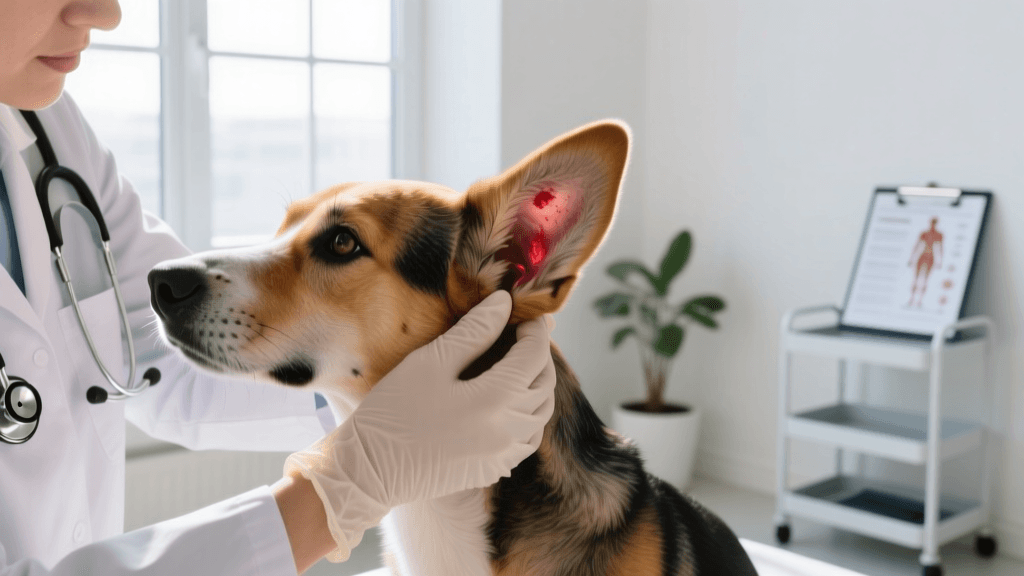
Early symptoms are easy to miss if you are not actively looking for them. Your dog may shake its head repeatedly, scratch at one or both ears, or rub the side of its face along the carpet or furniture. You might notice a dark brown or yellowish discharge inside the ear flap, or detect an unpleasant yeasty or musty odour when you lean close. Redness and swelling of the ear canal entrance are also common early indicators.
Behavioural Clues Worth Watching
Dogs in pain rarely vocalise it directly. Instead, watch for subtle behavioural shifts: reluctance to have the head touched, tilting the head persistently to one side, or appearing off-balance when walking. A dog that was previously happy to have its ears handled and now pulls away sharply is telling you something is wrong. These signs can indicate the infection has progressed beyond the outer canal into the middle ear (otitis media), which requires more aggressive treatment.
The PDSA (People's Dispensary for Sick Animals, 2023) notes that owners who delay seeking veterinary attention by more than two weeks from first noticing symptoms are three times more likely to require a prolonged treatment course of four weeks or longer, compared to those who present within the first seven days.
Common Causes and Contributing Factors
No single pathogen is responsible for all dog ear infections. The most frequent culprits are the yeast Malassezia pachydermatis and bacteria such as Staphylococcus pseudintermedius and Pseudomonas aeruginosa. In many cases, both bacteria and yeast are present simultaneously, which complicates treatment selection.
Underlying allergies are the single most important predisposing factor. Research published through the Royal Veterinary College (RVC) in London found that dogs with atopic dermatitis — an allergic skin condition — are up to 5 times more likely to develop recurrent ear infections than non-allergic dogs. If your dog suffers from repeated infections despite appropriate treatment, an allergy workup is strongly recommended.
Other contributing factors include:
- Excessive moisture from swimming or frequent bathing without thorough drying
- Overgrowth of hair inside the ear canal, which restricts airflow
- Foreign bodies such as grass seeds, particularly common in summer months
- Ear mites (Otodectes cynotis), more prevalent in puppies and dogs with outdoor access
- Hormonal disorders including hypothyroidism, which alters skin and ear canal health
- Trauma from overzealous cleaning with cotton buds
The Role of Ear Anatomy in Infection Risk
Breeds with narrow, hair-filled, or heavily folded ear canals face a structural disadvantage. Cocker Spaniels, for instance, have both pendulous ear flaps that restrict ventilation and a tendency toward excessive cerumen (wax) production. A study cited by the BSAVA Small Animal Formulary (9th edition, 2022) found that Cocker Spaniels represent approximately 14% of all otitis externa cases seen in UK veterinary practices, despite making up a far smaller proportion of the overall dog population.
Ear mites deserve special mention because they are highly contagious between animals in the same household. If one pet is diagnosed, all cats and dogs in the home should be treated simultaneously, even if they appear asymptomatic.
How Vets Diagnose Ear Infections
A proper diagnosis goes beyond a visual inspection. Your vet will use an otoscope to examine the ear canal and assess the condition of the eardrum. If the eardrum is ruptured or cannot be visualised, certain ear drops containing alcohol or some antibiotics cannot be used safely, as they risk causing inner ear damage.
Cytology — examining a swab of ear discharge under a microscope — is the most important diagnostic step. It takes only a few minutes and immediately reveals whether yeast, bacteria (and whether they are rod-shaped or round, which guides antibiotic choice), or mites are present. Culture and sensitivity testing may be requested for chronic or non-responsive infections, particularly where Pseudomonas is suspected, as this organism is notorious for antibiotic resistance.
"Cytology should be performed at every otitis consultation, not just at the first visit. The microbial population can shift during treatment, and what started as a yeast infection may become a bacterial one. Treating blind wastes time and risks resistance." — BSAVA Manual of Canine and Feline Dermatology, 4th Edition (2022)
When to Suspect a Middle or Inner Ear Infection
Otitis media (middle ear) and otitis interna (inner ear) are more serious and require different management. Signs that infection has spread deeper include a head tilt that does not resolve, loss of balance or circling, Horner's syndrome (drooping eyelid, sunken eye, and a protruding third eyelid on the affected side), or facial nerve paralysis. These cases warrant advanced imaging — typically CT scanning at a specialist referral centre such as the Queen Mother Hospital for Animals at the Royal Veterinary College in Hertfordshire, or the Small Animal Hospital at the University of Glasgow.
Treatment Options and Dosage Guidance
Treatment depends entirely on what the cytology reveals. There is no single universal ear drop, and using the wrong product can worsen the infection or cause resistance. Your vet will prescribe based on the specific organisms identified.
For yeast-predominant infections, topical antifungals such as miconazole or clotrimazole are the standard of care. Most combination ear drops (which contain an antifungal, an antibiotic, and a corticosteroid) are applied once or twice daily for 7 to 14 days. A commonly prescribed product in the UK, Osurnia (florfenicol, tiamulin, and betamethasone), is formulated as a gel applied just twice — once at the initial vet visit and once seven days later — which significantly improves owner compliance.
For bacterial infections, antibiotic selection is guided by cytology and, where necessary, culture results. Fluoroquinolone-based drops (such as those containing marbofloxacin or enrofloxacin) are often reserved for Pseudomonas infections or cases where first-line antibiotics have failed, in line with responsible antibiotic stewardship guidelines from the British Veterinary Association.
Oral medications are added when:
- The infection has spread to the middle ear
- The ear canal is so swollen that drops cannot penetrate adequately
- The dog has concurrent skin disease requiring systemic treatment
- The eardrum is ruptured, limiting safe topical options
A typical oral antibiotic course for otitis media runs 6 to 8 weeks, significantly longer than the 1 to 2 weeks used for uncomplicated otitis externa. Oral antifungals such as itraconazole may be dosed at 5 mg/kg once daily for 21 to 30 days in refractory yeast cases, though this should always be under direct veterinary supervision with liver enzyme monitoring for extended courses.
Cleaning the Ears at Home
Ear cleaning is an important part of both treatment and prevention, but technique matters enormously. Using the wrong product or method can push debris deeper, damage the canal lining, or rupture a compromised eardrum.
Always use a veterinary-approved ear cleaner — never water, olive oil, or hydrogen peroxide. Ceruminolytic cleaners (those that break down wax) are appropriate for routine maintenance, while drying agents containing isopropyl alcohol are useful after swimming but must never be used if the eardrum integrity is in doubt.
The correct technique is as follows: fill the ear canal generously with cleaner, fold the ear flap down over the canal opening, and massage the base of the ear firmly for 30 to 60 seconds. You should hear a squelching sound as the cleaner loosens debris. Allow your dog to shake its head, then gently wipe away the visible discharge from the outer canal and ear flap using cotton wool. Never insert cotton buds into the canal itself.
During active infection, your vet may recommend cleaning once daily before applying medication. For maintenance in a healthy ear, once every 1 to 2 weeks is sufficient for most breeds, though dogs that swim regularly may benefit from cleaning after every swim.
Preventing Recurrence
A single treated infection is not the end of the story for many dogs. The PDSA estimates that up to 50% of dogs treated for otitis externa will experience at least one recurrence within 12 months if the underlying cause is not identified and managed. Prevention requires addressing the root problem, not just the symptoms.
The following table summarises the most common underlying causes and their corresponding preventive strategies:
| Underlying Cause | Preventive Strategy | Typical Review Interval |
|---|---|---|
| Atopic dermatitis / environmental allergy | Allergen testing, immunotherapy, or long-term anti-itch medication (e.g., oclacitinib) | Every 3–6 months |
| Food allergy | Strict 8–12 week hydrolysed or novel protein diet trial | After diet trial completion |
| Excess moisture | Drying ear cleaner after swimming; cotton wool plug during bathing | Ongoing |
| Ear mites | Treat all in-contact pets; use isoxazoline-based parasite prevention | Monthly or as per product label |
| Hypothyroidism | Daily levothyroxine supplementation; thyroid level monitoring | Every 6 months once stable |
For dogs with confirmed allergies, working with a veterinary dermatologist — available at referral centres such as the Dick White Referrals in Cambridgeshire — can dramatically reduce the frequency of flare-ups. Allergen-specific immunotherapy, when appropriate, has been shown to reduce otitis recurrence rates by 60 to 70% in atopic dogs over a two-year treatment period, according to data reviewed in the BSAVA Manual of Canine and Feline Dermatology (2022).
Regular ear checks at home — ideally weekly — allow you to catch early changes before they escalate. A healthy ear should be pale pink, odourless, and free of visible discharge. Any deviation from this baseline is a reason to contact your vet rather than wait and see.
Anouk Beaumont
All our authors care for dogs every day — read more of their work on the authors page.