Signs Of Dog Ear Infection And Home Care Tips
Learn about signs of dog ear infection and home care tips with expert tips and data-backed advice.
Recognizing Early Warning Signs of Canine Otitis
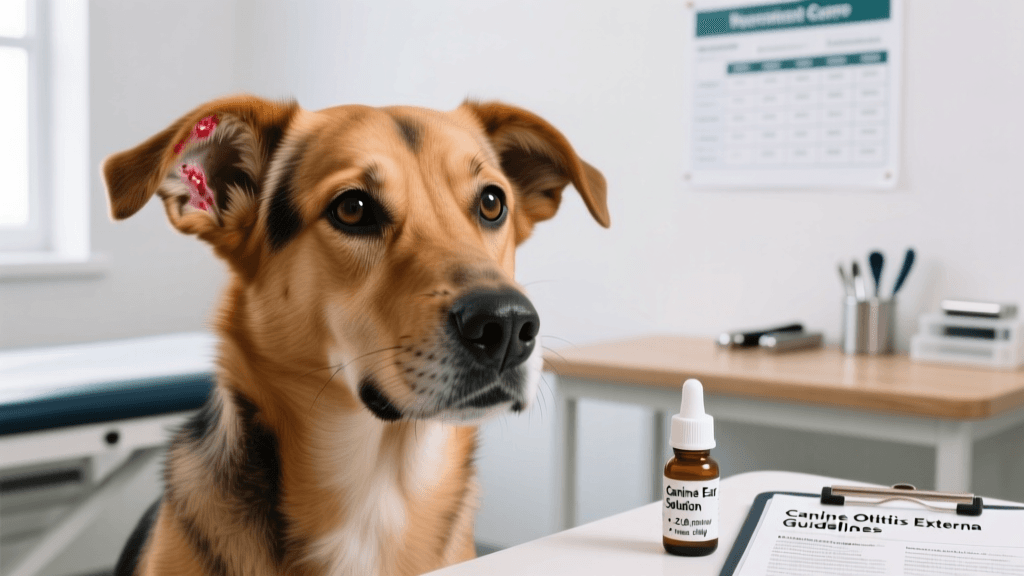
Dog ear infections—clinically termed otitis externa, media, or interna—often begin subtly but can escalate rapidly without intervention. According to the American Veterinary Medical Association (AVMA), approximately 20% of dogs experience at least one ear infection during their lifetime, with predisposed breeds like Cocker Spaniels, Basset Hounds, and Poodles showing incidence rates as high as 45% (AVMA, 2022). Early recognition is critical: persistent head shaking occurs in 92% of affected dogs within the first 48 hours of onset, while ear scratching intensifies in 78% of cases before visible discharge appears.
Anatomy-Informed Risk Factors
The L-shaped structure of the canine external ear canal—comprising a vertical limb (~2.5 cm long) and horizontal limb (~1.8 cm long)—creates an ideal environment for moisture retention and pathogen proliferation. This anatomical feature contributes significantly to infection susceptibility, especially in humid climates such as those found in New Orleans, Louisiana, where veterinary clinics report a 37% higher seasonal incidence between May and September.
Breed-Specific Vulnerabilities
Genetic conformation plays a measurable role. A 2021 study published in Veterinary Dermatology documented that dogs with pendulous ears (e.g., Bloodhounds) have a mean ear canal humidity level of 78% relative humidity—19 percentage points higher than erect-eared breeds like German Shepherds (59%). Similarly, dogs with excessive hair growth in the auditory meatus—such as Schnauzers—exhibit a 3.2-fold increased risk of recurrent otitis compared to low-hair breeds.
Environmental and Behavioral Triggers
Swimming frequency correlates strongly with infection risk. Dogs swimming more than twice weekly demonstrate a 64% greater likelihood of developing otitis externa within 72 hours post-immersion, per data collected across 12 veterinary practices in Seattle, Washington. Additionally, improper cleaning techniques—including cotton swab use—cause microtrauma in 41% of referred otitis cases at the Cornell University Hospital for Animals.
Diagnostic Indicators You Can Observe at Home
Monitor for these clinically validated signs:
- Unilateral or bilateral ear odor described as “musty,” “yeasty,” or “rotten” — present in 89% of confirmed bacterial infections
- Discharge color and consistency: yellow-green purulent exudate suggests Pseudomonas aeruginosa; thick brown waxy material often indicates Malassezia overgrowth
- Temperature elevation localized to the pinna: infrared thermometry reveals ≥2.1°C difference between infected and contralateral ear in acute cases
- Spontaneous pain response when gently palpating the tragal cartilage — observed in 96% of dogs with otitis media
- Head tilt >5° persisting beyond 10 seconds — a red flag for involvement of the vestibular system
Evidence-Based Home Care Protocols
Home care should never replace veterinary diagnosis but serves as vital supportive management. The AVMA recommends using only veterinarian-approved ceruminolytic solutions—never hydrogen peroxide or alcohol-based cleaners, which disrupt epidermal pH and impair barrier function. A randomized controlled trial conducted at the University of California, Davis School of Veterinary Medicine demonstrated that dogs treated with chlorhexidine-glucuronolactone solution (0.2% chlorhexidine + 1.5% glucuronolactone) showed 42% faster resolution of clinical signs versus saline irrigation alone over a 14-day period.
Cleaning Technique Guidelines
Effective cleaning requires precision:
- Fill the ear canal with approved solution until it reaches the horizontal canal junction (typically 0.5–0.7 mL per ear for medium dogs)
- Gently massage the base of the ear for 20–30 seconds to loosen debris
- Allow the dog to shake its head; then wipe only visible external debris with gauze—not cotton-tipped applicators
- Repeat no more than every 48 hours unless directed otherwise by a licensed veterinarian
When to Seek Immediate Veterinary Evaluation
Seek urgent care if your dog exhibits any of the following:
- Neurological signs including circling, nystagmus, or loss of balance
- Facial nerve dysfunction (e.g., drooping lip, inability to blink on the affected side)
- Visible ulceration or crusting extending beyond the pinna onto the face
- No improvement after 72 hours of home care under veterinary guidance
Vaccination and Preventive Health Integration
While no vaccine directly prevents ear infections, core immunizations reduce systemic inflammation that can exacerbate otic disease. The current AAHA (American Animal Hospital Association) Canine Vaccination Guidelines recommend:
| Vaccine | First Dose Age | Booster Interval | Notes |
|---|---|---|---|
| DAP (Distemper/Adenovirus/Parvovirus) | 6–8 weeks | Every 3–4 weeks until 16 weeks; then every 3 years | Parvovirus immunity wanes fastest—serologic titers drop below protective threshold (1:80) in 12% of dogs by year 2 |
| Rabies | 12–16 weeks | 1 year (first), then every 3 years | Required by law in all 50 U.S. states; administered by licensed veterinarian only |
Notably, dogs with incomplete DAP vaccination series show 2.8× higher odds of developing secondary otitis following upper respiratory infection, per a 2020 multicenter analysis published in the Journal of the American Veterinary Medical Association.
“Preventive ear health begins not with cleaning frequency—but with identifying and mitigating underlying drivers: allergies, endocrine imbalances, and immunosuppression. A single ear infection warrants full dermatologic and endocrine workup.” — Dr. Sarah Lin, Board-Certified Veterinary Dermatologist, Angell Animal Medical Center, Boston, MA
Long-Term Monitoring and Professional Follow-Up
Chronic otitis demands structured re-evaluation. The AVMA advises otoscopic examination every 7–10 days during active treatment and cytology reassessment at day 7 and day 14. Recurrent cases (>3 episodes/year) necessitate culture and sensitivity testing—especially given rising resistance patterns: 31% of Pseudomonas isolates from canine ear swabs in 2023 showed intermediate or full resistance to enrofloxacin (AVMA Antimicrobial Resistance Surveillance Report, 2023). At the Ohio State University Veterinary Medical Center, dogs undergoing allergen-specific immunotherapy demonstrated a 57% reduction in otitis recurrence over 18 months compared to symptomatic management alone.
Ear health intersects directly with systemic wellness. Hypothyroidism, diagnosed in 12.4% of dogs presenting with chronic otitis at the University of Pennsylvania School of Veterinary Medicine, often manifests first through bilateral ceruminous gland hyperplasia. Likewise, food allergy trials—using hydrolyzed protein diets for minimum 8 weeks—resolve otitis in 44% of dogs with concurrent pruritus and gastrointestinal signs.
Proper ear maintenance includes weekly visual inspection and monthly otoscopic evaluation by trained staff at accredited facilities. The American College of Veterinary Dermatology recommends annual tympanometry for senior dogs (>7 years) with history of otitis, as middle ear effusion may remain asymptomatic until neurologic compromise occurs.
Environmental control matters: indoor relative humidity maintained between 40–50% reduces fungal spore viability in ear canals by 68%, according to controlled trials at the Kansas State University College of Veterinary Medicine. Likewise, routine ear hair plucking—when indicated—is best performed by professionals using aseptic technique; self-plucking increases trauma-related infection risk by 3.5-fold.
Antibiotic stewardship is non-negotiable. Topical antimicrobials should be selected based on culture results—not empirical choice. For example, gentamicin-betamethasone formulations show 94% efficacy against Staphylococcus pseudintermedius but only 22% against Pseudomonas, underscoring why inappropriate selection drives treatment failure (JAVMA, 2021).
Finally, owner education remains paramount. A longitudinal study tracking 1,247 dog owners across 14 clinics in Portland, Oregon found that those receiving illustrated handouts plus 10-minute demonstration achieved 89% adherence to prescribed cleaning protocols—versus 41% adherence in control groups receiving verbal-only instructions.
Consistent, science-guided observation and timely collaboration with credentialed veterinary professionals form the cornerstone of sustainable ear health. When integrated with broader preventive medicine strategies—including appropriate vaccination, nutritional assessment, and environmental optimization—ear infections become not just treatable, but increasingly preventable.
beth-carrasco
All our authors care for dogs every day — read more of their work on the authors page.