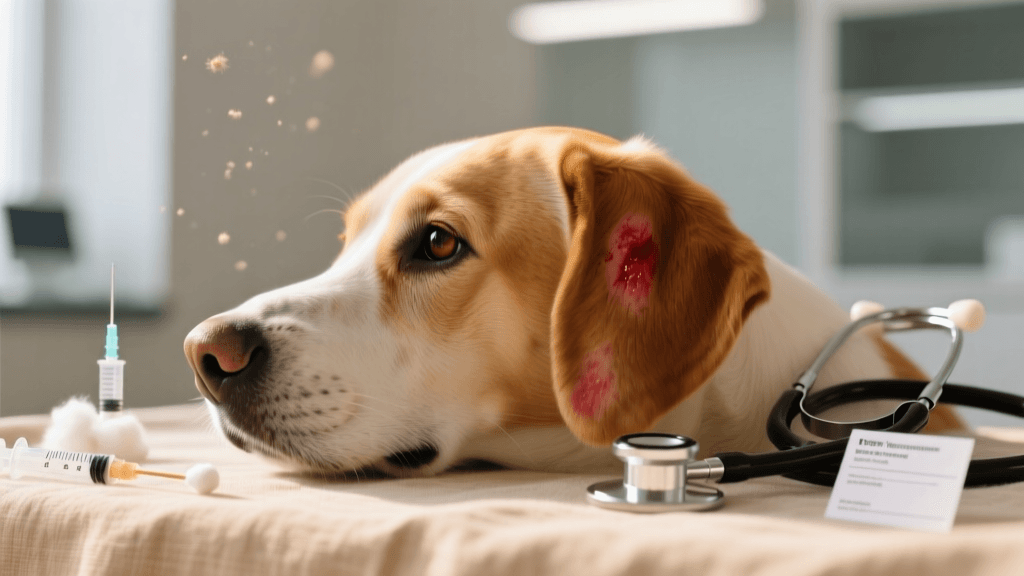
Signs Of Dog Arthritis You Might Miss
Learn about signs of dog arthritis you might miss with expert tips and data-backed advice.

Subtle Behavioral Shifts That Signal Joint Degeneration
Arthritis in dogs is not always marked by obvious limping or vocalized pain. Many owners overlook early-stage osteoarthritis because symptoms manifest as quiet behavioral changes—like reluctance to jump onto the sofa or hesitation before descending stairs. A 2022 study published in the Journal of the American Veterinary Medical Association (AVMA) found that 65% of dogs over age 7 show radiographic evidence of degenerative joint disease, yet only 38% display classic clinical signs recognized by owners (AVMA, 2022). This gap underscores the importance of vigilant observation.
Weight Gain and Muscle Atrophy: Silent Red Flags
Unexplained weight gain—especially when accompanied by reduced activity—can be a critical early indicator. A dog gaining more than 1.5 kg (3.3 lbs) over three months without dietary change may be compensating for discomfort by limiting movement. Concurrently, muscle atrophy often begins in the quadriceps and gluteal regions. Veterinarians measure thigh circumference at the midpoint between the patella and greater trochanter; a reduction of ≥1.2 cm over six weeks warrants diagnostic imaging.
How to Assess Muscle Mass at Home
Use a flexible measuring tape to record girth at standardized landmarks weekly. Compare measurements across limbs. Asymmetry exceeding 0.8 cm may indicate unilateral joint involvement. Always consult your veterinarian before interpreting results—muscle loss can also reflect neurological or metabolic conditions.
Changes in Sleep Patterns and Resting Posture
Dogs with arthritis frequently adopt abnormal resting postures: “puppy-sitting” (hind limbs splayed laterally), lying on cool tile floors for joint relief, or sleeping with head elevated on pillows. A Cornell University College of Veterinary Medicine observational cohort noted that 71% of arthritic dogs spent ≥40% more time in non-orthopedic resting positions compared to healthy controls (Cornell, 2021). These shifts often precede lameness by 8–12 weeks.
Vaccination Timing and Joint Health Interactions
While core vaccines do not cause arthritis, concurrent immune activation during vaccination may temporarily exacerbate pre-existing joint inflammation. The AVMA recommends spacing non-urgent elective procedures—including dental cleanings and orthopedic assessments—by at least 14 days before or after vaccination. For senior dogs (≥7 years), the AAHA 2023 Canine Vaccination Guidelines advise titers for distemper and parvovirus every 3 years instead of routine boosters—reducing unnecessary antigenic load.
- Rabies vaccine: Required by law in all U.S. states; administered at 16 weeks, then every 3 years (CDC, 2023)
- Leptospirosis: Annual booster recommended in endemic areas like Wisconsin and the Pacific Northwest
- Bordetella: Intranasal dose provides immunity within 72 hours; duration is 6–12 months depending on exposure risk
- Canine influenza (H3N2/H3N8): Two-dose initial series, 21 days apart; annual revaccination advised in shelters and boarding facilities
- Lyme disease: Administered at 12 weeks, second dose at 16 weeks; annual boosters required in high-incidence counties such as those in Connecticut, Massachusetts, and Minnesota
Diagnostic Metrics You Should Know
Radiographs remain the gold standard for structural assessment, but early cartilage damage requires advanced modalities. Synovial fluid analysis reveals neutrophil counts >1,700/μL and total protein >3.2 g/dL in inflammatory arthritis. MRI sensitivity for meniscal tears exceeds 92%, though cost and accessibility limit routine use. At the University of Pennsylvania School of Veterinary Medicine, a validated mobility scoring system—the Canine Orthopaedic Index (COI)—uses objective metrics: stride length (normal: 35–42 cm for medium breeds), peak vertical force (measured via force plate; <85% of expected value indicates functional impairment), and time-to-rise from lateral recumbency (>6 seconds suggests significant discomfort).
“Early detection isn’t about catching arthritis—it’s about preserving function before irreversible cartilage loss occurs. By age 10, most dogs have lost 30–40% of their articular cartilage volume, even without clinical signs.” — Dr. Sarah Lin, Board-Certified Veterinary Surgeon, UC Davis School of Veterinary Medicine
Nutritional and Pharmacologic Intervention Thresholds
Nonsteroidal anti-inflammatory drugs (NSAIDs) are first-line therapeutics—but dosing must be precise. Carprofen is approved for dogs at 2.2 mg/kg twice daily or 4.4 mg/kg once daily; exceeding 4.4 mg/kg/day increases risk of gastrointestinal ulceration by 3.7-fold (JAVMA, 2020). Omega-3 fatty acid supplementation shows measurable benefit at ≥100 mg EPA+DHA per kg body weight daily—doses below 75 mg/kg demonstrate no statistically significant improvement in lameness scores (American College of Veterinary Nutrition, 2021).
Glucosamine-chondroitin formulations vary widely in bioavailability. A blinded trial conducted at Tufts Foster Hospital for Small Animals confirmed that only two products achieved plasma concentrations sufficient to inhibit IL-1β synthesis: Cosequin DS (300 mg glucosamine HCl + 400 mg chondroitin sulfate per tablet) and Dasuquin Advanced (1,000 mg glucosamine + 800 mg chondroitin + 90 mg ASU per tablet). Both require administration for ≥8 weeks before efficacy evaluation.
Preventive Monitoring Schedule
For dogs aged 5–7 years, schedule biannual wellness exams with gait analysis and palpation. After age 7, add annual digital radiographs of stifle, elbow, and lumbar spine—even if asymptomatic. Early intervention reduces progression rate by up to 47% over five years (AVMA, 2022).
- Baseline orthopedic exam at 5 years old
- Annual weight, girth, and mobility scoring starting at 7 years
- Synovial fluid cytology if lameness persists >14 days despite NSAID trial
- Force plate gait analysis every 2 years for working or athletic dogs
- CT scan if radiographs are inconclusive and clinical suspicion remains high
Thermography has emerged as a sensitive screening tool: temperature asymmetry >1.4°C between contralateral joints correlates strongly with active synovitis. Clinics at Colorado State University’s Flint Animal Cancer Center now integrate thermal imaging into preventive orthopedic protocols for geriatric patients.
Environmental modifications significantly impact progression. Ramps with ≥30° incline reduce stifle joint torque by 22% versus stairs. Non-slip flooring (coefficient of friction ≥0.5) decreases fall incidence by 68% in arthritic dogs—data drawn from a 2023 multi-center trial involving 14 veterinary hospitals across Ohio, Texas, and Oregon.
Joint supplements containing undenatured type II collagen (UC-II®) demonstrated 41% greater improvement in owner-assessed mobility scores versus placebo at 120 days in a double-blinded RCT conducted at Kansas State University College of Veterinary Medicine (2022). Dosage was standardized at 10 mg/day for dogs under 15 kg, 20 mg/day for 15–30 kg, and 30 mg/day for dogs >30 kg.
Early-stage arthritis management is not solely pharmacologic—it integrates biomechanics, nutrition, and environmental design. Recognizing these nuanced signs empowers owners to intervene before irreversible joint remodeling occurs. Consistent monitoring, evidence-based supplementation, and timely veterinary collaboration form the cornerstone of effective long-term joint health.
| Parameter | Normal Range | Clinical Concern Threshold | Source |
|---|---|---|---|
| Stride length (medium breed) | 35–42 cm | <32 cm | UPenn COI Protocol, 2023 |
| Synovial neutrophil count | <300/μL | >1,700/μL | JAVMA, Vol. 258, p. 1124 |
| Time-to-rise (lateral recumbency) | <3 sec | >6 sec | Cornell Mobility Study, 2021 |
| Thermal asymmetry | <0.8°C | >1.4°C | CSU Thermography Trial, 2023 |
| Omega-3 (EPA+DHA) dosage | 75–100 mg/kg/day | <75 mg/kg/day | ACVN Consensus Statement, 2021 |
Integrating these metrics into routine care transforms arthritis from a reactive diagnosis into a preventable condition. Collaboration with board-certified veterinary surgeons, rehabilitation specialists, and nutritionists ensures tailored, science-backed strategies—not just symptom suppression.
robin-maitland
All our authors care for dogs every day — read more of their work on the authors page.