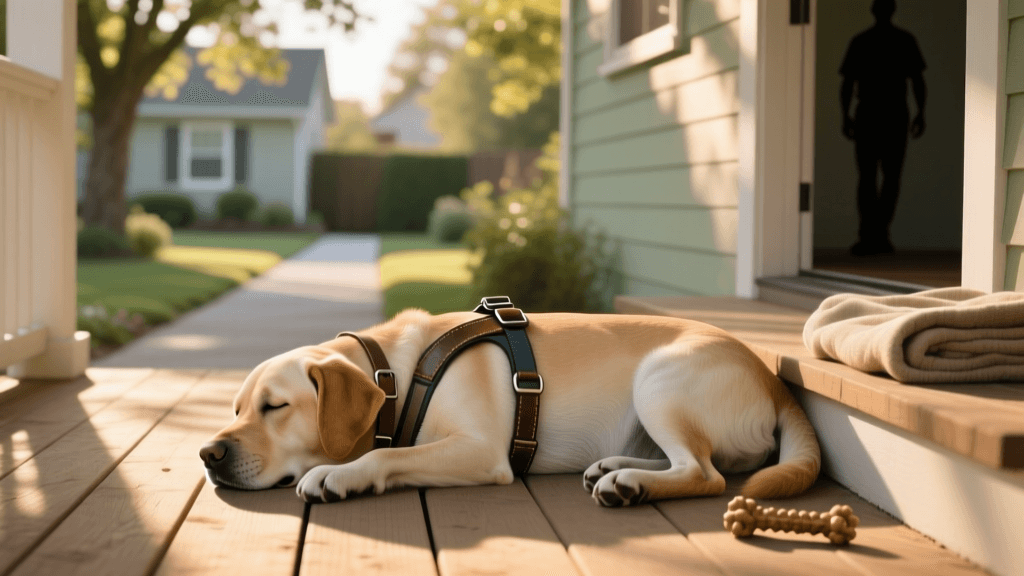
Decoding the Off-Duty Switch: Service Dog Decompression 2026
Discover the psychology behind the service dog off-duty switch. Learn 2026 decompression techniques to prevent burnout in working and assistance dogs.
The Hidden Psychological Toll of the Working Dog
When we see a service dog navigating a crowded airport or providing deep pressure therapy during a panic attack, we are witnessing a masterpiece of canine cognition and training. However, as we move through 2026, veterinary behaviorists and canine psychologists are increasingly focused on what happens after the harness comes off. Understanding the 'off-duty' switch is no longer just about giving your dog a nap; it is a critical component of preventing canine burnout, compassion fatigue, and task refusal. For handlers and owners of working breeds, mastering the psychology of decompression is essential for the longevity and mental health of your canine partner.
Unlike pet dogs, whose primary 'job' is companionship, service and working dogs operate in a state of sustained cognitive arousal. They are trained to suppress natural instincts—like chasing a squirrel or sniffing a discarded food wrapper—in favor of hyper-vigilance and task execution. According to the standards set by Assistance Dogs International (ADI), the welfare of the working dog must remain paramount, yet the subtle signs of psychological fatigue often go unnoticed until a dog begins to exhibit behavioral changes.
The Neurology of the Working Drive
To understand why decompression is necessary, we must look at the neurology of task-oriented breeds like Labrador Retrievers, Golden Retrievers, and German Shepherds. When a service dog performs a trained task—such as alerting to a drop in blood sugar or guiding a handler with visual impairments—their brain releases a cascade of dopamine. This neurotransmitter reinforces the behavior and creates a 'working drive' that makes the dog eager to perform.
However, this drive is coupled with elevated cortisol and adrenaline levels. The dog is essentially in a state of 'eustress' (positive stress), which is highly stimulating but metabolically expensive. When the harness is removed, the brain does not simply flip a switch and return to baseline. The residual neurochemicals remain in the bloodstream, leaving the dog in a state of physiological arousal. If a handler assumes the dog is 'relaxed' simply because it is lying on a dog bed, they may be misreading the situation. A dog lying rigidly on a bed, panting softly, or exhibiting 'whale eye' is still actively processing the stress of the workday. True decompression requires intentional, structured activities that actively metabolize these stress hormones and signal to the dog's nervous system that the workday is over.
Recognizing the 'Harness Hangover' and Canine Burnout
In the working dog community, the term 'Harness Hangover' has gained traction to describe the immediate post-work exhaustion and irritability some dogs exhibit. If not managed properly through daily decompression protocols, this can evolve into chronic canine burnout or compassion fatigue. Dogs are deeply empathetic creatures, and psychiatric service dogs, in particular, absorb the emotional weight of their handlers' trauma, anxiety, or medical crises.
The American Kennel Club (AKC) emphasizes that working dogs must be monitored for subtle shifts in behavior that indicate mental exhaustion. Key micro-signals of burnout include:
- Task Latency: A delay of even one or two seconds in responding to a known cue.
- Displacement Behaviors: Excessive scratching, yawning, or lip licking when the harness is brought out.
- Avoidance: Turning the head away from the handler or hiding when it is time to 'go to work'.
- Hyper-Vigilance at Home: An inability to settle in the home environment, pacing, or reacting to minor household noises.
- Changes in Play: A sudden lack of interest in toys or playing too roughly, indicating an inability to self-regulate arousal levels.
The 2026 Protocol for Service Dog Decompression
Modern canine sports medicine and behavioral science have refined how we approach canine rest. In 2026, the gold standard for working dog care involves a multi-sensory approach to decompression, targeting the dog's olfactory, tactile, and cognitive systems.
1. Olfactory Decompression Walks (The Sniffari)
When a service dog is on duty, their olfactory system is largely suppressed so they can focus on visual and auditory cues from their handler. Allowing the dog to engage in unstructured sniffing is one of the most effective ways to lower their heart rate and engage the parasympathetic nervous system. A 20-minute 'Sniffari' on a 15-to-30-foot biothane long line in a quiet, natural environment allows the dog to process environmental information at their own pace. Sniffing requires intense mental processing and is proven to be more tiring for a dog than a brisk physical walk of the same duration. This activity signals to the brain that they are no longer responsible for the handler's safety and can simply 'be a dog.'
2. Tactile Reversal and Canine Massage
Many service dogs, particularly psychiatric and mobility assistance dogs, are trained in Deep Pressure Therapy (DPT), where they use their body weight to ground a handler during a crisis. This requires the dog to remain still and endure physical compression. To reverse this dynamic, handlers should engage in tactile reversal. Using techniques derived from Tellington TTouch, handlers can gently massage the dog's ears, chest, and shoulders. This reciprocal touch releases oxytocin in both the human and the dog, reinforcing the bond while physically releasing muscle tension accumulated during task execution.
3. Cognitive Shifting via Free Shaping
Service dog training is heavily based on compliance and directed behavior. To help the dog decompress, handlers should introduce 'Free Shaping' sessions using a clicker and high-value treats. In this game, the dog is given total agency to offer behaviors without any cues from the handler. The dog decides to sit, spin, touch a mat, or pick up a toy, and the handler simply marks and rewards the choices. This cognitive shift from compliance to agency is incredibly empowering for working dogs and helps restore their psychological balance.
Active Duty vs. Off-Duty: A Physiological Comparison
Understanding the physiological shift required for true rest helps handlers realize why simply taking off the harness is not enough. The following table illustrates the internal state of a working dog across different modes.
| Physiological Marker | Active Duty (On-Harness) | Off-Duty (Decompressed) |
|---|---|---|
| Resting Heart Rate | 90 - 120 BPM | 60 - 80 BPM |
| Cortisol Levels | Elevated (Sustained Focus) | Baseline (Restorative) |
| Muscle Tension | High (Ready State) | Low (Relaxed State) |
| Olfactory Engagement | Suppressed (Task-Focused) | High (Environmental Processing) |
| Decision Making | Handler-Directed | Dog-Directed (Agency) |
Environmental Management and Smart Home Integration
The environment in which the dog rests plays a pivotal role in their ability to decompress. In 2026, many handlers are utilizing smart home technology to create optimized recovery spaces for their working dogs. Circadian lighting systems that automatically shift to warm, amber tones in the evening help stimulate the natural production of melatonin in canines, signaling that the day's work is done. Additionally, the use of continuous white noise or specifically calibrated bio-acoustic music (designed to lower canine heart rates) can mask triggering household sounds, allowing the dog to enter deep REM sleep without the subconscious need to monitor their surroundings.
Furthermore, providing a 'decompression zone'—a crate or a specific mat that is never used for grooming, nail trimming, or isolation time-outs—is vital. This space must be associated exclusively with positive outcomes, safety, and autonomy. Under the guidelines outlined by the Americans with Disabilities Act (ADA), service dogs must be under control, but when off-duty in the home, giving the dog the freedom to choose their resting space is a crucial aspect of their psychological welfare.
Conclusion: Honoring the Whole Dog
A service dog is a lifeline, a medical device, and a dedicated professional. But beneath the vest, they are still dogs driven by ancient instincts, a need for play, and a desire for unstructured freedom. By recognizing the neurology of the working drive and implementing intentional, science-backed decompression protocols, handlers can protect their canine partners from the silent creep of burnout. As we continue to advance our understanding of canine psychology in 2026, the most profound thing we can do for our working dogs is to give them the permission, the environment, and the time to simply be a dog.
robin-maitland
All our authors care for dogs every day — read more of their work on the authors page.