DIY Snuffle Mats: Understanding Your Dog's Instincts
Learn how canine foraging instincts drive behavior. Build a DIY snuffle mat with household items to reduce stress and enrich your dog's daily routine.
The Evolutionary Psychology of Canine Foraging
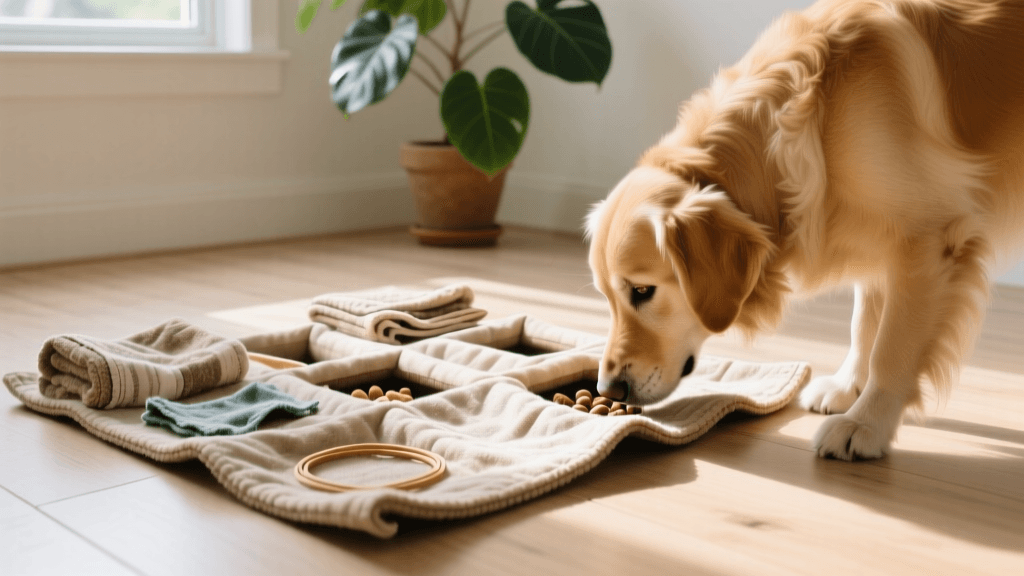
To truly understand your dog, you must first look past the modern living room and into their evolutionary history. Dogs are not merely pets; they are complex animals with deep-rooted survival instincts. In the wild, canines spend up to 80% of their waking hours searching for, stalking, and consuming food. This foraging drive is hardwired into their DNA. However, modern domestication has drastically altered this dynamic. Today, most dogs are presented with a bowl of kibble twice a day, reducing a complex, hours-long psychological endeavor into a two-minute mechanical task.
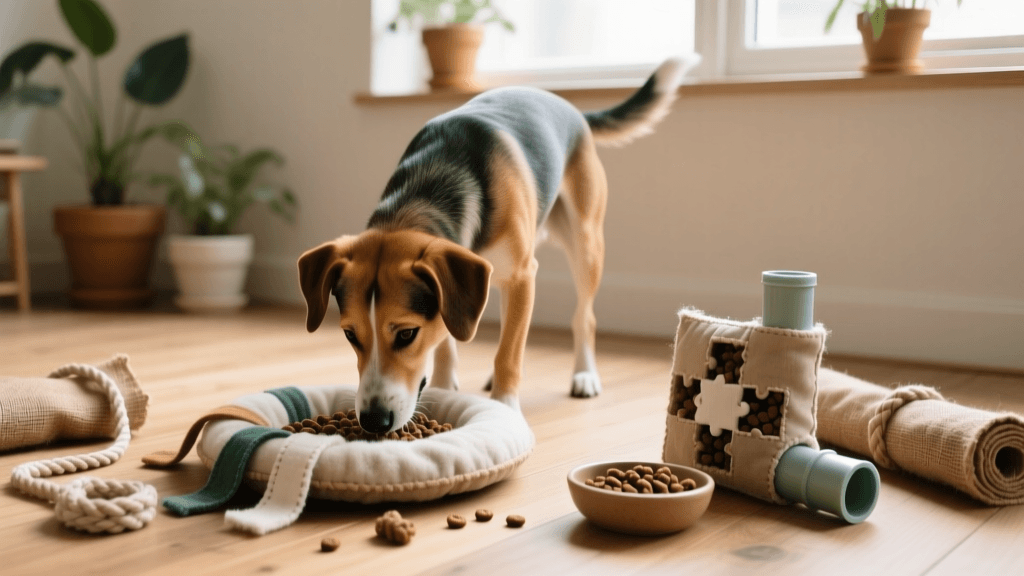
This sudden abundance of free time and lack of mental stimulation often leads to a host of behavioral issues. When a dog's natural foraging instincts are suppressed, that pent-up cognitive energy must go somewhere. This frequently manifests as destructive chewing, excessive barking, pacing, and generalized anxiety. By understanding your dog's innate drive to work for their food, you can implement homemade solutions that satisfy their psychological needs, turning mealtime into an enriching cognitive exercise.
The Neurological Benefits of Sniffing
The cornerstone of canine foraging is the sense of smell. According to the American Kennel Club, mental enrichment and scent work are just as tiring for a dog as rigorous physical exercise. A dog's olfactory bulb is proportionally 40 times larger than a human's, and the part of their brain dedicated to analyzing odors is vastly more complex.
When a dog engages in deep, rhythmic sniffing, a fascinating physiological shift occurs. Their heart rate actually decreases, promoting a parasympathetic nervous system response that induces a state of calm. Furthermore, the act of successfully locating hidden food triggers the release of dopamine, the brain's primary 'feel-good' neurotransmitter. This is why sniffing is not just a way to find food; it is a self-soothing mechanism. Providing an outlet for this behavior through DIY enrichment tools is a powerful way to manage canine stress and build confidence.
DIY Snuffle Mat: Materials and Cost Breakdown
A snuffle mat is a fabric-based puzzle toy that mimics the experience of foraging for food in tall grass. While commercial versions can be expensive and poorly constructed, building your own is cost-effective, highly customizable, and allows you to select dog-safe, durable materials. Here is exactly what you need to build a professional-grade snuffle mat at home.
Required Materials:
- 1 Rubber Sink Mat (with drainage holes): Approximately 12x18 inches. This serves as the sturdy, non-slip base. (Cost: $5 - $8 at most hardware or dollar stores).
- 2 to 3 Yards of Anti-Pill Fleece Fabric: Choose 2 or 3 contrasting colors. Anti-pill fleece is crucial because it resists fraying and holds up to repeated washing and canine chewing. (Cost: $12 - $15 at craft stores).
- Fabric Scissors: A sharp pair dedicated to cutting thick fabric.
- High-Value Training Treats or Kibble: For testing the finished product.
Total Estimated Cost: Under $25. (Commercial equivalents often retail for $40 to $60).
Time Investment: 90 to 120 minutes for cutting and assembly.
Step-by-Step Construction Guide
Creating a snuffle mat requires patience, but the behavioral payoff for your dog is immense. Follow these precise measurements and steps for optimal durability and enrichment.
Step 1: Cut the Fleece Strips
Lay your fleece fabric flat. Using your fabric scissors, cut the fleece into long strips. Each strip should be exactly 1.5 inches wide and 8 inches long. You will need approximately 150 to 200 strips depending on the size of your sink mat and how dense you want the final mat to be. The contrasting colors will help you visually track the density of the mat as you build it.
Step 2: The Primary Knotting Technique
Take one fleece strip and thread it through two adjacent holes in the rubber sink mat. Pull the ends up so they are even. Tie a standard overhand knot, pulling it tight against the rubber base. Repeat this process across the entire mat, working in rows. Ensure every strip is pulled taut; loose strips can become a choking hazard if a dog pulls them free.
Step 3: The Secondary Cross-Knot (For Density)
Once the base layer is complete, flip the mat over. You will see the loops of the fleece strips on the rubber side. Take adjacent loops from neighboring holes and tie them together in a second overhand knot. This secondary knotting locks the fleece in place, preventing your dog from easily ripping the strips out, and creates the dense, grass-like canopy necessary for hiding food.
Step 4: Fluff and Hide
Flip the mat back to the fleece side. Use your fingers to fluff and separate the strips, ensuring they stand up like tall grass. Bury a small handful of kibble deep within the fleece canopy, ensuring some pieces fall to the rubber base while others are caught in the upper fabric layers.
Reading Your Dog: Engagement vs. Frustration
Understanding your dog's body language during enrichment activities is critical. A snuffle mat should promote calm foraging, not frantic frustration. As The Humane Society of the United States notes, puzzles must be matched to the dog's cognitive level to prevent stress.
Signs of Healthy Engagement:
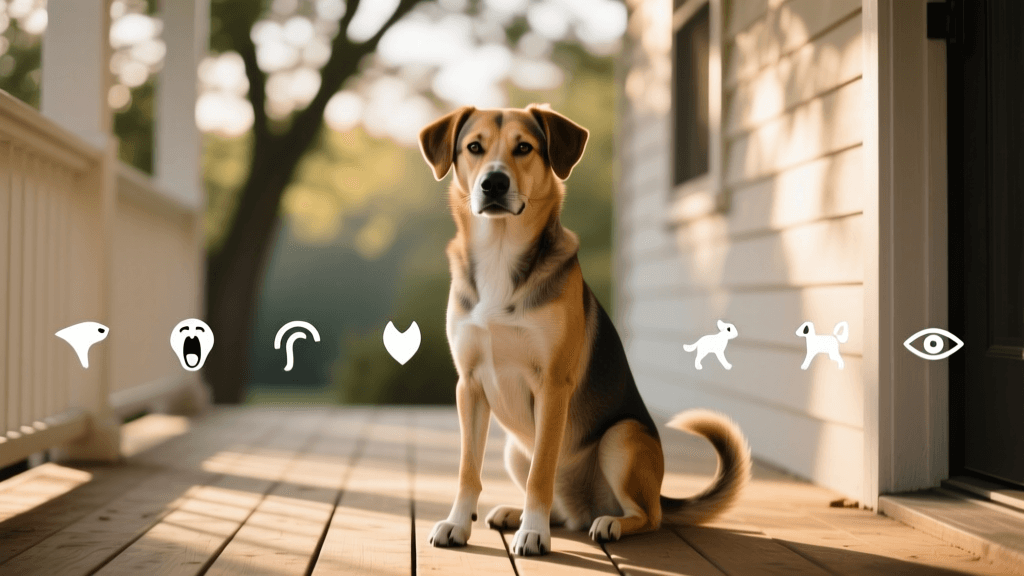
- Rhythmic Sniffing: Deep, sustained inhalations with the nose buried in the mat.
- Relaxed Posture: Soft eyes, relaxed ears, and a gently wagging tail at mid-level.
- Sneezing: Occasional sneezing is a common canine calming signal and a way to clear nasal passages during intense scent work.
- Pawing Gently: Using one paw to carefully part the fleece strips to access hidden food.
Signs of Frustration and Stress:
- Aggressive Digging: Frantic, two-pawed scratching that flips the mat over.
- Vocalization: Whining, barking, or huffing at the mat.
- Destructive Chewing: Biting and pulling at the fleece strips rather than sniffing for food.
- Displacement Behaviors: Sudden yawning, lip licking, or shaking off when no food is found, indicating cognitive overload.
If your dog exhibits frustration, the puzzle is too difficult. Remove the mat, scatter the remaining treats openly on the floor to give them a 'win,' and next time, hide fewer treats or place them closer to the top of the fleece canopy.
Comparison Chart: DIY vs. Commercial Enrichment Toys
Why go through the effort of building your own? The following table highlights the distinct advantages of the DIY approach when considering canine behavioral needs and owner economics.
| Feature | DIY Fleece Snuffle Mat | Commercial Plastic Puzzle |
|---|---|---|
| Cost | $15 - $25 | $30 - $60+ |
| Sensory Experience | Soft, quiet, mimics natural grass | Hard, noisy, unnatural textures |
| Customization | High (adjust density and colors) | None (fixed difficulty levels) |
| Durability | High (if cross-knotted properly) | Variable (plastic can crack) |
| Washability | Machine washable (cold, air dry) | Hand wash required |
Expanding Your Dog's Homemade Enrichment Repertoire
Once your dog has mastered the snuffle mat, you can introduce other DIY foraging solutions to keep their brain engaged. Best Friends Animal Society recommends rotating enrichment toys to prevent habituation, ensuring the dog remains mentally stimulated by novel challenges.
The Towel Roll-Up
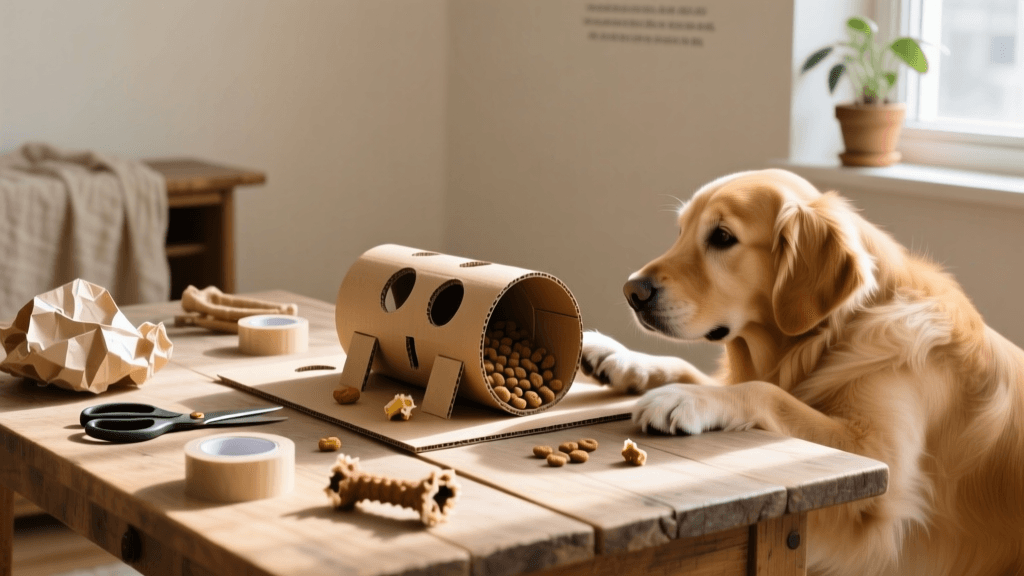
Take an old, clean bath towel and lay it flat. Scatter treats evenly across the surface. Roll the towel up tightly into a cylinder. For an advanced challenge, tie the rolled towel into a loose knot. This requires the dog to use their paws and nose to unroll and untie the fabric, engaging their problem-solving skills and physical dexterity.
The Muffin Tin Puzzle
Place a few treats into the cups of a standard metal muffin tin. Cover each cup with a dog-safe tennis ball or a tightly balled-up pair of socks. The dog must figure out how to remove the obstacles to access the reward. This is an excellent intermediate step between open bowl feeding and complex mechanical puzzles.
Conclusion
Understanding your dog goes far beyond teaching them to sit or stay; it requires a deep empathy for their evolutionary biology. By recognizing their innate need to forage, sniff, and work for their resources, you can transform daily routines into powerful behavioral therapy. A simple, homemade snuffle mat is more than just a craft project—it is a window into your dog's mind, offering them the mental stimulation they crave and fostering a calmer, more balanced companion. Grab your fleece, start knotting, and watch your dog's natural instincts beautifully unfold.
hannah-wickes
All our authors care for dogs every day — read more of their work on the authors page.