Training Your Senior Dog: Cognitive Care & Gentle Tricks
Discover how to train your senior dog with gentle tricks and cognitive enrichment. Adapt your life stage care guide for aging canine minds and bodies.
The Golden Years: Why Train a Senior Dog?
Many pet parents believe the old adage that 'you cannot teach an old dog new tricks.' However, modern veterinary behaviorists and canine enrichment experts strongly disagree. Training your senior dog is not only possible, but it is also a vital component of a comprehensive life stage care guide. As dogs enter their golden years—typically around 7 to 10 years of age, depending on the breed and size—their physical and cognitive needs shift dramatically. Continuing to train your aging companion provides essential mental stimulation, helps delay the onset of Canine Cognitive Dysfunction (CCD), and strengthens the bond you share. According to the American Kennel Club (AKC), mental enrichment is just as crucial as physical modifications for maintaining a senior dog's quality of life. This guide will walk you through adapting your training approach, selecting the right low-impact tricks, and managing age-related behavioral changes with empathy and science-backed strategies.
Adapting to Physical Changes: Low-Impact Training
Before introducing new training concepts, it is critical to assess your senior dog's physical capabilities. Osteoarthritis, hip dysplasia, and general joint stiffness are prevalent in aging canines. Forcing a senior dog to perform repetitive 'sit' or 'down' commands on hard surfaces can cause unnecessary pain and create a negative association with training sessions.
Environmental and Equipment Adjustments
- Surface Traction: Always train on non-slip surfaces. Invest in interlocking foam mats or lay down yoga mats over hardwood floors to prevent slipping, which can lead to catastrophic ligament tears like a CCL rupture.
- Orthopedic Support: Use a high-quality orthopedic bed (such as the Big Barker 7-inch Pillow Top, typically priced around $250-$300) as a designated 'place' or 'mat' command station to cushion aging joints.
- Treat Selection: Aging dogs often experience dental disease or tooth loss. Swap hard biscuits for soft, aromatic, and easily chewable rewards. Zuke's Mini Naturals or Ziwi Peak air-dried beef (approx. $25-$35 per bag) are excellent, high-value options that require minimal chewing.
- Joint Supplements: Consult your veterinarian about adding a glucosamine/chondroitin supplement like Dasuquin Advanced (approx. $65 for a 60-count bottle) to support joint health during active enrichment sessions.
Cognitive Enrichment: Keeping the Aging Mind Sharp
Canine Cognitive Dysfunction (CCD) is a neurodegenerative disease similar to Alzheimer's in humans. The ASPCA notes that signs of CCD include disorientation, altered sleep-wake cycles, and a decrease in learned behaviors. While training cannot cure CCD, proactive cognitive enrichment builds 'cognitive reserve,' helping the brain stay resilient longer.
Scent Work and Snuffle Mats
As vision and hearing decline, a dog's olfactory system remains remarkably robust. Scent work is the ultimate low-impact, high-reward brain game. You can purchase a high-quality snuffle mat (brands like Paw5 Wooly Snuffle Mat, approx. $45) or create a DIY version using fleece strips tied to a rubber sink mat. Hide 10-15 pieces of your dog's daily kibble or soft treats within the mat. A 15-minute sniffing session burns as much mental energy as a one-hour physical walk, making it ideal for dogs with mobility restrictions.
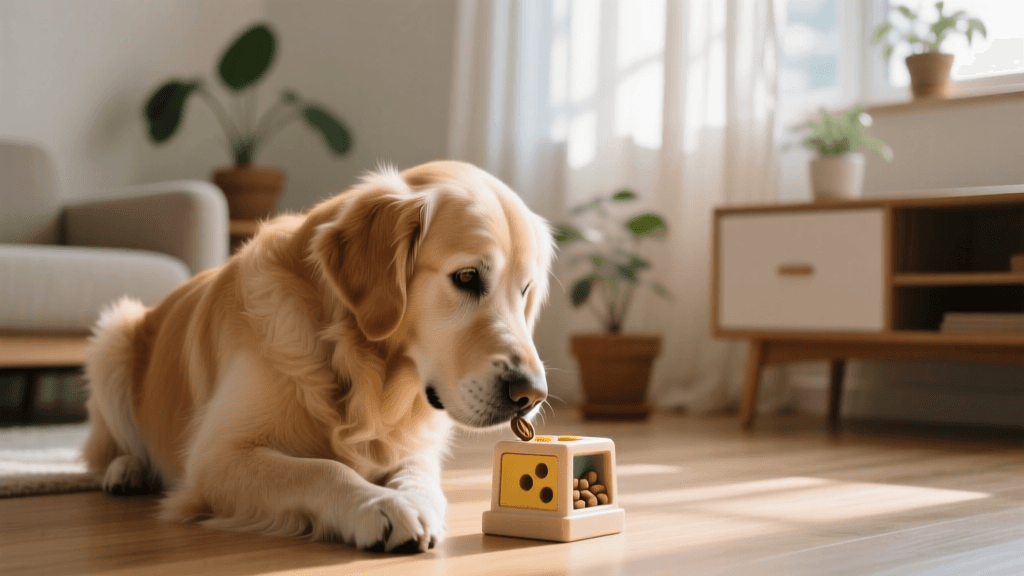
Food Puzzles
Replace standard food bowls with interactive puzzles. The KONG Senior (made with a softer, purple rubber specifically designed for aging teeth, approx. $15) can be stuffed with plain pumpkin puree, low-sodium chicken broth, and a few training treats, then frozen overnight. This provides a soothing, enriching activity that also promotes slow feeding.
Three Gentle Tricks for Senior Dogs
When teaching new cues to an older dog, keep sessions incredibly short—no more than 5 to 8 minutes at a time. Here are three low-impact tricks that provide immense cognitive value without straining the body.
1. The Hand Target ('Touch')
Teaching your dog to touch their nose to your palm is a fantastic way to guide them without pulling on a leash or collar, which is vital for dogs with tracheal sensitivity or neck arthritis.
- Step 1: Rub a soft, smelly treat on the palm of your hand and present it at your dog's nose level.
- Step 2: The moment their nose makes contact with your skin, use a clicker or a verbal marker ('Yes!') and reward with your other hand.
- Step 3: Gradually move your hand further away, requiring the dog to take a step to reach it. This encourages gentle, controlled movement and builds hind-end awareness.
2. The 'Find It' Game
This leverages natural foraging instincts and builds confidence.
- Step 1: Have your dog stay in a 'sit' or 'down' (or simply have a partner hold them gently).
- Step 2: Place a highly aromatic treat on the floor just a few feet away and say 'Find it!'
- Step 3: Release the dog to locate the reward. Slowly increase the difficulty by hiding treats behind table legs or under low rugs. This builds spatial memory and encourages environmental exploration at a safe pace.
3. The Chin Rest
The chin rest is an invaluable husbandry behavior. It allows you to examine your dog's eyes, clean their ears, or administer eye drops without forcing them into a stressful, restrictive headlock.
- Step 1: Sit in a chair and place a soft towel on your lap or a low stool.
- Step 2: Lure your dog's chin down onto the towel using a treat. Mark and reward the moment their chin makes contact.
- Step 3: Gradually increase the duration they must hold their chin down before receiving the reward. This builds trust and makes routine veterinary and grooming care significantly less stressful for your aging companion.
Life Stage Training Comparison Chart
Understanding how training evolves across a dog's lifespan is crucial for setting appropriate expectations. The following table outlines the shifting priorities and methodologies required for effective life stage care.
| Life Stage | Primary Focus | Session Duration | Physical Impact | Ideal Rewards |
|---|---|---|---|---|
| Puppy (8 weeks - 6 months) | Socialization, basic cues, bite inhibition | 3-5 minutes | High (growth plate care needed) | High-value kibble, soft chews |
| Adult (1 - 7 years) | Advanced obedience, agility, impulse control | 10-15 minutes | Moderate to High | Standard treats, toy play, praise |
| Senior (7+ years) | Cognitive maintenance, low-impact tricks, bonding | 5-8 minutes | Low (arthritis-friendly) | Soft, aromatic treats, gentle petting |
Managing Age-Related Behavioral Shifts
As dogs age, they may develop new behavioral issues that can be easily mistaken for 'stubbornness.' House soiling, night-time pacing (sundowning), and increased vocalization are common. The American Animal Hospital Association (AAHA) strongly recommends bi-annual veterinary wellness exams for senior pets to rule out underlying medical causes such as urinary tract infections, kidney disease, or hypertension before attempting behavioral modification.
If medical issues are cleared, manage the environment to support your dog's changing needs. For night-time pacing, consider using an Adaptil pheromone diffuser (approx. $25 for a starter kit) in their sleeping area and playing continuous white noise to mask startling household sounds. For house soiling, revert to puppy-management protocols: increase the frequency of potty breaks, utilize enzymatic cleaners like Nature's Miracle to fully eliminate scent markers, and provide easy access to outdoor areas via ramps or pet stairs.
Conclusion
Training a senior dog is a profound act of love and life stage care. By adapting your methods to accommodate physical limitations and leaning heavily into cognitive enrichment, you can ensure your dog's golden years are filled with purpose, comfort, and joy. Remember that the goal is no longer flawless obedience, but rather the preservation of your dog's mental acuity and the deepening of the lifelong bond you share.
jonas-cole
All our authors care for dogs every day — read more of their work on the authors page.