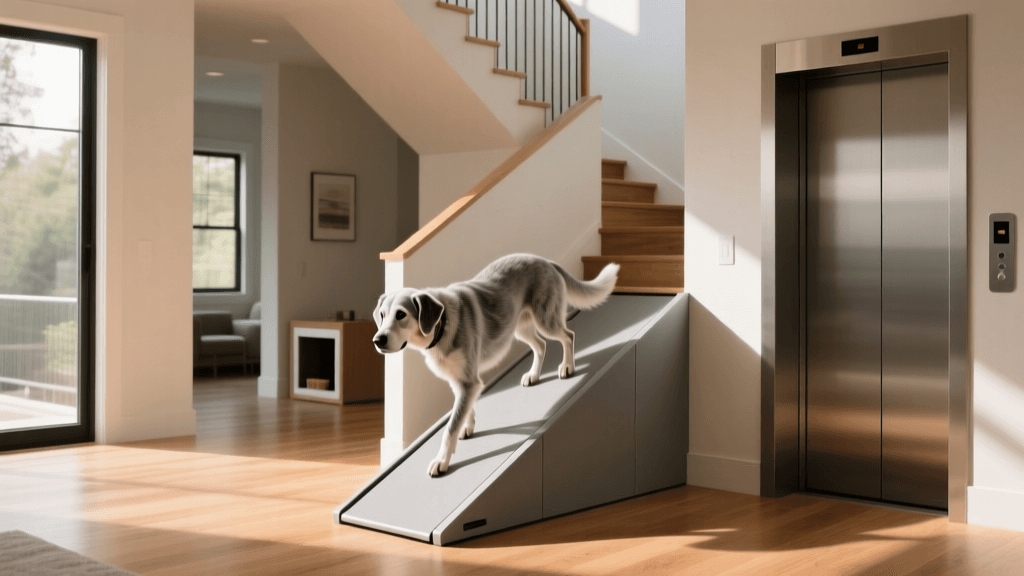
Senior Dog Stair Ramps and Indoor Lifts: 2026 Guide
Discover how to transition your aging dog to a multi-story home in 2026. Compare top stair ramps, indoor pet elevators, and joint-care tips.
Navigating the Move: Multi-Story Homes and Aging Joints
Moving to a new home is one of the most exciting life transitions you can experience, but when you share your life with an aging dog, a multi-story house presents a unique set of challenges. While a sprawling two-story home offers more space for your family, the staircases can quickly become insurmountable barriers for a senior dog dealing with osteoarthritis, hip dysplasia, or general age-related muscle loss. In 2026, pet owners have more advanced, ergonomic, and aesthetically pleasing options than ever before to help their senior companions navigate vertical spaces safely. Transitioning your older dog to a new environment requires a careful blend of environmental modification, mobility aids, and emotional support. This comprehensive guide will walk you through assessing your dog's needs, selecting the right ramps or lifts, and creating a joint-friendly environment in your new multi-story home.
Assessing Your Senior Dog’s Mobility in 2026
Before you start shopping for ramps or installing elevators, it is crucial to understand your dog's current physical limitations. The American Animal Hospital Association (AAHA) emphasizes that senior dogs require bi-annual wellness exams, specifically focusing on mobility and pain management. According to the AAHA's senior care guidelines, early intervention in mobility issues can significantly extend a dog's quality of life. Ask your veterinarian to perform a standardized mobility assessment, such as the Liverpool Osteoarthritis in Dogs (LOAD) questionnaire, to quantify your dog's pain levels and physical capabilities.
Consider the specific layout of your new home. Are the stairs carpeted or hardwood? What is the angle of the incline? A dog that can comfortably manage a three-step porch may completely refuse a steep, 14-step staircase leading to the master bedroom. Understanding these nuances will dictate whether you need a simple foam ramp, a heavy-duty aluminum structure, or a mechanized pet lift.
Top Stair Ramp Solutions for Multi-Story Homes
For dogs that still have some rear-leg strength and balance, stair ramps are the most cost-effective and practical solution. In 2026, the market has shifted away from flimsy plastic ramps toward high-traction, joint-absorbing materials. When selecting a ramp for a full staircase, the golden rule is the incline ratio: you generally need 3 inches of ramp length for every 1 inch of rise to ensure the slope is gentle enough for an arthritic dog.
| Ramp Type | Best For | Weight Capacity | 2026 Avg. Cost | Pros & Cons |
|---|---|---|---|---|
| High-Density Foam | Small breeds, low furniture, short stair runs | Up to 60 lbs | $90 - $180 | Pros: Lightweight, soft. Cons: Too bulky for long stairs, lacks rigidity. |
| Folding Aluminum with Rubber Grip | Large breeds, long staircases, outdoor steps | Up to 250 lbs | $220 - $450 | Pros: Durable, adjustable length. Cons: Heavy, can be noisy on hardwood. |
| Custom Wood with Side Rails | Multi-story homes, heavy dogs, permanent install | Up to 300 lbs | $500 - $1,200 | Pros: Aesthetically pleasing, highly stable. Cons: Expensive, fixed location. |
Training Your Dog to Use a Stair Ramp
Purchasing the ramp is only half the battle; convincing a hesitant senior dog to use it is the other. Never force your dog onto a ramp, as this can cause panic and a permanent aversion. Instead, use a step-by-step positive reinforcement protocol:
- Phase 1: Flat Introduction. Lay the ramp flat on the floor in the living room. Reward your dog with high-value treats (like freeze-dried liver) simply for sniffing and walking across it.
- Phase 2: Slight Incline. Prop the ramp up on a single stair or a low book. Use a target stick or a treat lure to guide them up and down, praising heavily for forward momentum.
- Phase 3: Full Staircase Integration. Attach the ramp securely to the stairs. Use a supportive harness with a rear-lift handle (such as the Help 'Em Up Harness) to provide physical security and confidence as they navigate the full incline.
When Ramps Aren't Enough: Indoor Pet Elevators and Stair Lifts
For dogs with severe neurological deficits, advanced degenerative myelopathy, or extreme osteoarthritis, ramps may no longer be a safe option. The risk of slipping or suffering a cardiovascular event from the exertion of climbing is simply too high. In these cases, 2026 offers remarkable mechanical solutions.
Residential pet elevators and specialized stair climbers are becoming increasingly common in multi-story homes. Companies like Savaria and specialized custom-home builders now offer compact, low-profile vertical platform lifts designed specifically for pets and their owners. These indoor pet elevators typically cost between $8,000 and $15,000 installed, but they completely eliminate the physical strain of vertical movement. For a more budget-friendly mechanical option, motorized stair-climbing dollies adapted for pet crates (often called pet stair climbers) can carry dogs up to 120 lbs up a standard staircase via a motorized track system, usually costing around $2,500 to $4,000.
Environmental Modifications for Joint Health
Beyond the stairs themselves, the flooring and layout of your new multi-story home must be optimized for an aging body. Hardwood, tile, and laminate floors are notoriously slippery and can exacerbate joint pain or lead to catastrophic falls. According to research from the Cornell University College of Veterinary Medicine, environmental management is a cornerstone of osteoarthritis treatment in dogs.
To transition your dog successfully, implement the following environmental modifications on every floor:
- Traction Pathways: Install interlocking foam floor tiles, low-pile carpet runners, or non-slip yoga mats along your dog's primary routes (from the bed to the door, to the water bowl).
- Smart Lighting: Senior dogs often experience declining vision, making dim staircases terrifying. Install motion-sensor LED strip lights along the baseboards of your stairs to provide automatic, glare-free illumination at night.
- Duplicate Resources: Do not force your senior dog to travel between floors for basic needs. Set up identical orthopedic beds, water stations, and potty pads (if applicable) on both the ground floor and the upper level where the family sleeps.
Managing the Emotional Transition
Life transitions are stressful, and dogs are highly attuned to the chaos of moving boxes, new smells, and altered routines. The American Kennel Club notes that senior dogs are particularly vulnerable to cognitive dysfunction and stress-induced anxiety during major environmental changes. A new house can trigger confusion, pacing, and vocalization in an older dog.
To ease the emotional burden, maintain strict adherence to your dog's daily schedule. Feed them, walk them, and administer their joint supplements (such as Omega-3 fatty acids and glucosamine) at the exact same times as you did in your old home. Utilize synthetic canine pheromone diffusers (like Adaptil) in the rooms where your dog will spend the most time. These diffusers release calming pheromones that mimic those produced by a nursing mother dog, helping to lower cortisol levels and promote a sense of security in an unfamiliar space.
"The key to a successful move with a senior dog is predictability. While the walls and stairs may be new, the rhythm of your dog's day—and your reassuring presence—must remain entirely unchanged."
Final Thoughts on Your 2026 Move
Transitioning to a multi-story home with a senior dog requires foresight, patience, and a willingness to invest in their comfort. By accurately assessing their mobility, investing in high-quality stair ramps or mechanical lifts, and optimizing the home's flooring and lighting, you can ensure that your new house is a safe haven rather than an obstacle course. The resources and products available in 2026 make it entirely possible for your aging companion to enjoy every square foot of your new home, keeping them close to you and comfortable in their golden years.
jonas-cole
All our authors care for dogs every day — read more of their work on the authors page.