Reading Canine Calming Signals In Multi-Dog Homes: 2026 Guide
Learn to decode canine calming signals in multi-dog households. Our 2026 guide covers stress cues, intervention strategies, and peaceful cohabitation.
The Evolution of Canine Communication in Modern Homes
As we navigate 2026, multi-dog households are more prevalent than ever. Recent data indicates that nearly 40% of dog-owning homes now share their space with two or more canines. While this brings immense joy, it also creates a complex social web where canine communication and signals become the foundation of household harmony. Understanding how your dogs speak to one another—and to you—is no longer just a niche interest for professional trainers; it is an essential skill for the modern pet parent.
When dogs live together, they rely on a sophisticated vocabulary of body language to negotiate space, establish boundaries, and prevent conflict. Unlike humans, who rely heavily on verbal language, dogs are masters of the unspoken. A flick of an ear, a subtle shift in weight, or a prolonged blink can mean the difference between a peaceful afternoon and a stressful veterinary visit. In this comprehensive 2026 guide, we will decode the most critical canine calming signals, explore how they manifest in multi-dog environments, and provide actionable strategies to foster a tranquil home.
What Exactly Are Calming Signals?
The concept of calming signals was pioneered by Norwegian dog trainer and behaviorist Turid Rugaas. She identified that dogs possess an innate repertoire of behaviors designed to defuse tension, communicate peaceful intentions, and self-soothe in stressful situations. According to the American Kennel Club (AKC), these signals are crucial for maintaining social cohesion within a pack. When one dog feels overwhelmed by the exuberant play of another, they will deploy these signals to say, 'I mean no harm, but I need a break.'
In a multi-dog home, ignoring these signals can lead to chronic stress or sudden behavioral explosions. If a senior dog repeatedly signals that they are tired, and a boisterous puppy ignores those cues, the senior dog may eventually feel forced to escalate to a growl or snap to make their point. By learning to read the subtle, early-stage signals, you can intervene before the situation deteriorates.
Top 10 Canine Calming Signals You Must Recognize
To effectively manage a multi-dog household in 2026, you must be fluent in canine body language. The Humane Society of the United States (HSUS) emphasizes that recognizing stress cues early is the key to preventing behavioral issues. Below is a detailed breakdown of the most common calming signals and their specific meanings in a shared living environment.
| Signal | Physical Description | Meaning in Multi-Dog Context |
|---|---|---|
| Yawning | A wide, prolonged opening of the mouth, often out of context. | Indicates internal stress or an attempt to calm an overly excited housemate. |
| Lip Licking | Quick, repetitive flicking of the tongue over the nose. | Shows mild discomfort or appeasement when approached too quickly by another dog. |
| Turning Head Away | Averting gaze or turning the entire head to the side. | A polite refusal to engage; a request for the other dog to back off. |
| Sniffing the Ground | Sudden, intense interest in the floor or grass. | A displacement behavior used to avoid direct confrontation or diffuse tension. |
| Slow Blinking | Deliberately closing and opening the eyes slowly. | Communicates trust and non-aggression; often used to soothe a nervous companion. |
| Play Bow | Front elbows on the ground, rear end in the air. | An invitation to play, or an apology to clarify that previous roughhousing was just fun. |
| Curving Path | Walking in an arc rather than a straight line toward another dog. | A polite greeting strategy that avoids the confrontational nature of head-on approaches. |
| Sitting/Turning Back | Sitting down and exposing the back or rear to the other dog. | Shows vulnerability and trust; often used to end a chaotic interaction peacefully. |
| Shaking Off | Vigorously shaking the entire body as if wet. | A 'reset' button used to release accumulated adrenaline and stress after an interaction. |
| Whale Eye | Showing the whites of the eyes while keeping the head turned away. | A severe stress indicator; warns that the dog is highly uncomfortable and may bite if pushed. |
Scenario 1: The Senior Dog and the New Puppy
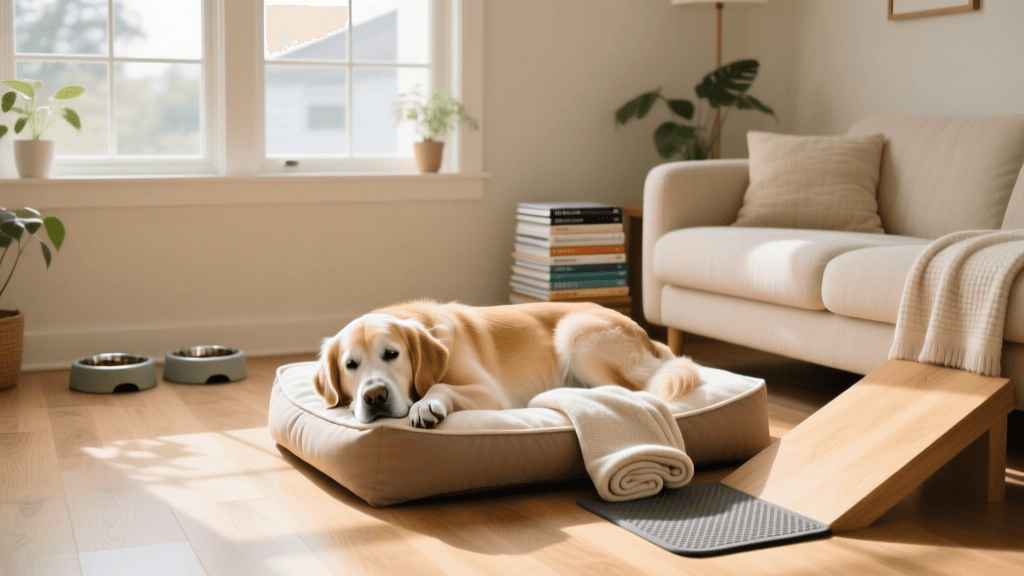
One of the most common challenges in 2026 is integrating a high-energy puppy into a home with an aging dog. Puppies are notoriously oblivious to subtle communication. When your senior dog turns their head away or yawns as the puppy bites at their ears, they are pleading for space. If the puppy persists, the senior dog's stress levels will spike.
Actionable Advice: Do not wait for the senior dog to growl. The moment you see the senior dog yawn, lick their lips, or turn away, immediately call the puppy to you and reward them with a high-value treat. This reinforces the puppy's recall and, more importantly, advocates for your senior dog's boundaries, teaching them that you will handle the pestering so they don't have to.
Scenario 2: High-Arousal Play vs. True Aggression
It can be terrifying for new multi-dog owners to distinguish between healthy, loud play and genuine aggression. Dogs often use vocalizations and exaggerated movements during play. However, true calming signals can help you read the room. If both dogs are frequently pausing to shake off, offering play bows, and taking turns being on top, the play is healthy.
Conversely, if one dog is constantly trying to sniff the ground to escape, showing whale eye, or tucking their tail while the other dog relentlessly pursues, the play has crossed the line into bullying. The American Veterinary Medical Association (AVMA) notes that chronic stress from unmanaged play can lead to long-term anxiety and reactivity. Intervene by initiating a structured cool-down period, separating the dogs into different rooms for fifteen minutes, and offering them food puzzles to lower their heart rates.
Environmental Design: Creating Signal-Friendly Spaces
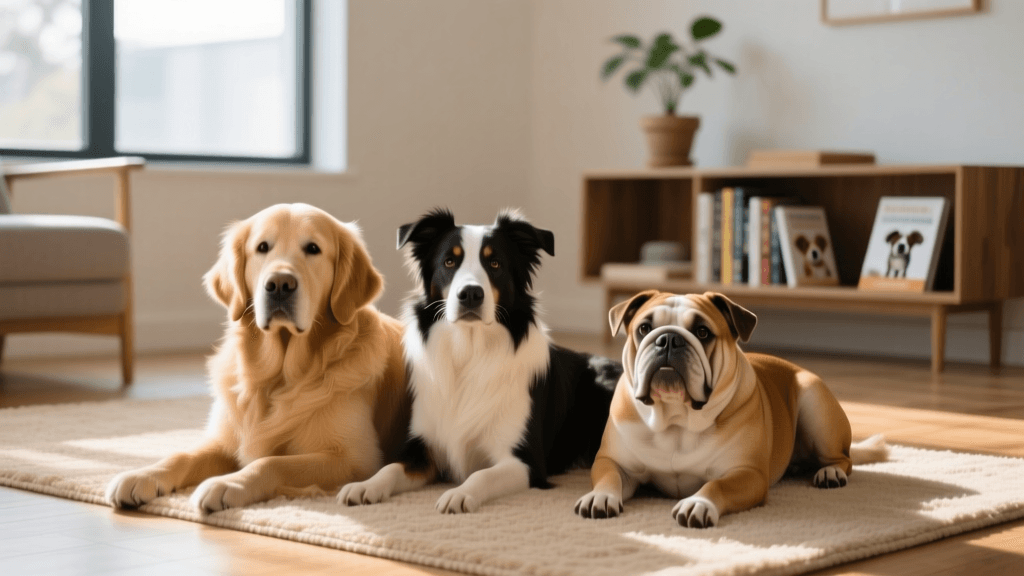
In 2026, pet-friendly interior design has evolved to support canine mental health. A modern multi-dog home should be structured to allow dogs to naturally utilize calming signals and find refuge. Open-concept living, while popular for humans, can be exhausting for dogs who feel they are constantly in each other's line of sight.
Visual Barriers: Utilize modular, acoustic-dampening pet playpens or strategically placed indoor planters to break up sightlines. If a dog can retreat behind a visual barrier, they can decompress without feeling cornered.
Smart Pet Gates: Invest in smart-tint privacy glass partitions or automated pet gates that can be controlled via your smartphone. This allows you to instantly create separate zones if you notice tension building during meal times or when guests arrive, preventing resource guarding before it starts.
Vertical Space and Mats: Provide elevated resting spots, such as wall-mounted dog hammocks or sturdy, low-profile climbing shelves for smaller breeds. Additionally, place distinct 'settle mats' in various rooms. Train each dog to associate their specific mat with absolute peace, ensuring they always have a designated safe zone where they will not be bothered by their siblings.
How to Respond When Your Dog Speaks
Recognizing the signals is only half the battle; your response dictates the future harmony of your pack. When you observe your dog using calming signals, validate their communication. If your dog is licking their lips while being hugged by a child or approached by a boisterous housemate, gently remove the stressor. Never punish a dog for growling or snapping if they have already exhausted their calming signals; doing so suppresses their warning system and creates a dog that bites without warning.
Instead, reward the calming signals themselves. If your dog looks away from a triggering stimulus or offers a yawn to self-soothe, calmly toss a treat away from the trigger. This builds a positive association with their own coping mechanisms and reinforces peaceful behavior.
When to Call a Certified Behaviorist
While many multi-dog squabbles can be managed through environmental adjustments and signal recognition, some situations require professional intervention. If you notice chronic whale eye, frequent freezing, or if your dogs are unable to share a room without displaying severe stress signals, it is time to seek help. Look for a certified applied animal behaviorist or a fear-free certified trainer who specializes in multi-dog dynamics. In 2026, many top-tier behaviorists offer virtual home assessments via smart home cameras, allowing them to observe your dogs' natural interactions without the stress of a stranger in the house.
Conclusion
Living with multiple dogs is a rewarding experience that requires empathy, observation, and a willingness to learn a foreign language. By mastering the art of canine calming signals, you transform from a passive observer into an active, supportive leader for your pack. Pay attention to the yawns, the lip licks, and the subtle turns of the head. In doing so, you ensure that your home remains a sanctuary of peace, trust, and mutual respect for every dog under your roof.
anouk-beaumont
All our authors care for dogs every day — read more of their work on the authors page.