Top Snuffle Mats and Scent Puzzle Games for Senior Dogs in 2026
Discover the best snuffle mats and scent puzzle games for senior dogs in 2026. Boost cognitive health and slow feeding with these expert training tips.
The Importance of Mental Enrichment for Aging Dogs
As our canine companions enter their golden years, their physical stamina may naturally decrease, but their need for mental stimulation remains just as vital. In 2026, veterinary behaviorists increasingly emphasize that cognitive enrichment is not just a luxury for senior dogs; it is a critical component of healthy aging. While a young Border Collie might burn off energy through hours of agility training or fetch, a senior dog with arthritis or reduced mobility requires low-impact, high-reward activities to keep their mind sharp and prevent boredom-related behavioral issues.
Mental enrichment and puzzle games, particularly those that tap into a dog's natural foraging instincts, offer a perfect solution. Scent work and snuffle mat training provide rigorous neurological exercise without putting unnecessary strain on aging joints. This comprehensive guide will explore the science behind scent-based cognitive games, review the top commercial puzzle feeders available in 2026, provide a step-by-step DIY snuffle mat tutorial, and outline a structured training progression to help your senior dog thrive.
The Science Behind Scent Work and Canine Cognitive Health
A dog's olfactory system is incredibly complex, boasting up to 300 million olfactory receptors compared to our mere six million. When a dog uses their nose to forage for food, they are engaging a massive portion of their brain. According to the American Kennel Club, Canine Cognitive Dysfunction (CCD) is a condition related to brain aging that affects a significant portion of dogs over the age of 11, leading to changes in awareness, learning, memory, and responsiveness.
Engaging in daily scent puzzles helps build and maintain neural pathways, promoting neuroplasticity even in older dogs. The act of sniffing lowers a dog's heart rate and releases dopamine, creating a natural calming effect. For senior dogs experiencing anxiety or restlessness at night, a 15-minute snuffle mat session before bed can be more tiring and satisfying than a 45-minute walk. The ASPCA strongly recommends adapting a senior dog's environment and daily routine to include mentally stimulating, low-impact activities to maintain their overall quality of life and delay the onset of cognitive decline.
Top 3 Commercial Puzzle Feeders for Senior Dogs in 2026
The pet industry has seen a massive surge in cognitive enrichment toys designed specifically with aging dogs in mind. The 2026 market features puzzles with softer materials, easier-to-manipulate pieces, and non-slip bases to accommodate dogs with limited paw dexterity or vision impairment. Here are the top three commercial options currently recommended by canine enrichment specialists.
| Puzzle Model (2026) | Difficulty | Physical Demand | Avg. Price | Best For |
|---|---|---|---|---|
| Outward Hound Dog Brick (Senior Edition) | Level 2 | Low | $18.99 | Beginners with mild arthritis |
| Sniffiz SmellyMatty Pro XL | Level 3 | None | $36.50 | Dogs with severe mobility issues |
| Nina Ottosson Dog Worker Advanced | Level 3 | Medium | $32.99 | Experienced puzzle solvers |
1. Outward Hound Dog Brick (2026 Senior Edition)
Outward Hound recently updated their classic Dog Brick with a 'Senior Edition' line. This version features larger, softer silicone sliders that require less downward paw pressure to move, making it ideal for dogs with joint pain or weakened nails. The bright, high-contrast colors also assist dogs suffering from age-related vision loss.
2. Sniffiz SmellyMatty Pro XL
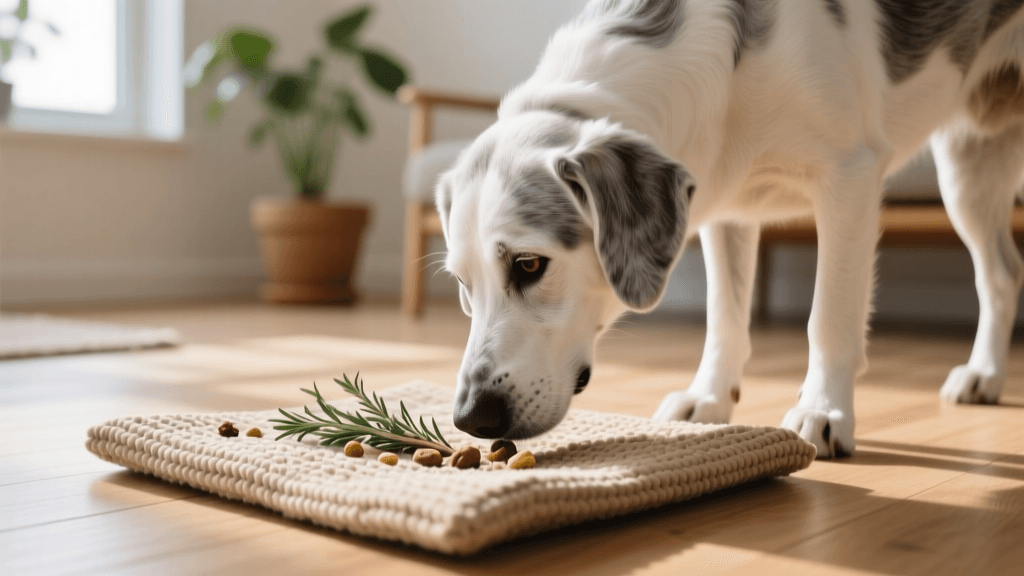
Snuffle mats are essentially fabric foraging boxes. The 2026 SmellyMatty Pro XL stands out due to its anti-slip, weighted base and machine-washable, ultra-plush fleece strands. It requires zero physical pushing or pulling; the dog simply uses their nose to root through the fabric layers to find hidden kibble.
3. Nina Ottosson Dog Worker Advanced
For the senior dog who has been doing puzzles their whole life and needs a serious challenge, the Dog Worker offers multiple locking mechanisms. However, owners must monitor their dogs to ensure they are not using their teeth or excessive force to pry pieces loose, which could damage aging teeth.
How to Build a Custom Heavy-Duty Snuffle Mat
While commercial options are excellent, building a DIY snuffle mat allows you to customize the depth, fabric texture, and size to your dog's specific needs. It is also highly cost-effective. As noted in the AKC's guide to brain games, DIY enrichment toys can be tailored to your dog's exact skill level and physical capabilities.
Materials Needed:
- 1 heavy-duty rubber sink mat with holes (approx. 12x18 inches)
- 2 to 3 yards of anti-pill polar fleece (choose 3 contrasting colors for visual stimulation)
- Fabric scissors
Step-by-Step Instructions:
- Cut the Fleece: Cut your fleece into strips that are approximately 1 inch wide and 7 inches long. You will need roughly 250 to 300 strips depending on the size of your mat and how dense you want it.
- Thread the First Row: Take a single fleece strip and push one end through a hole in the rubber mat from the bottom up. Pull both ends so they are even.
- Tie the Knot: Tie a simple, tight overhand knot right at the base of the mat. This secures the fleece so it cannot be pulled out and swallowed.
- Repeat and Alternate: Continue threading and tying strips through every available hole in the mat. Alternate colors to create a visually stimulating pattern.
- Fluff and Layer: Once all holes are filled, fluff the fleece strips upward. For an advanced challenge, you can tie additional strips horizontally between the vertical strands to create hidden 'pockets' for treats.
A 4-Week Scent Puzzle Training Progression
Introducing a senior dog to complex puzzle games requires patience. If a puzzle is too difficult, the dog may become frustrated and give up. If it is too easy, they will not receive adequate cognitive stimulation. Follow this 4-week progression to build your dog's confidence and skills.
Week 1: Introduction and Scent Association
Start with the snuffle mat or puzzle placed on a non-slip surface. For the first few sessions, place highly aromatic treats (like small pieces of freeze-dried liver or strong-smelling cheese) directly on top of the fleece or in the easiest, uncovered compartments of a puzzle. Use an encouraging cue word like 'Find it!' and praise heavily when they eat the treat. The goal this week is simply to teach the dog that the mat equals food.
Week 2: Partial Concealment
Begin hiding the treats slightly beneath the top layer of fleece or under the easiest sliders on a puzzle toy. Allow your dog to watch you place the treats so they understand the mechanics of the game. If they struggle, gently point to the hidden treat or lift the fabric slightly to offer a hint. This builds problem-solving confidence without inducing frustration.
Week 3: Full Concealment and Distraction
Now, hide the kibble or treats deep within the snuffle mat or lock the easier compartments on the puzzle. Have your dog wait in a 'sit-stay' or 'down-stay' in another room while you set up the puzzle. This introduces a memory component and impulse control, both of which are excellent for maintaining cognitive sharpness in senior dogs. Release them with your 'Find it!' cue.
Week 4: The Scent Trail and Room Search
Take the training off the mat. Hide small piles of treats around a single, safe room. Create a 'scent trail' by dragging a treat across the floor leading to the hidden piles. Encourage your dog to keep their nose to the ground and follow the trail. This mimics natural scavenging behavior and provides the highest level of olfactory enrichment.
Managing Caloric Intake and Safety Considerations
One of the most common mistakes owners make when introducing puzzle feeders is failing to adjust the dog's daily caloric intake. Mental enrichment games often utilize a dog's daily kibble allowance or high-value treats. In 2026, veterinary nutritionists stress that obesity in senior dogs exacerbates joint pain and cardiovascular issues. Always measure out the exact amount of kibble your dog is allowed for the day and use that to fill the puzzles, rather than adding treats on top of their regular meals.
Additionally, always supervise your senior dog during puzzle play. Aging dogs may have weakened teeth or a higher propensity to chew and swallow non-edible parts of a toy if they become frustrated. Inspect DIY snuffle mats regularly for loose fleece strands, and discard commercial puzzles if plastic components become cracked or sharp. By prioritizing safety and caloric balance, scent work and puzzle games will remain a joyful, health-boosting activity for your senior dog throughout their golden years.
hannah-wickes
All our authors care for dogs every day — read more of their work on the authors page.