Senior Dog Osteoarthritis: Joint Care, Diet, and Home Tips
Learn how to manage osteoarthritis in senior dogs with proven joint supplements, diet adjustments, and affordable home modifications for better mobility.

Understanding Osteoarthritis in Aging Dogs
As our canine companions enter their golden years, maintaining their mobility and comfort becomes a top priority. Osteoarthritis (OA), also known as degenerative joint disease, is the most common chronic condition affecting senior dogs. According to the American Kennel Club (AKC), it is estimated that up to 80% of dogs over the age of eight show radiographic signs of osteoarthritis. This progressive condition occurs when the protective cartilage that cushions the joints wears down over time, leading to bone-on-bone friction, inflammation, and chronic pain.
While osteoarthritis cannot be cured, a proactive, multi-modal approach can significantly slow its progression and dramatically improve your senior dog's quality of life. This comprehensive guide covers actionable strategies, including specific joint supplements, dietary adjustments, home modifications, and veterinary treatments to keep your aging dog comfortable and mobile.
Recognizing the Subtle Signs of Joint Pain
Dogs are notoriously stoic and rarely vocalize chronic pain. Instead of whimpering, senior dogs with osteoarthritis often exhibit subtle behavioral and physical changes. Watch for the following indicators:
- Reluctance to move: Hesitating before jumping into the car, onto the couch, or climbing stairs.
- Changes in gait: A stiff, stilted walk, especially after resting or waking up in the morning (often referred to as "warming out of it").
- Decreased activity: Shorter walks, lagging behind on trails, or sleeping more than usual.
- Excessive licking: Repeatedly licking or chewing at specific joints, such as the carpus (wrist) or stifle (knee).
- Postural changes: A "bunny-hopping" gait when running, or shifting weight away from the affected hind legs.
Comparing Top Joint Supplements for Senior Dogs
Nutraceuticals are a cornerstone of managing canine osteoarthritis. The most effective supplements contain a combination of glucosamine hydrochloride, chondroitin sulfate, and MSM (methylsulfonylmethane) to support cartilage matrix synthesis and reduce inflammatory markers. Below is a comparison of three veterinary-recommended joint supplements.
| Product Name | Key Active Ingredients | Best For | Approx. Cost (60-Day Supply, 50lb Dog) |
|---|---|---|---|
| Dasuquin Advanced | Glucosamine, Chondroitin, MSM, ASU, Boswellia | Severe OA & post-surgical joint support | $65 - $75 |
| Cosequin DS Plus MSM | Glucosamine, Chondroitin, MSM | Mild to moderate OA & daily maintenance | $40 - $50 |
| GlycoFlex Plus | Perna Mussel, Glucosamine, MSM, DMG | Active seniors needing joint & muscle support | $55 - $65 |
Dosing and Timing Tips
When starting a joint supplement, it is crucial to administer a loading dose for the first 4 to 6 weeks. This usually means giving double the daily maintenance amount to quickly saturate the joint tissues. After the loading phase, drop down to the daily maintenance dose. Because these supplements are derived from shellfish and bovine cartilage, they are generally safe for long-term use, but always consult your veterinarian before starting any new regimen, especially if your dog has liver or kidney disease.
Dietary Adjustments and Weight Management
Weight management is arguably the single most effective non-medical intervention for senior dogs with osteoarthritis. Excess body fat does not just add mechanical stress to the joints; adipose tissue is biologically active and secretes pro-inflammatory cytokines that worsen joint pain. Every single extra pound of body weight places approximately four pounds of additional pressure on a dog's weight-bearing joints.
Calculating Caloric Needs for Weight Loss
To help your senior dog shed excess weight safely, you must calculate their Resting Energy Requirement (RER) and feed for their target weight, not their current weight.
- Calculate RER: RER = 70 x (Target Body Weight in kg)^0.75
- Determine Daily Calories: For weight loss in a neutered/spayed senior dog, multiply the RER by 0.8 to 1.0.
- Measure Food Precisely: Use a standard 8oz measuring cup or, even better, a digital kitchen scale to weigh your dog's kibble in grams. Free-feeding is highly detrimental to arthritic dogs.
The Power of Omega-3 Fatty Acids
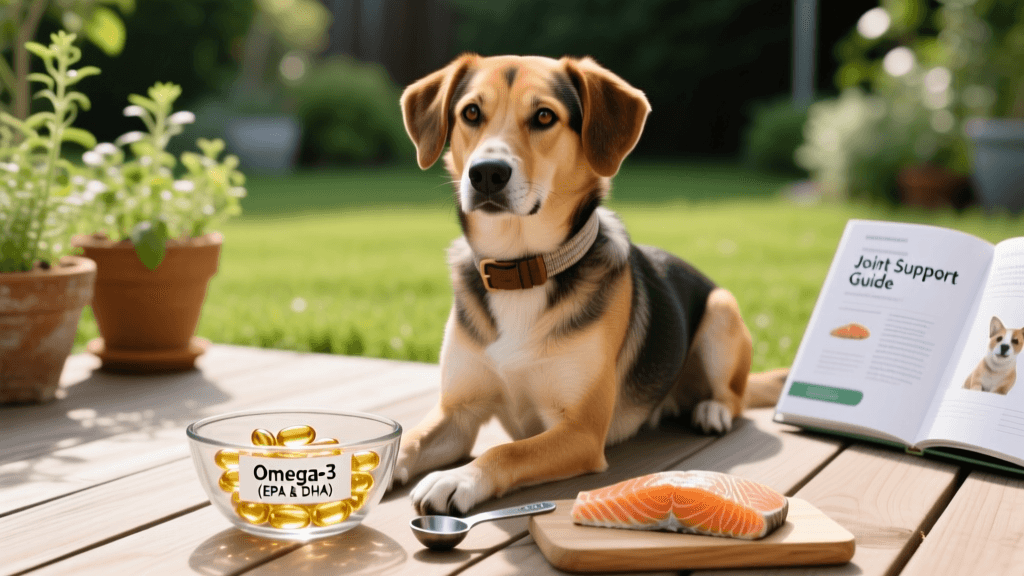
Adding high-quality Omega-3 fatty acids to your dog's diet can significantly reduce joint inflammation. Specifically, you want to look for EPA (eicosapentaenoic acid) and DHA (docosahexaenoic acid). The therapeutic dose for osteoarthritis is generally between 75 to 100 mg of combined EPA/DHA per kilogram of metabolic body weight. Products like Nordic Naturals Omega-3 Pet or Grizzly Salmon Plus are excellent choices. Store liquid fish oils in the refrigerator to prevent oxidation and rancidity.
Affordable Home Modifications for Mobility
Simple environmental changes can prevent slips, falls, and the micro-traumas that exacerbate joint pain. Hardwood, tile, and laminate floors are incredibly dangerous for senior dogs with weakened hind ends.
Essential Mobility Products
- Traction Solutions: Instead of covering your entire home in expensive rugs, buy interlocking foam gym tiles or cheap yoga mats. Place them in your dog's primary walking paths and near their food and water bowls. Cost: $20 - $40.
- Pet Ramps and Stairs: Jumping on and off furniture causes massive concussive forces on the spine and hips. Use a ramp like the PetSafe Solvit Wood Bed Ramp (approx. $140) for high beds, or foam pet stairs (approx. $40) for lower couches.
- Orthopedic Bedding: Standard poly-fill dog beds flatten out and offer zero joint support. Invest in a high-density orthopedic bed like the Big Barker 7-inch Pillow Top Orthopedic Dog Bed (approx. $239). While expensive, it comes with a 10-year warranty and prevents pressure sores on the elbows and hocks of large, aging dogs.
- Elevated Bowls: For large breed seniors with cervical (neck) or shoulder arthritis, raising food and water bowls by 4 to 8 inches reduces the strain of bending down to eat.
Veterinary Treatments and Pain Management
When supplements and home modifications are no longer enough, veterinary intervention is required. The Washington State University College of Veterinary Medicine emphasizes a multi-modal approach to pain management, combining different classes of medications to target pain pathways from multiple angles.
Common Pain Medications
- NSAIDs (Non-Steroidal Anti-Inflammatory Drugs): Medications like Carprofen (Rimadyl) and Meloxicam are the first line of defense. They reduce inflammation and pain. The U.S. Food and Drug Administration (FDA) notes that while NSAIDs are highly effective, they require baseline and periodic blood work to monitor liver and kidney function.
- Gabapentin: Originally a human seizure medication, Gabapentin is widely used off-label in veterinary medicine to treat neuropathic and chronic pain. It is particularly useful for senior dogs with spinal arthritis and is often given at night to aid in sleep.
- Librela (Bedinvetmab): A groundbreaking newer treatment, Librela is a monoclonal antibody administered via a monthly subcutaneous injection. Unlike NSAIDs, which are metabolized by the liver and kidneys, Librela targets Nerve Growth Factor (NGF) directly and is broken down like natural proteins, making it exceptionally safe for senior dogs with compromised organ function.
Physical Therapy and At-Home Exercises
Controlled movement is vital; "use it or lose it" applies heavily to senior dog muscle mass. However, high-impact activities like fetch or frisbee should be retired. Instead, focus on low-impact conditioning:
- Controlled Leash Walks: Short, 10 to 15-minute walks on flat, even terrain are better than one long, exhausting hike. Keep the leash short to prevent sudden pulling or lunging.
- Hydrotherapy: Underwater treadmills or swimming pools designed for dogs provide cardiovascular exercise and muscle building with zero concussive impact on the joints.
- Passive Range of Motion (PROM): While your dog is lying on their side relaxing, gently cup their knee or elbow and slowly bicycle the joint through its natural range of motion. Do 10 to 15 repetitions per joint daily to maintain joint fluid circulation and prevent contractures.
Conclusion
Caring for a senior dog with osteoarthritis requires patience, observation, and a willingness to adapt. By combining high-quality joint supplements, strict weight management, strategic home modifications, and targeted veterinary pain relief, you can ensure your aging companion remains comfortable, happy, and active in their twilight years. Always partner closely with your veterinarian to tailor a pain management plan that suits your dog's specific medical history and lifestyle needs.
marcus-aldridge
All our authors care for dogs every day — read more of their work on the authors page.