Moving With Senior Dogs: 2026 Stress-Free Relocation Guide
Discover how to safely move with a senior dog in 2026. Learn mobility adaptations, CCD management, and stress-free relocation tips for aging pets.
The Unique Challenges of Relocating an Aging Dog
Relocating to a new home is universally recognized as one of the most stressful life events for humans, but for our canine companions, it can be profoundly disorienting. This is especially true for senior dogs. As we navigate 2026, veterinary behaviorists emphasize that aging dogs rely heavily on environmental predictability to manage both physical discomfort and cognitive decline. A sudden shift in flooring texture, spatial layout, and ambient noise can trigger severe anxiety, exacerbate osteoarthritis, and accelerate symptoms of Canine Cognitive Dysfunction (CCD).
According to the American Veterinary Medical Association (AVMA), senior pets require specialized environmental management to maintain their quality of life. Moving disrupts their established mental maps, forcing them to expend precious cognitive and physical energy to relearn their surroundings. However, with meticulous planning, modern mobility aids, and updated 2026 veterinary protocols, you can transform this major life transition into a smooth, stress-free experience for your aging best friend.
Pre-Move Preparation: The Power of Sensory Anchoring
Dogs experience the world primarily through olfaction. In the chaotic weeks leading up to a move, your dog's sense of smell is their most vital anchor to reality. A common mistake owners make is washing all of the dog's bedding, crates, and favorite toys right before the move to ensure they arrive 'clean' at the new house. In 2026, veterinary behaviorists strongly advise against this.
Instead, practice 'scent mapping.' Leave your senior dog's favorite blanket unwashed and place it in the new home before moving day. If possible, take a clean cloth, gently rub it on your dog's cheeks and shoulders (where their calming pheromones are produced), and wipe down the baseboards and doorframes of the new home. This creates an invisible, comforting scent trail that signals safety. Furthermore, maintain their exact feeding and walking schedule throughout the packing process. The physical boxes may change, but the temporal structure of their day must remain rigidly consistent.
Mobility Modifications for the New Environment
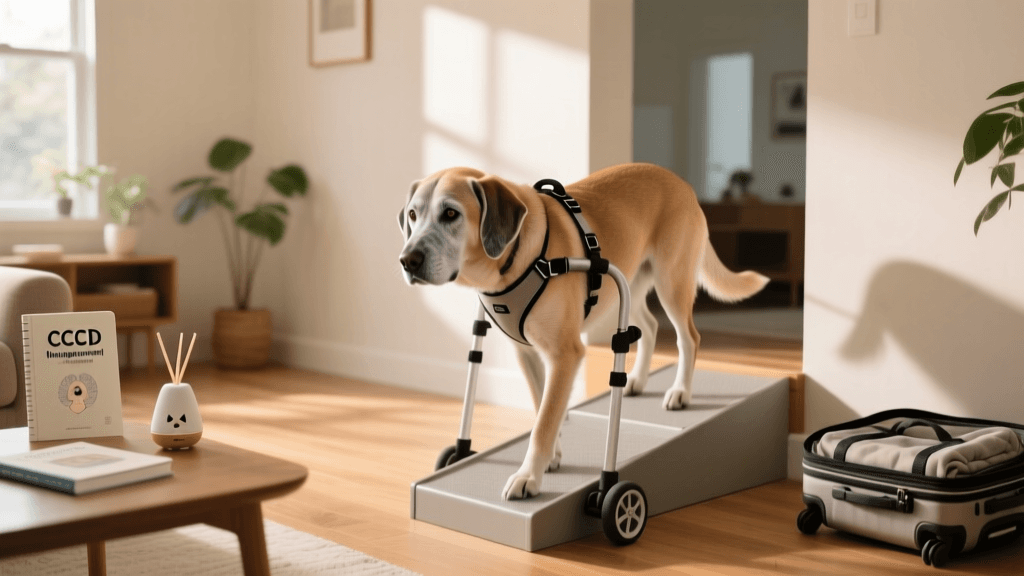
Senior dogs frequently suffer from osteoarthritis, hip dysplasia, or general muscle atrophy. A new home often introduces new hazards, such as slippery hardwood floors, steeper staircases, or higher furniture. Slippery surfaces force arthritic dogs to splay their legs, which can lead to catastrophic ligament tears or severe joint pain.
Before bringing your dog into the new space, conduct a 'paw-traction audit.' Cover high-traffic pathways with interlocking foam mats or low-pile, non-slip area rugs. Ensure that the path from their sleeping area to their potty spot is entirely flat and grippy. Below is a comparison of top-rated mobility aids recommended by veterinary physical therapists in 2026 to help your senior dog navigate their new environment safely.
| Mobility Aid Category | Top 2026 Recommendation | Estimated Cost | Best Use Case |
|---|---|---|---|
| Vehicle Ramp | PetSafe Happy Ride Telescoping Ramp | $120 - $140 | SUVs and trucks; reduces joint strain during travel. |
| Indoor Stairs | Solvit PupSTEP Plus Pet Stairs | $65 - $80 | Accessing high beds or couches without jumping. |
| Floor Traction | OrthoPaws Interlocking Foam Mats | $35 per 6-pack | Creating non-slip pathways over hardwood or tile. |
| Wearable Grip | Dr. Buzzy's Original Mutt Muffs & Paw Pads | $25 - $40 | Direct paw traction for dogs averse to floor mats. |
Managing Canine Cognitive Dysfunction (CCD) in a New Space
Canine Cognitive Dysfunction is a neurodegenerative disease similar to Alzheimer's in humans. The American Kennel Club (AKC) notes that CCD affects a significant percentage of dogs over the age of 11, leading to disorientation, altered sleep-wake cycles, and house-soiling. A new home is a massive trigger for CCD-related confusion.
To mitigate this, you must restrict your dog's access to the entire house immediately upon arrival. In 2026, experts recommend setting up a 'transition sanctuary'—a single, quiet room (like a primary bedroom or a large guest room) equipped with their bed, water, and familiar toys. Allow your dog to master this single room for the first few days before gradually introducing them to the rest of the house, one room at a time.
Additionally, aging dogs with CCD often suffer from 'sundowning'—increased anxiety and pacing as the sun sets. Install smart, motion-sensor nightlights along the hallway leading to the backyard. This prevents them from becoming disoriented in the dark if they wake up to eliminate during the night, reducing the likelihood of indoor accidents and panic.
2026 Veterinary Pain Management Protocols
A life transition is the worst time for a dog to experience uncontrolled pain. If your senior dog is showing signs of stiffness, reluctance to move, or irritability during the move, consult your veterinarian before moving day. The landscape of canine pain management has evolved dramatically.
As of 2026, monthly anti-NGF (Nerve Growth Factor) monoclonal antibody injections, such as Librela (bedinvetmab), have become the gold standard for managing canine osteoarthritis. Unlike traditional NSAIDs, which can carry risks for the kidneys and liver in older dogs, these targeted therapies neutralize the NGF responsible for transmitting pain signals, offering profound relief with an excellent safety profile. If your dog is not yet on a comprehensive joint supplement regimen, ask your vet about starting a clinical-strength supplement containing undenatured Type II collagen, green-lipped mussel, and high-dose Omega-3 fatty acids (EPA/DHA) at least four weeks prior to the move to build up systemic anti-inflammatory support.
The American Animal Hospital Association (AAHA) strongly advocates for proactive, multimodal pain management in senior pets to preserve mobility and cognitive function during major environmental shifts.
The First 72 Hours: A Step-by-Step Transition Plan
The initial three days in your new home will set the tone for your dog's long-term adjustment. Follow this structured protocol to ensure a calm transition:
- Day 1: The Sanctuary Phase. Keep your dog confined to their designated transition room. Do not invite friends or family over to see the new house. Unpack their bed, bowls, and toys first. Spend the evening sitting quietly with them on the floor, offering high-value, slow-feed enrichment toys like frozen Kongs stuffed with bone broth and pumpkin.
- Day 2: The Leashed Exploration. Put your dog on a harness and leash inside the house. Walk them slowly through the main living areas. Let them sniff the corners and baseboards. Keep the sessions short (5-10 minutes) to prevent sensory overload. Reward calm behavior with soft treats.
- Day 3: The Yard Introduction. Before letting them off-leash in the new yard, walk the perimeter with them on a long line (15-30 feet). Check the fencing for gaps or loose boards that an arthritic or confused dog might exploit. Establish a specific 'potty zone' in the yard and reward them heavily for using it.
Long-Term Wellbeing and Routine Establishment
Once the physical move is complete, the emotional transition begins. Senior dogs thrive on predictability. Establish your new walking routes immediately, keeping them short and sniff-heavy. Sniffing lowers a dog's heart rate and provides vital mental stimulation that tires them out more effectively than physical exercise alone.
Monitor your dog closely for the first month for any signs of regression in house training, changes in appetite, or increased vocalization. These are not signs of 'spite' or 'stubbornness'; they are clinical indicators of stress or underlying pain. By combining modern 2026 veterinary interventions with compassionate, scent-based environmental management, you can ensure your senior dog's golden years are spent comfortably, no matter where you call home.
hannah-wickes
All our authors care for dogs every day — read more of their work on the authors page.