Senior Dog Mobility Transition: Best Joint Care 2026
Discover how to manage your dog's joint health during the senior transition in 2026 with top supplements, ramps, and veterinary mobility protocols.
Navigating the Senior Transition: A New Era of Canine Joint Care
The transition from a vibrant adult dog to a senior companion is one of the most significant life shifts you will experience as a pet owner. While we often think of aging as a gradual process, the onset of canine osteoarthritis (OA) and mobility issues can sometimes feel sudden. In 2026, veterinary medicine has shifted away from simply reacting to pain and toward proactive, multimodal mobility management. Understanding how to support your dog through this life transition is critical for maintaining their quality of life, mental well-being, and physical independence.
According to the Cornell University College of Veterinary Medicine, osteoarthritis affects a vast majority of senior dogs, yet early signs are frequently missed because dogs are evolutionarily hardwired to hide pain. As your dog enters their golden years—typically around age seven for large breeds and age nine for smaller breeds—implementing a comprehensive joint care protocol is no longer optional; it is a fundamental pillar of responsible senior dog ownership.
Recognizing the Subtle Signs of Joint Degeneration
Before your dog begins visibly limping, they will exhibit subtle behavioral and environmental changes. During the senior transition, watch for the following early indicators of joint discomfort:
- Environmental Hesitation: Pausing before jumping into the car, onto the bed, or navigating stairs.
- Changes in Grooming: A decrease in self-grooming, particularly around the hindquarters and lower back, due to spinal or hip stiffness.
- Altered Sleep Patterns: Restlessness at night, frequent repositioning, or an inability to settle into a comfortable posture.
- Post-Rest Stiffness: A "warming up" period where the dog moves slowly for the first few minutes after waking up or standing from a prolonged rest.
- Behavioral Shifts: Irritability when touched in specific areas, withdrawal from family activities, or a sudden reluctance to play with younger pets in the household.
The 2026 Veterinary Standard for Osteoarthritis Management
The American Animal Hospital Association (AAHA) Osteoarthritis Guidelines emphasize that managing canine OA requires a multimodal approach. In 2026, the reliance on daily Non-Steroidal Anti-Inflammatory Drugs (NSAIDs) as a first-line, standalone treatment has decreased, largely due to the widespread adoption of anti-Nerve Growth Factor (anti-NGF) monoclonal antibodies.
Librela (bedinvetmab): This monthly injectable biologic has revolutionized senior dog care. Unlike NSAIDs, which are processed through the liver and kidneys and can pose risks to senior organs, Librela specifically targets the NGF protein responsible for transmitting OA pain signals. In 2026, the average cost for a monthly Librela injection ranges from $90 to $160, depending on the dog's weight. It offers profound pain relief without the gastrointestinal or renal side effects associated with traditional pain medications, making it a cornerstone of the senior transition protocol.
NSAIDs and Adjunctive Therapies: For breakthrough pain or acute flare-ups, veterinarians may still prescribe NSAIDs like Galliprant (grapiprant), which specifically targets the EP4 receptor to minimize systemic side effects. Additionally, adjunctive medications like Gabapentin or Amantadine are frequently utilized to manage neuropathic pain and central sensitization in older dogs.
Nutritional Interventions: Joint Supplements That Actually Work
The pet supplement market is saturated, but veterinary science has clearly identified which ingredients provide measurable clinical benefits for aging joints. When transitioning your dog to a senior care regimen, look for products bearing the National Animal Supplement Council (NASC) Quality Seal to ensure manufacturing integrity.
| Active Ingredient | Mechanism of Action | Typical 2026 Cost | Expected Onset of Action |
|---|---|---|---|
| Undenatured Type II Collagen (UC-II) | Modulates the immune system to prevent the destruction of joint cartilage. | $30 - $45 / month | 4 to 6 weeks |
| EPA/DHA Omega-3 Fatty Acids | Reduces systemic inflammation and degrades inflammatory enzymes in the joint capsule. | $25 - $60 / month | 8 to 12 weeks |
| Green-Lipped Mussel (GLM) | Provides a natural matrix of glycosaminoglycans (GAGs) and ETA (eicosatetraenoic acid). | $20 - $40 / month | 6 to 8 weeks |
| Avocado/Soybean Unsaponifiables (ASU) | Protects cartilage from degradation and stimulates the synthesis of extracellular matrix. | $35 - $55 / month | 4 to 8 weeks |
Note: Always consult your veterinarian before introducing high-dose Omega-3s, as excessive amounts can interfere with blood clotting or contribute to caloric surplus in less active senior dogs.
Environmental Modifications for the Senior Home
Adapting your living space is one of the most immediate and impactful ways to support your dog during their senior transition. A multi-level home or a house with hard flooring can become an obstacle course for a dog with compromised proprioception and joint pain.
1. Traction and Flooring
Slippery hardwood or tile floors force a dog's stabilizing muscles to work overtime, accelerating joint fatigue. In 2026, interlocking foam puzzle mats and specialized canine grip-socks with silicone treads are highly recommended. Alternatively, applying a non-slip floor coating or laying down low-pile, rubber-backed area rugs in high-traffic corridors provides immediate stability.
2. Orthopedic Bedding
Standard poly-fill dog beds compress under the weight of a senior dog, offering zero joint relief. Invest in a high-density, medical-grade orthopedic bed. Brands like Big Barker offer 7-inch thick, multi-layer foam beds specifically engineered to prevent "bottoming out." The bed should be thick enough to support the dog's heaviest pressure points (shoulders and hips) and feature a bolster to provide neck support and a sense of security.
3. Ramps and Stairs
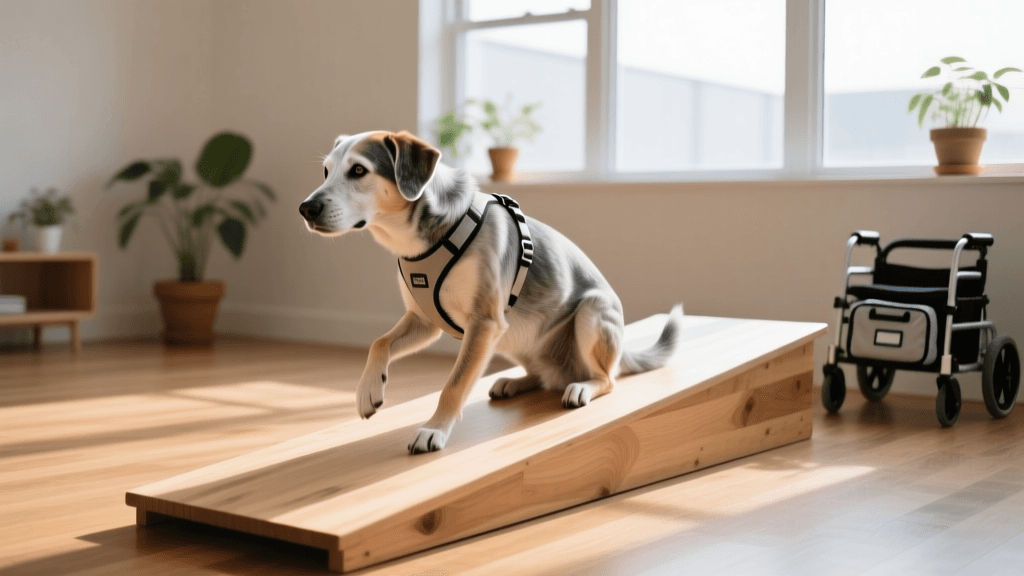
Jumping on and off furniture or into vehicles causes massive concussive force on the spine and hips. When selecting a ramp, the incline is critical. The general rule of thumb is that the ramp should be at least three times as long as the height it is reaching to maintain a safe incline of 18 degrees or less. Look for adjustable, telescoping wooden or high-density foam ramps with high-traction surfaces, such as the PetSafe Happy Ride series, which currently retails between $80 and $150 depending on the length and weight capacity.
Physical Rehabilitation and Low-Impact Exercise
Movement is medicine, but the *type* of movement must change as your dog ages. High-impact activities like fetching tennis balls on hard surfaces or sudden agility turns should be replaced with controlled, low-impact exercises that maintain muscle mass without stressing the joints.
According to the Texas A&M Veterinary Medicine Rehabilitation Service, canine physical therapy is highly effective in slowing the progression of OA. Modalities available in 2026 include:
- Hydrotherapy: Underwater treadmills and therapeutic swimming pools use buoyancy to reduce joint loading while water resistance builds muscle strength.
- Therapeutic Laser (Photobiomodulation): Class IV cold lasers penetrate deep into the tissue to stimulate cellular repair, increase local blood flow, and reduce acute inflammation.
- Proprioceptive Training: Using balance discs, cavaletti rails, and wobble boards to improve neurological feedback and core stability, which helps prevent falls and compensatory injuries.
At home, replace long, erratic hikes with multiple short, structured leash walks (15-20 minutes) on flat, even terrain. Sniffaris—where the dog is allowed to set the pace and engage their olfactory senses—provide immense mental stimulation and cognitive enrichment, which is equally important during the senior transition.
Your 2026 Senior Transition Care Schedule
To ensure consistency, integrate these joint-care tasks into your daily and monthly routines:
Daily Protocol
- Morning: Administer joint supplements (e.g., UC-II or ASU) with breakfast. Engage in a 5-minute gentle indoor stretching or massage routine to alleviate morning stiffness.
- Afternoon: Two 15-minute controlled leash walks on flat surfaces, focusing on sniffing and mental engagement.
- Evening: Ensure the orthopedic bed is in a draft-free, easily accessible location. Administer any prescribed evening pain medications or CBD tinctures for overnight comfort.
Bi-Annual Protocol
- Veterinary Mobility Assessment: Schedule a dedicated senior wellness exam every six months. This should include a hands-on orthopedic exam, weight check, and potentially updated radiographs to track joint space narrowing.
- Body Condition Score (BCS) Audit: Keeping your senior dog lean is the single most effective way to reduce joint stress. Adjust caloric intake to accommodate their decreased metabolic rate and lower activity levels.
- Nail and Paw Pad Maintenance: Overgrown nails alter the biomechanics of the foot, pushing weight backward onto the hocks and hips. Keep nails trimmed short and paw pads moisturized to maintain traction.
Embracing the Golden Years
The transition into your dog's senior years is not a decline; it is an evolution of your bond. By leveraging the advanced veterinary protocols, targeted nutrition, and environmental adaptations available in 2026, you can effectively manage joint degeneration and keep your companion comfortable. Proactive mobility care ensures that your dog's final chapters are defined not by pain, but by comfort, dignity, and the enduring joy of your shared life together.
beth-carrasco
All our authors care for dogs every day — read more of their work on the authors page.