Senior Dog Training: Mental Stimulation and Trick Teaching
Discover how to train your senior dog with gentle mental stimulation and trick teaching to combat cognitive decline and keep their aging mind sharp.
The Golden Years: Why Senior Dogs Need Training
When we think of dog training, we often picture rambunctious puppies learning to sit or adolescent dogs mastering leash manners. However, training should not stop as your dog enters their senior life stage. In fact, mental stimulation and trick teaching become critical components of senior dog care. Just like humans, aging dogs experience changes in their brain chemistry, joint mobility, and sensory perception. According to the American Veterinary Medical Association (AVMA), senior dogs require specialized care that includes both physical accommodations and cognitive enrichment to maintain their quality of life.
Continuing to train your older dog provides essential mental exercise, which can tire them out just as effectively as a long walk, but without the physical strain on aging joints. Furthermore, engaging your senior dog's brain helps build cognitive reserve, potentially delaying the onset of age-related mental decline. In this comprehensive life stage care guide, we will explore how to safely and effectively train your senior dog, complete with product recommendations, timing guidelines, and low-impact tricks.
Preparing for Senior Training Sessions
Before you begin teaching new tricks, you must adapt your training environment and methodology to suit an older dog's physiological needs. Senior dogs often deal with osteoarthritis, diminished hearing, and canine cognitive dysfunction. Therefore, your setup must prioritize comfort and accessibility.
Timing and Session Length
Older dogs have shorter attention spans and fatigue more quickly than their younger counterparts. Keep your training sessions incredibly short. Aim for 5 to 8 minutes per session, with a maximum of two sessions per day. Watch for signs of fatigue, such as excessive panting, lip licking, or wandering away. If your dog lies down or turns their head, the session is over.
Environmental Setup and Gear
Slippery floors are a major hazard for senior dogs with weakened hindquarters or hip dysplasia. Always conduct training on a high-traction surface. Invest in an orthopedic, non-slip training mat. The Furhaven Orthopedic Dog Bed (approx. $35 to $45, depending on size) provides excellent joint support and a defined 'workspace' for your dog. Ensure the room is well-lit, as older dogs often develop lenticular sclerosis or cataracts, making it harder to see hand signals in dim lighting.
Choosing the Right Rewards
Because senior dogs are generally less active, their caloric needs decrease. To prevent obesity, which exacerbates joint pain, use extremely small, low-calorie treats. Cut rewards into pea-sized pieces (approximately 5mm). Soft treats are also essential, as older dogs may suffer from dental disease or missing teeth. Zuke's Mini Naturals (approx. $7 for a 6oz bag) are a fantastic, soft, and low-calorie option that can be easily broken down into tiny morsels.
Top Low-Impact Tricks for Aging Joints
When selecting tricks for a senior dog, avoid behaviors that require jumping, spinning rapidly, or standing on the hind legs. Instead, focus on ground-level behaviors and cognitive tasks that rely on scent and gentle movement.
1. Hand Targeting (The 'Touch' Command)
Targeting teaches your dog to touch their nose to your palm. This is incredibly useful for guiding a dog with poor vision or hearing without needing to pull on their leash or collar.
- Step 1: Rub a soft treat on your palm to transfer the scent.
- Step 2: Hold your open hand about two inches from your dog's nose while they are sitting or lying down.
- Step 3: The moment their nose investigates and touches your skin, use a marker word like 'Yes!' or click a clicker, and reward with your other hand.
- Step 4: Gradually increase the distance, encouraging them to take a step or two to reach your hand.
2. The 'Find It' Scent Game
Scent work is one of the most exhausting and rewarding activities for a senior dog. It engages the olfactory lobe, which remains highly functional even as other senses fade.
- Step 1: Have your dog stay in a sit or down position (or have a family member gently hold them).
- Step 2: Take 3 to 5 strong-smelling treats (like freeze-dried liver) and place them in plain sight around the room.
- Step 3: Release them with the cue 'Find it!' and praise them as they eat each one.
- Step 4: As they improve, hide the treats behind furniture legs, under the edge of a rug, or on low, accessible shelves to increase the cognitive challenge without requiring physical strain.
3. Toy Name Recognition
Teaching your dog the names of their toys builds memory recall and encourages gentle play.
- Step 1: Start with one distinct toy, such as a plush squirrel. Hold it and say 'Squirrel' repeatedly while playing gently.
- Step 2: Place the toy on the floor a few feet away. Say 'Touch Squirrel' and reward when they investigate it.
- Step 3: Introduce a second toy (e.g., 'Ball') and repeat the process.
- Step 4: Place both toys apart and ask for a specific one by name. Reward only if they choose the correct item.
Pro Tip: The American Kennel Club (AKC) emphasizes that older dogs may take slightly longer to process new information. Patience and repetition are your best tools. Never raise your voice; confusion in senior dogs is often linked to sensory loss, not stubbornness.
Cognitive Enrichment: Puzzle Toys and Games
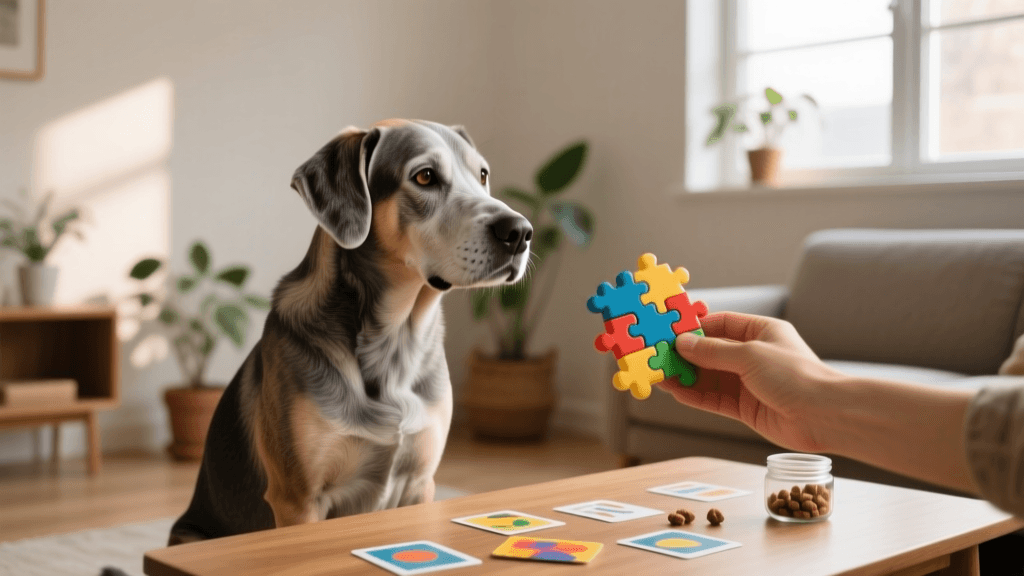
On days when you do not have the time for active training sessions, interactive puzzle toys are an excellent way to keep your senior dog's brain engaged. These toys require the dog to solve a problem to access a food reward, mimicking the foraging behaviors of their ancestors. Below is a comparison chart of top-rated puzzle toys suited for senior dogs, factoring in difficulty, physical requirements, and cost.
| Product Name | Difficulty Level | Physical Impact | Estimated Cost | Best For |
|---|---|---|---|---|
| Kong Senior (Purple) | Beginner | Low (Licking/Chewing) | $12 - $15 | Dogs with dental issues; freezing soft pastes inside provides soothing mental work. |
| Outward Hound Dog Brick | Intermediate | Low (Pawing/Nosing) | $15 - $18 | Dogs learning to slide compartments; easy to manipulate with arthritic paws. |
| Nina Ottosson Dog Tornado | Advanced | Medium (Spinning layers) | $22 - $28 | Highly intelligent seniors needing a complex sequential puzzle to prevent boredom. |
| Snuffle Mat (Wooly) | Beginner | Very Low (Sniffing) | $25 - $35 | Foraging simulation; excellent for blind or deaf dogs relying on scent. |
When using puzzle toys, always supervise your senior dog to ensure they do not chew and ingest plastic pieces, especially if they have a history of destructive chewing or pica.
Recognizing Canine Cognitive Dysfunction (CCD)
As you engage in mental stimulation training, you will become highly attuned to your dog's cognitive baseline. This makes you the first line of defense in spotting Canine Cognitive Dysfunction (CCD), a condition similar to Alzheimer's disease in humans. According to UC Davis Veterinary Medicine, CCD affects a significant percentage of dogs over the age of 11.
While training, watch for the following red flags:
- Disorientation: Getting stuck in corners or forgetting how to navigate around familiar furniture during a 'Find It' game.
- Altered Interactions: Failing to recognize familiar hand signals or seeming detached during targeting exercises.
- Sleep-Wake Cycle Changes: Sleeping deeply during the day but pacing or vocalizing at night.
- House Soiling: Forgetting previously mastered potty training cues.
- Decreased Activity: A sudden, unexplained loss of interest in puzzle toys or learning new tricks.
If you notice these signs, consult your veterinarian immediately. While CCD cannot be cured, early intervention with prescription diets rich in medium-chain triglycerides (MCTs), antioxidants, and specific medications like Selegiline can significantly slow the progression of symptoms and improve your dog's trainability.
Sample Weekly Training Schedule for Senior Dogs
Consistency is vital for aging brains. Here is a structured, low-stress weekly schedule designed to provide daily mental enrichment without causing physical exhaustion.
- Monday: 5-minute Hand Targeting refresher + Evening Snuffle Mat foraging.
- Wednesday: 8-minute Toy Name Recognition practice + Kong Senior (frozen with plain yogurt and pumpkin puree).
- Friday: 5-minute 'Find It' scent game in the living room + Outward Hound Dog Brick puzzle.
- Saturday: Gentle 15-minute sniffari walk (allowing the dog to set the pace and sniff as long as they like) + Evening brushing/massage.
- Sunday: Rest day. Provide a Kong Senior stuffed with their regular, softened kibble to keep them occupied while you relax.
Conclusion
Entering the senior life stage is a natural part of your dog's journey, and it should be a time of deep bonding and gentle engagement. By adapting your training techniques, utilizing low-impact tricks, and incorporating cognitive puzzle toys, you can protect your dog's mental acuity and stave off the effects of aging. Remember to prioritize their physical comfort, keep sessions brief, and celebrate every small victory. Training your senior dog is not about perfection; it is about preserving their joy, confidence, and connection to you in their golden years.
priya-sutaria
All our authors care for dogs every day — read more of their work on the authors page.