The Science of Reward Timing and Treat Value in Dog Training
Discover the science behind reward timing and treat value in dog training. Learn how dopamine drives learning and how to optimize your treat pouch.
The Neuroscience of Canine Learning: Dopamine and Reward Prediction
Dog training is often perceived by novices as a battle of wills, but modern veterinary behaviorists and canine cognitive scientists view it through a vastly different lens: neurobiology. When you ask your dog to sit, stay, or come, you are not merely establishing dominance; you are actively shaping neural pathways. At the core of this process is positive reinforcement, a science-backed methodology that leverages the brain's reward system. However, simply handing your dog a biscuit when they behave is not enough. The efficacy of positive reinforcement hinges on two critical, scientifically validated variables: reward timing and treat value.
To understand why these variables matter, we must first look at dopamine, the neurotransmitter responsible for motivation and learning. In canine cognition, dopamine is not just released when a dog receives a reward; it is released in anticipation of the reward. This concept, known as the 'reward prediction error,' dictates that learning accelerates most rapidly when a reward is unexpected or significantly better than anticipated. According to veterinary behaviorists at Texas A&M University, understanding this neurochemical response is the key to transitioning a dog from simple obedience to enthusiastic, reliable compliance.
The Critical 0.5-Second Window: Mastering Reward Timing
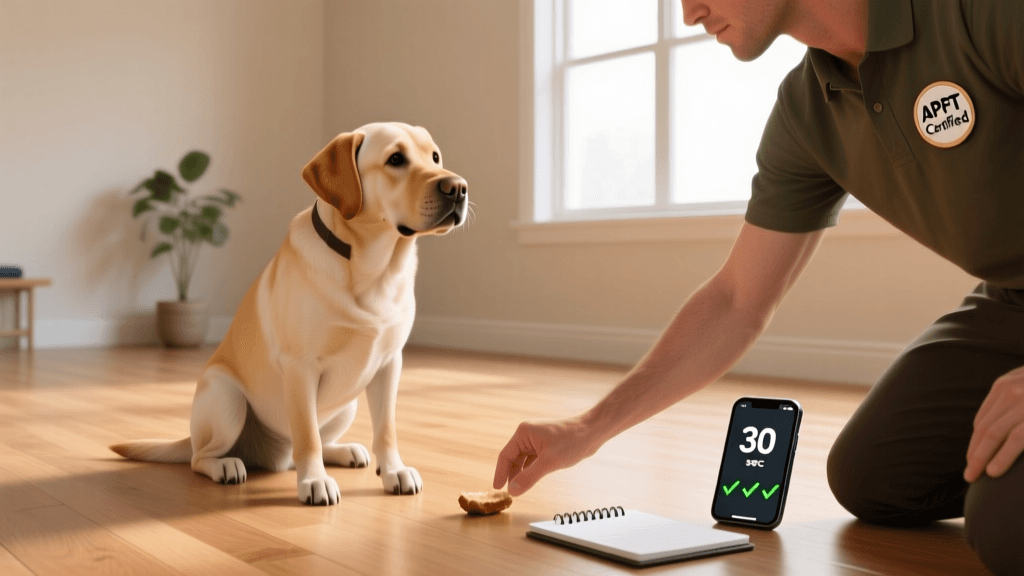
The most common mistake pet owners make is delayed reinforcement. If you ask your dog to 'sit,' and they comply, but you spend three seconds fumbling in your treat pouch, the neurological connection between the action (sitting) and the reward (the treat) is severed. The canine brain operates on a remarkably tight temporal window. To effectively mark a behavior and trigger a dopamine release, the reward—or the marker signal that predicts the reward—must occur within 0.5 to 1 second of the desired behavior.
This is where marker training becomes essential. A marker is a distinct, consistent sound that tells the dog, 'Yes, that exact behavior is what earned you the reward.' It bridges the gap between the behavior and the delivery of the treat, allowing you to buy yourself an extra second or two to reach into your pouch without losing the neurological connection.
Choosing Your Marker Tool
- The iClick Classic Clicker ($5.99): The mechanical clicker is the gold standard for marker training. The sound is acoustically unique, consistent, and devoid of human emotional inflection. The iClick brand features a raised button that is easier to thumb-press than traditional box clickers, reducing physical fumbling.
- Verbal Markers ('Yes!'): If you prefer not to carry a clicker, a sharp, consistent verbal marker like 'Yes!' can be effective. However, studies show that mechanical clickers yield faster acquisition rates for complex behaviors because the sound is entirely uniform, whereas human voices vary in pitch and tone based on frustration or excitement.
The Hierarchy of Treat Value: What Science Says About Motivation
Not all calories are created equal in the mind of a dog. The ASPCA emphasizes that a dog's willingness to perform a behavior in a high-distraction environment is directly correlated to the perceived value of the reinforcement. Treat value is subjective and hierarchical, generally categorized into low, medium, and high tiers based on scent, moisture content, and protein density.
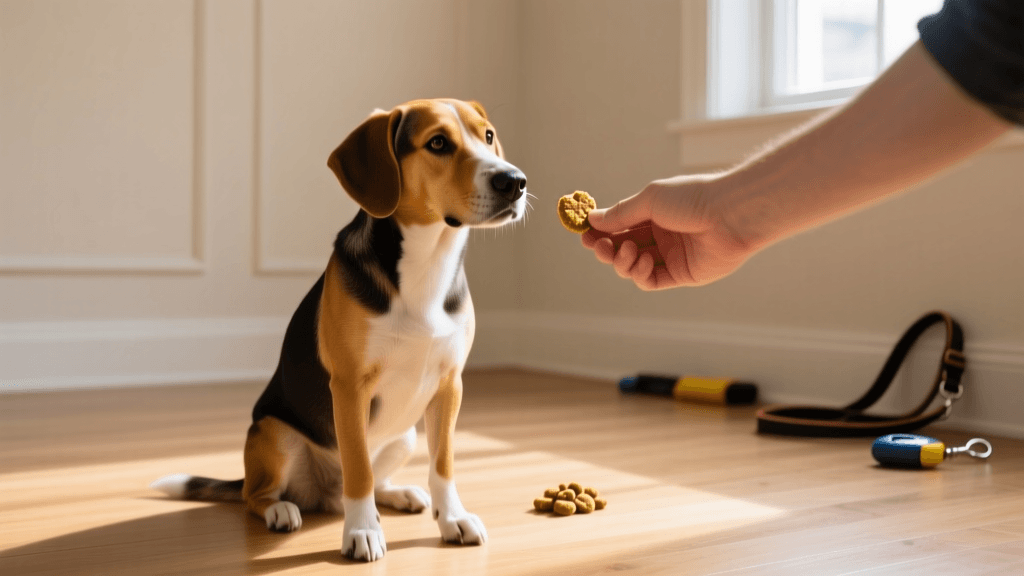
For optimal training, treats should be cut into pea-sized pieces (approximately 1/4 inch cubes). This prevents the dog from becoming satiated too quickly and minimizes the time spent chewing, allowing for more repetitions per training session. Below is a data-driven breakdown of treat hierarchies, including specific product recommendations and cost analyses to help you budget your training pouch.
| Reward Tier | Examples & Products | Cost Estimate | Best Use Case |
|---|---|---|---|
| Low Value | Dry kibble, standard hard biscuits (e.g., Milk-Bone) | $0.15 / oz | Known behaviors, low-distraction environments (e.g., inside the home). |
| Medium Value | Zuke's Mini Naturals, commercial soft chews, training bites | $1.10 / oz | Learning new behaviors, moderate distractions (e.g., quiet neighborhood walks). |
| High Value | Stewart Freeze-Dried Beef Liver, boiled chicken breast, string cheese | $3.50+ / oz | High distraction environments, counterconditioning, critical recall commands. |
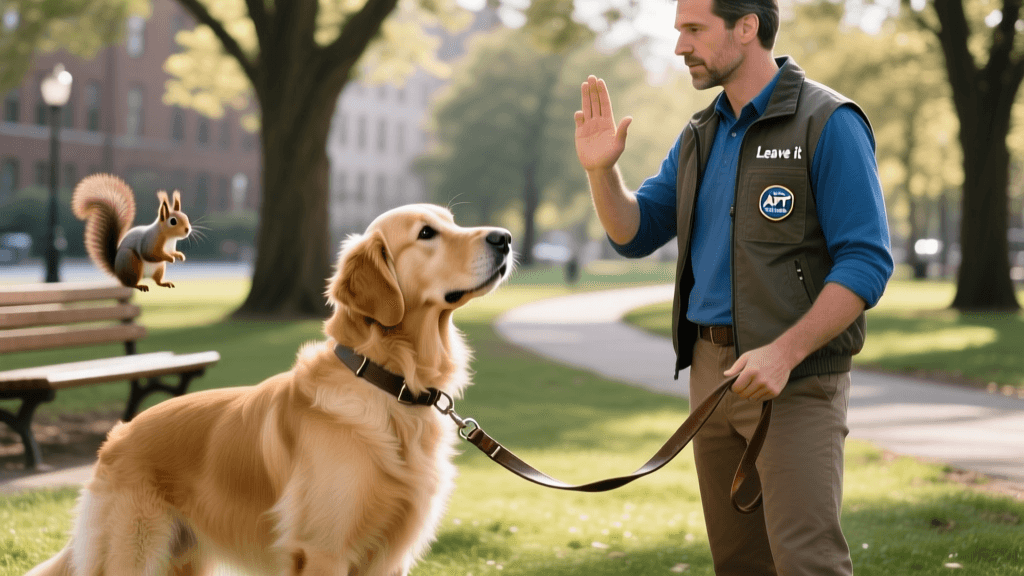
As noted by the American Kennel Club (AKC), keeping a mix of these tiers in your treat pouch allows you to dynamically adjust your payout based on the difficulty of the task. If your dog ignores a squirrel to look at you, that requires a high-value payout. If they simply sit on cue in your kitchen, a low-value kibble piece is sufficient.
Satiation and the Premack Principle
A common scientific hurdle in positive reinforcement training is satiation—the point at which the dog is full and food loses its motivational power. To combat this, behavioral scientists utilize the Premack Principle, which states that a more probable behavior can be used to reinforce a less probable behavior. In practical terms, this means using 'life rewards' as currency.
If your dog is highly motivated by sniffing a specific fire hydrant, you can ask them to 'sit' or 'make eye contact' before releasing them with a 'Go Sniff!' cue. The environment itself becomes the high-value treat, completely bypassing the issue of food satiation and keeping the dog's dopamine system engaged without adding excess calories to their diet.
Actionable Protocol: Applying Science to the 'Recall' Command
Let's synthesize the science of timing, treat value, and marker training into a concrete, actionable protocol for teaching a bulletproof recall ('Come'). This protocol requires a standard 6-foot leash, a 15-foot long line, and a pouch loaded with high-value rewards like freeze-dried liver.
Step-by-Step Implementation
Phase 1: The Naming Game (Days 1-3)
- Stand in a low-distraction room with your dog on the 6-foot leash.
- Say your recall cue ('Come!' or 'Here!') exactly one time in an upbeat tone.
- The moment your dog takes a single step toward you, click your iClick (or say 'Yes!').
- Deliver a pea-sized piece of high-value liver within 0.5 seconds of the marker.
- Repeat 10 times per session, keeping sessions under 5 minutes to prevent cognitive fatigue.
Phase 2: Adding Distance and Distraction (Days 4-14)
- Move to a fenced yard or use the 15-foot long line in an open field.
- Wait until your dog is mildly distracted (e.g., sniffing the grass).
- Say your recall cue. If they do not respond immediately, do not repeat the cue. Instead, make a high-pitched kissing sound or jog backward to trigger their prey-drive instinct to chase.
- Mark the exact moment they orient their body toward you and begin running.
- When they reach you, deliver a 'jackpot' reward: three to four pieces of high-value liver fed one at a time over 5 seconds. This extends the duration of the dopamine release and reinforces staying close to you.
'The reliability of a recall is not a measure of your dog's love for you, but a direct reflection of your reinforcement history. If the environment is more rewarding than your treat pouch, the dog will choose the environment. You must outcompete the grass, the squirrels, and the other dogs through strategic treat value and impeccable timing.' — Canine Behavioral Science Consensus
Conclusion: Training as a Neurological Partnership
Ultimately, science-backed dog training removes the frustration and guesswork from the process. By respecting the 0.5-second timing window, strategically deploying high-value treats like freeze-dried liver, and utilizing consistent mechanical markers, you are speaking directly to your dog's neurobiology. You are no longer just commanding obedience; you are engineering an environment where making the right choice is the most rewarding, dopamine-fueled experience your dog can have. Equip your treat pouch, grab your clicker, and start shaping those neural pathways today.
tom-renshaw
All our authors care for dogs every day — read more of their work on the authors page.