The Science of Sniffing: Why Your Dog Needs Mental Walks
Discover the neuroscience behind your dog's sniffing habit. Learn how scent-based enrichment reduces stress and tires them out faster than physical walks.
The Neuroscience of Canine Olfaction
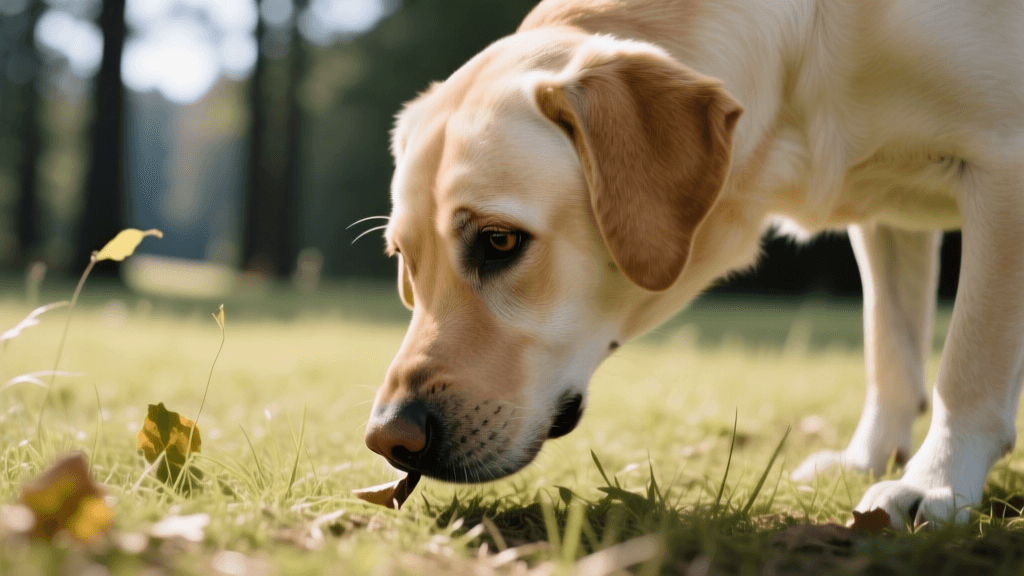
Have you ever felt frustrated when your dog stops to sniff the same patch of grass for what feels like an eternity? As humans, we are highly visual creatures, relying on our eyes to navigate and understand the world. Dogs, however, experience reality primarily through their noses. According to research highlighted by Smithsonian Magazine and canine cognition expert Dr. Alexandra Horowitz, a dog's olfactory system is a marvel of evolutionary engineering.
While humans possess roughly 6 million olfactory receptors in our nasal cavities, dogs have up to 300 million, depending on the breed. Bloodhounds, for instance, sit at the very top of this spectrum. Furthermore, the part of a dog's brain dedicated to analyzing smells—the olfactory bulb—is proportionally 40 times larger than the equivalent region in the human brain. When your dog inhales, a specialized tissue fold in their nasal cavity separates the air into two distinct pathways: one for respiration and one exclusively for olfaction. This allows them to continuously sample scent molecules even while exhaling. Additionally, dogs possess "stereo olfaction." Because their nostrils can move independently, they can determine the exact direction a scent is coming from based on which nostril receives the odor molecules first.
Physical Exercise vs. Olfactory Enrichment
Many dog owners operate under the assumption that a rigorous, fast-paced physical walk is the ultimate key to a tired, well-behaved dog. While cardiovascular health is vital, science shows that cognitive fatigue often outpaces physical exhaustion in canines. Processing complex environmental scents requires immense neurological energy. A 20-minute walk where a dog is permitted to freely sniff can be just as tiring, if not more so, than a 60-minute brisk walk where they are forced to heel.
Below is a comparison of how different types of walks impact your dog's physiology and psychology:
| Metric | Standard 45-Minute Heel Walk | 30-Minute "Sniffari" Enrichment Walk |
|---|---|---|
| Primary Energy System | Aerobic (Muscular) | Cognitive (Neurological) |
| Heart Rate Average | Elevated (100-140 bpm) | Resting to Mildly Elevated (70-100 bpm) |
| Cortisol Reduction | Moderate | High (Scent processing lowers stress) |
| Post-Walk Fatigue | Physical tiredness (1-2 hours) | Mental fatigue (3-5 hours of deep rest) |
| Leash Reactivity | Frequent (if under-stimulated) | Rare (dog is self-rewarding) |
The Vomeronasal Organ: Decoding the Invisible World
Beyond the standard nasal cavity, dogs possess a secondary olfactory system known as the vomeronasal organ, or Jacobson's organ. Located just above the roof of the mouth and behind the upper incisors, this specialized structure is dedicated entirely to detecting pheromones. When you see your dog curling their upper lip slightly while sniffing a fire hydrant or another dog's scent mark (a behavior known as the Flehmen response), they are actively routing chemical signals to the Jacobson's organ.
This organ connects directly to the amygdala and hypothalamus, the brain regions responsible for emotional processing and hormonal regulation. It allows dogs to gather intimate social and biological data: the sex, reproductive status, diet, and even the emotional state of the animal that left the scent mark. Interrupting this process is akin to someone snatching a fascinating, complex novel out of your hands before you can finish the chapter. Allowing them time to process this data is crucial for their psychological well-being and environmental confidence.
Actionable, Science-Backed Scent Enrichment Strategies
Understanding the biology of your dog's nose is only the first step. To truly harness the power of canine olfaction, you must integrate structured scent enrichment into your daily routine. Here are three practical, science-backed methods to provide mental stimulation, complete with specific product recommendations and timing.
1. Implement the Daily "Sniffari"
A "Sniffari" is a dog-led walk where the primary goal is olfactory exploration rather than physical distance or cardiovascular exercise. The American Kennel Club (AKC) highly recommends this practice for reducing anxiety and hyperactivity in high-energy breeds.
- Equipment Needed: A well-fitted, non-restrictive harness (such as the Ruffwear Front Range Harness, approx. $40) and a 15 to 30-foot biothane or cotton long line (approx. $15-$25). Avoid retractable leashes, as they can cause friction burns and offer poor tension control.
- Execution: Head to a quiet, grassy area or nature trail. Give your dog the full length of the long line and use a specific release cue like "Go Sniff." Let them dictate the pace and direction. If they want to spend four minutes investigating a single tree root, let them.
- Timing & Frequency: Aim for 20 to 30 minutes, 3 to 4 times a week. You will notice a significant increase in deep sleep and relaxed behavior post-walk.
2. Invest in High-Quality Snuffle Mats
For days when the weather is poor or you are short on time, indoor scent work is an excellent alternative. The ASPCA notes that foraging-based enrichment taps into a dog's natural scavenging instincts, significantly reducing destructive behaviors born from boredom.
- Product Recommendation: The Paw5 Wooly Snuffle Mat (approx. $45) is widely considered the gold standard. Its varying depths of thick, machine-washable wool strands mimic natural grass, forcing the dog to use their nose rather than their eyes to locate food.
- Budget Alternative: You can create a DIY snuffle mat for under $10 by tying strips of anti-pill fleece through the holes of a rubber sink mat.
- Execution: Instead of feeding your dog's breakfast from a stainless steel bowl (which takes roughly 30 seconds to consume), scatter their daily kibble portion deep within the mat's fibers. This turns a mundane daily event into a 10-to-15-minute cognitive puzzle.
3. Create Indoor Scent Trails
Scent trailing elevates basic sniffing into an active problem-solving game. It builds confidence in shy dogs and provides an intense mental workout.
- Equipment Needed: High-value, pungent treats. Zuke's Mini Naturals (approx. $8 for a 16oz bag) are excellent because they are low-calorie (only 3 calories per treat) and have a strong, meaty aroma.
- Execution: Start by placing your dog in a "stay" in one room. Walk through your home, dragging a treat along the floor to create a scent trail, leading to a "jackpot" pile of 3-4 treats hidden under a piece of furniture or behind a door. Release your dog with the cue "Find it!"
- Progression: As your dog masters the basic trail, begin dropping treats at intervals without dragging them, forcing the dog to use their nose to bridge the gaps in the scent cone.
Conclusion
Shifting your perspective on what constitutes a "good walk" can profoundly impact your dog's quality of life. By respecting their biological imperative to sniff and incorporating structured olfactory enrichment into their routine, you are not just exercising their body—you are fulfilling their mind. Participating in these scent-based activities also deepens the bond between you and your dog, as you become the facilitator of their greatest natural joy. The next time your dog hits the brakes to investigate a seemingly ordinary patch of weeds, remember that they are reading the morning news, solving complex chemical puzzles, and engaging in a deeply satisfying neurological workout. Put down the stopwatch, loosen the leash, and let them sniff.
tom-renshaw
All our authors care for dogs every day — read more of their work on the authors page.