The Science of Clicker Training: Reward Timing and Canine Behavior
Discover the science behind clicker training. Learn how precise reward timing and marker signals shape canine behavior and accelerate obedience.
The Neurobiology of Marker Training
Dog training has evolved dramatically over the past few decades, shifting from outdated dominance-based theories to a rigorous science grounded in behavioral psychology and neurobiology. At the forefront of this evolution is marker training, commonly known as clicker training. This method leverages the principles of operant and classical conditioning to communicate with canine companions with unprecedented precision. By understanding the neurological mechanisms that drive learning, dog owners can accelerate obedience training, resolve behavioral issues, and build a deeper, trust-based bond with their pets.
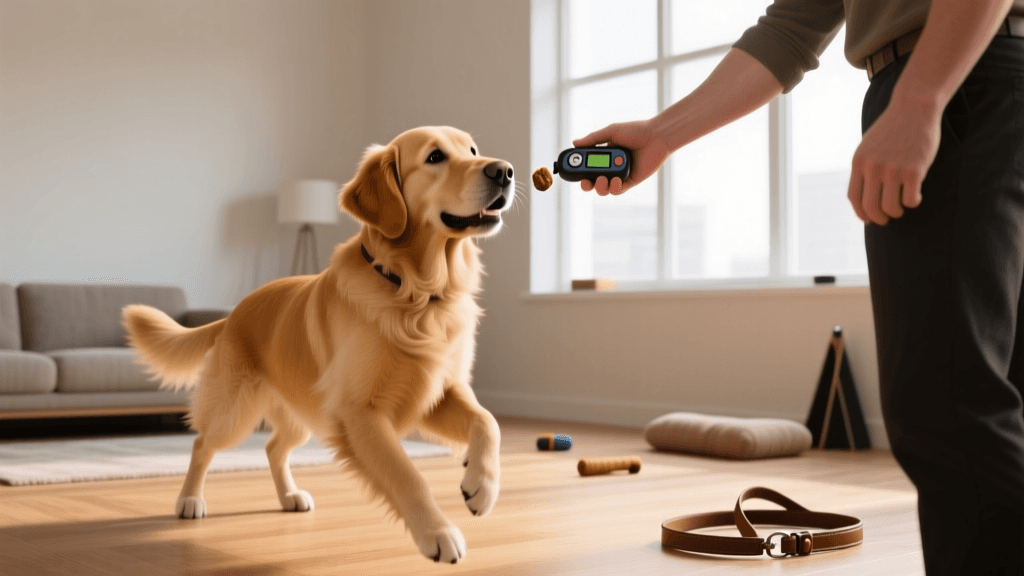
At its core, marker training relies on a 'conditioned reinforcer'—a distinct, consistent sound (like a mechanical click) that predicts the arrival of a primary reinforcer (such as food or play). To understand why this is so effective, we must look inside the canine brain. When a dog performs a desired behavior, such as sitting or making eye contact, the timing of the reward is critical. The canine brain processes associations within milliseconds, and the clicker acts as a neurological bridge, capturing the exact moment the correct decision is made.
The Operant Conditioning Framework in Dogs
B.F. Skinner's operant conditioning framework outlines how behaviors are modified by their consequences. In science-based dog training, we focus primarily on Positive Reinforcement (R+), which involves adding a desirable stimulus immediately after a behavior to increase the likelihood of that behavior occurring again. The Association of Professional Dog Trainers (APDT) guidelines on LIMA (Least Intrusive, Minimally Aversive) heavily emphasize R+ as the most ethical and effective quadrant of learning for domestic dogs.
Why the 'Click' Works: Dopamine and the Amygdala
The 'click' sound is neurologically significant. When a dog hears the sharp, unique acoustic signature of the clicker, the sound is processed by the amygdala. This triggers an immediate release of dopamine in the nucleus accumbens—the brain's primary reward center. Crucially, this dopamine spike occurs before the dog even tastes the treat. This anticipatory dopamine release effectively 'locks in' the exact neural firing pattern that produced the behavior, creating a robust synaptic pathway. The dog learns that the click sound itself is rewarding, which allows trainers to mark behaviors that occur at a distance or in rapid succession, where delivering food instantly would be physically impossible.
The Critical Window: Reward Timing in Milliseconds
In behavioral conditioning, timing is everything. The bridge (the click) must occur within a highly specific temporal window to ensure the dog associates the marker with the intended action. If the click is delayed by even a second, the dog will associate the reward with whatever action they are performing at the exact moment the click sounds, rather than the action you intended to reinforce. This often leads to the accidental reinforcement of 'superstitious' behaviors, such as a dog that sits but also scratches its ear, believing the ear scratch is what earned the reward.
Reinforcement Timings and Behavioral Outcomes
| Delay Between Behavior and Marker | Cognitive Association | Behavioral Outcome |
|---|---|---|
| 0 to 0.5 Seconds | Exact behavior is identified and reinforced. | Rapid acquisition; high reliability and clarity. |
| 0.5 to 1.5 Seconds | Slight ambiguity; dog may associate secondary movements. | Slower learning; potential for superstitious behaviors. |
| 1.5 to 3.0 Seconds | Marker is associated with the current action, not the target. | Confusion; accidental reinforcement of wrong behavior. |
| Over 3.0 Seconds | No logical association is formed by the canine brain. | Training fails; frustration for both dog and handler. |
Shaping: The Science of Successive Approximations
One of the most powerful applications of the clicker is 'shaping.' Shaping involves reinforcing incremental steps toward a final, complex behavior. For example, if you want to teach your dog to close a cabinet door, you do not wait for the dog to magically push the door shut. Instead, you click and reward for looking at the door, then for taking a step toward it, then for sniffing it, then for nudging it with the nose, and finally for pushing it hard enough to latch. This process of successive approximations keeps the dog in a state of active problem-solving, which stimulates neuroplasticity and builds immense confidence.
Practical Application: Tools, Costs, and Setup
To implement science-based marker training effectively, you need the right equipment. The goal is to minimize the time between the marker (the click) and the delivery of the primary reinforcer (the treat).
Essential Gear for Science-Based Marker Training
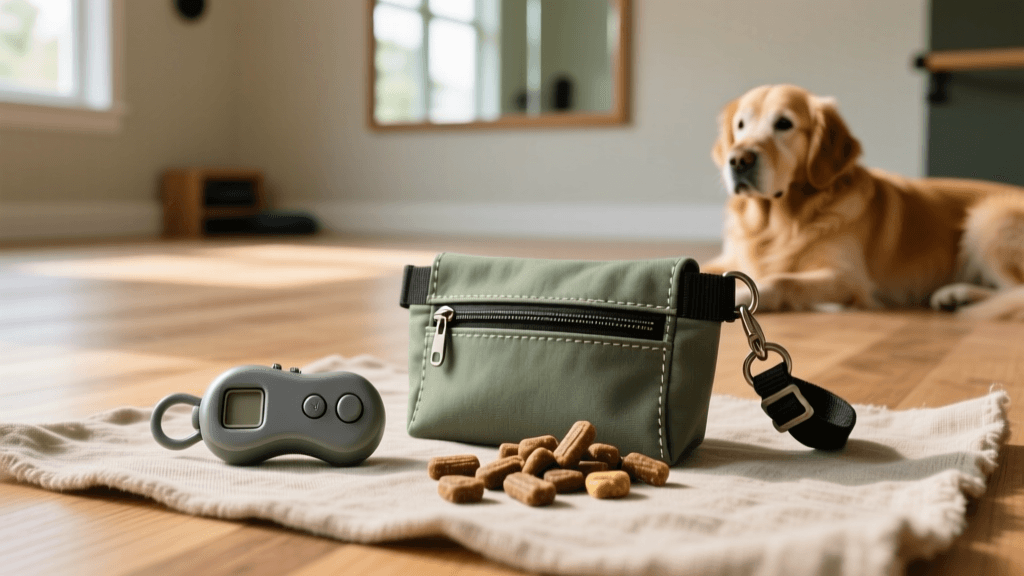
- Karen Pryor i-Click ($5 - $8): Features a quiet, raised button ideal for noise-sensitive dogs and indoor shaping sessions. Its ergonomic design allows you to click without moving your hand, preventing the dog from watching your hand instead of focusing on the behavior.
- Starmark Pro-Training Clicker ($7 - $10): Produces a sharper, louder sound suitable for outdoor environments, high-distraction areas, or hunting breeds working at a distance.
- Canvas Treat Pouch with Magnetic Closure ($10 - $15): Essential for keeping hands free and treats accessible within the 1-second delivery window. Avoid zippers, as the fumbling delay ruins the timing of the reinforcement.
- High-Value Training Treats ($6 - $9 per bag): Use soft, easily consumable treats like Zuke's Mini Naturals or Vital Essentials Freeze-Dried Minis. Break them into pea-sized pieces (approx. 1 to 2 grams) to maintain motivation without causing caloric surplus or rapid satiation.
Transitioning from Continuous to Variable Reinforcement
Once a behavior is acquired, the scientific approach dictates a shift in the reinforcement schedule. During the initial learning phase, trainers use Continuous Reinforcement (CRF), meaning every correct response is clicked and rewarded. This provides maximum clarity and builds the neural pathway quickly.
However, once the dog reliably performs the behavior (e.g., a recall command), you must transition to a Variable Ratio (VR) schedule. In a VR schedule, the dog is rewarded unpredictably—perhaps after the first recall, then the third, then the second. This is the exact same psychological mechanism that makes slot machines addictive to humans. The unpredictability of the reward maximizes dopamine anticipation, creating highly resilient behaviors that are resistant to extinction. If you fail to transition to a VR schedule, the dog will quickly realize when you are out of treats and simply choose not to obey.
Step-by-Step Recall Training Using Variable Reinforcement
- Baseline Acquisition (CRF): Call the dog in a low-distraction environment. Click the exact moment they turn toward you. Treat upon arrival. Repeat 20 times.
- Adding Distance: Increase the distance to 15 feet. Continue CRF. Ensure the click happens while the dog is running toward you, not after they stop.
- Transitioning to VR-3: Begin rewarding only 1 out of every 3 successful recalls. For the unrewarded trials, use a secondary reinforcer like verbal praise ('Good boy!') or a quick game of tug.
- Proofing with Distractions: Move to a park. Drop back to CRF temporarily to help the dog generalize the behavior in a new environment, then slowly build back up to a VR schedule.
The Scientific Consensus: Reward-Based vs. Aversive Methods
The superiority of reward-based marker training is not just theoretical; it is backed by rigorous peer-reviewed research. A landmark 2020 PLOS ONE study on canine welfare and training methods demonstrated that dogs trained with aversive methods (such as leash pops, shock collars, or verbal scolding) displayed significantly higher cortisol levels, more stress-related behaviors, and a more 'pessimistic' cognitive bias compared to dogs trained exclusively with positive reinforcement.
Furthermore, the American Veterinary Society of Animal Behavior (AVSAB) strongly advocates for reward-based methods in all dog training and behavioral modification. Their official position statements note that dominance theory has been scientifically debunked and that aversive tools can induce fear, anxiety, and aggression, often suppressing the warning signs of stress until a dog reaches a biting threshold. Marker training, by contrast, empowers the dog to make choices and actively engage with their handler, fostering a secure attachment and a resilient temperament.
Science tells us that animals learn best when they are active participants in the process, free from fear and coercion. The clicker is not just a tool; it is a clear line of communication that respects the canine mind.
Conclusion
Mastering the science of clicker training requires an understanding of neurobiology, precise timing, and structured reinforcement schedules. By utilizing a conditioned reinforcer to bridge the gap between behavior and reward, dog owners can bypass the confusion and frustration inherent in outdated training methods. Whether you are shaping a complex trick, proofing a life-saving recall command, or simply teaching a puppy to sit, the principles of operant conditioning remain universal. Invest in the right tools, respect the millisecond timing windows, and watch your dog's cognitive abilities flourish through the power of positive, science-backed reinforcement.
robin-maitland
All our authors care for dogs every day — read more of their work on the authors page.